Start where the roof water lands
One roof corner can collect runoff from an area much larger than the downspout footprint suggests. Concentrated discharge near a slab, garage entrance or low planting bed can repeatedly wet soil even if surrounding grass drains normally. Start by tracing each gutter run and observing where it empties.
Compare above-ground and buried extensions
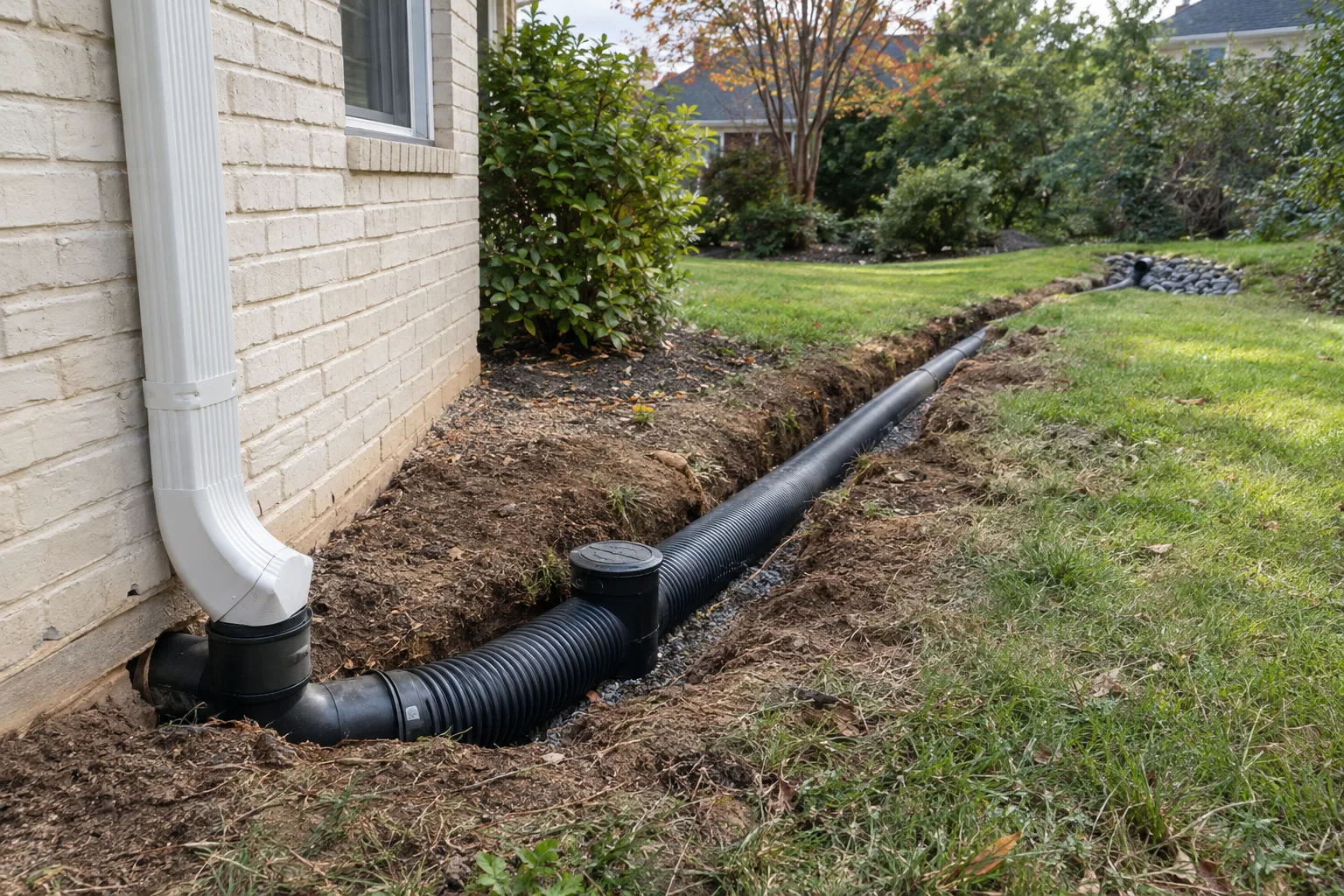
Above-ground extensions are inspectable and easy to alter, but may cross paths or interfere with mowing. A buried solid pipe reduces clutter yet demands a continuous downhill route, an accessible transition and a visible outlet that is not sealed under turf or mulch.
Use the right pipe for roof runoff
A perforated underground pipe along the entire route is not an automatic improvement. If the purpose is to transport roof water away from a sensitive location, a properly designed solid drain line is generally the clearer concept; subsurface dispersal is a separate decision that needs soil and siting evaluation.
Make debris removal possible
Leaf debris is predictable. Think about gutter screens, surface cleanouts where practical, fittings that turn without frequent plugging and the ability to confirm whether water is reaching the planned outlet. A line that cannot be maintained becomes difficult to evaluate once covered.
Choose a suitable receiving area
Discharge needs to avoid concentrating runoff onto another property or eroding a slope. If an outlet might enter a public drain or pass through an easement, get municipal or property permission where required. Do not confuse an existing curb inlet with an unrestricted private connection point.
Put the full route in the plan
In Arlington, municipal resources recommend redirecting downspouts and regrading where appropriate. The safest plan weighs roof contribution, legal destination, overflow during intense rain and restoration around the building together.
How the clues change the decision
Picture a roof valley delivering runoff to a downspout beside a narrow side walkway. An extension sends the water a few feet away but still releases it above an inward-sloping bed. Burying a solid line could move the discharge farther, but only if there is a suitable downhill destination and the pipe remains serviceable. If no approved outlet is available, the design problem must be reconsidered before a trench is dug. Now consider maintenance: leaves may reach the buried line, and a pop-up emitter covered by sod could clog invisibly. The proposed layout should explain cleanout access, the terminal location and what happens when rainfall exceeds the pipe’s intended capacity. The appearance of a neat buried pipe is not evidence that the water will reach a safe place.
Size up the whole roof-to-outlet route
We first check whether water is reaching the ground through the downspout or spilling from the gutter before it gets there. An extension cannot fix an upstream gutter problem. At ground level, the question becomes where that concentrated roof runoff travels. A short splash block may be enough to protect a small receiving area in some layouts, while other properties need a longer transport route. The choice depends on the slope, use of the yard and available destination rather than a fixed extension length for every home.
Above-ground extensions keep the route visible but can interfere with mowing or walking. Buried extensions clear the surface while making access and the location of the outlet more important. We compare those tradeoffs with the owner before choosing a route. Around an Arlington side yard, gates, equipment, planting beds and utilities can limit the available trench. A line that avoids one obstacle may add bends or cross paving elsewhere. The full route needs to be considered before treating burial as the obvious upgrade.
Avoid sending roof water into the wrong system
A solid transport line carries water toward its destination without intentionally releasing it through openings along the way. A perforated collector serves a different purpose. We do not connect a downspout to whichever buried pipe is easiest to reach without understanding that system. Combining several roof outlets can also change the flow demand on a shared line. The proposed connections, maintenance access and receiving conditions need to be reviewed together so the new extension does not create a backup somewhere else.
Once a destination is chosen, look at what happens after water leaves the terminal. The receiving ground should not send it back toward the wall or allow it to wash out a bed. Keep the end visible and reachable after turf or mulch is restored. The estimate should identify outlet work as well as trench length, connections and finish repairs. If an old extension is being replaced, note why it failed. A different pipe following the same unsuitable route may reproduce the same problem under the next rainfall.
Keep the planned outlet location with your property records. Later sod work, planting or a new walkway can obscure the terminal or block the route beyond it. If a backup starts after those changes, that history helps focus the first inspection. An extension should remain understandable and serviceable even after the trench itself is no longer visible.