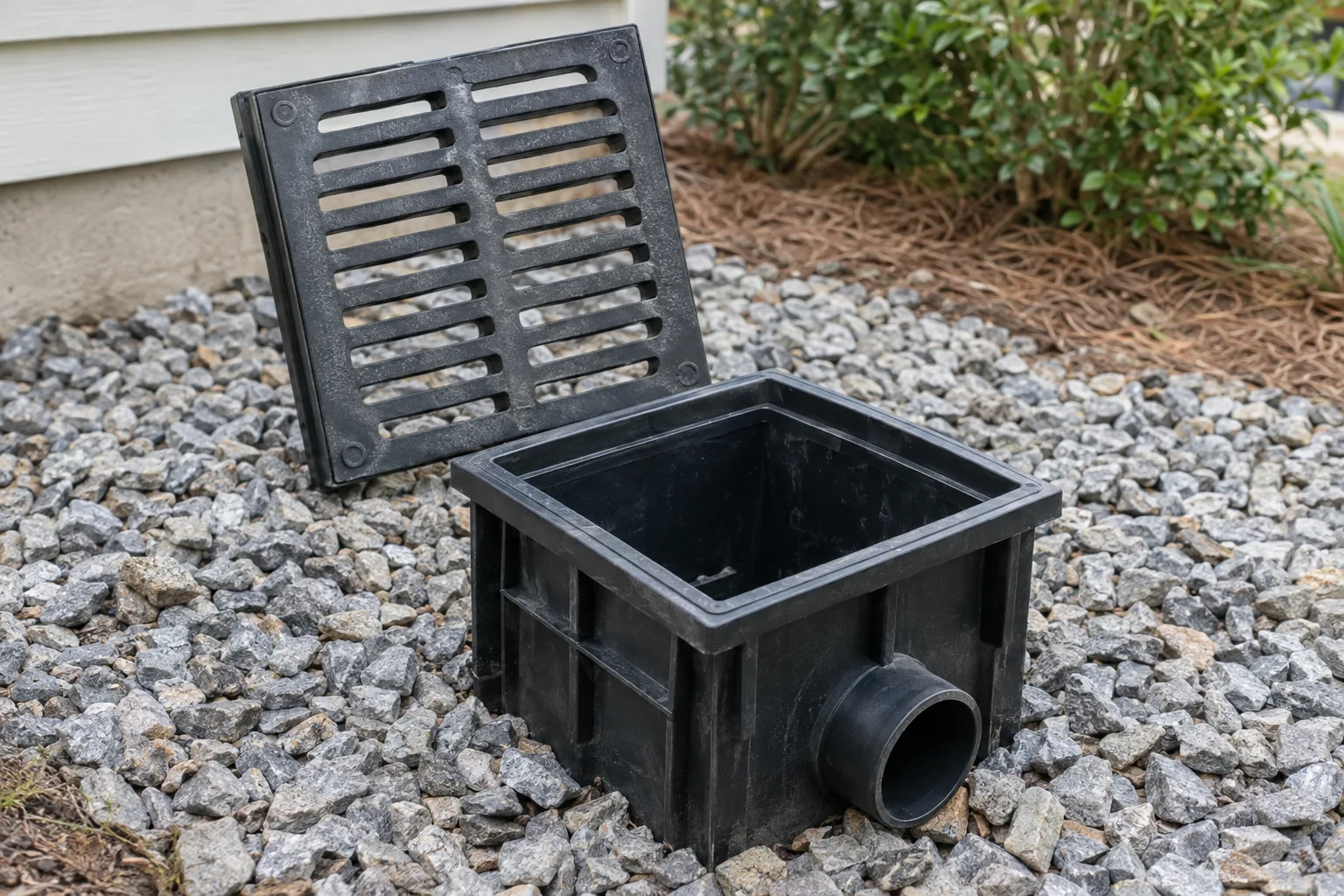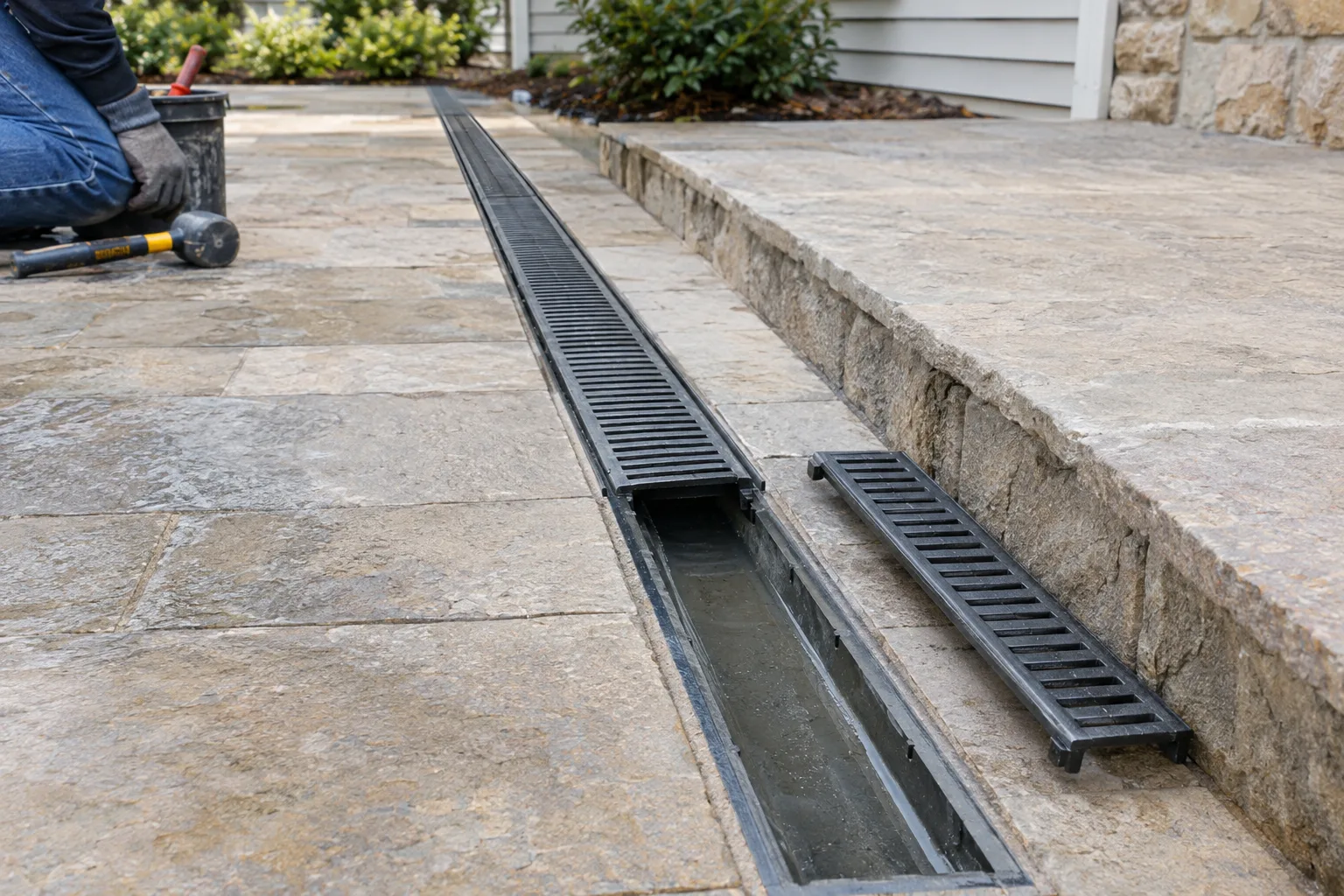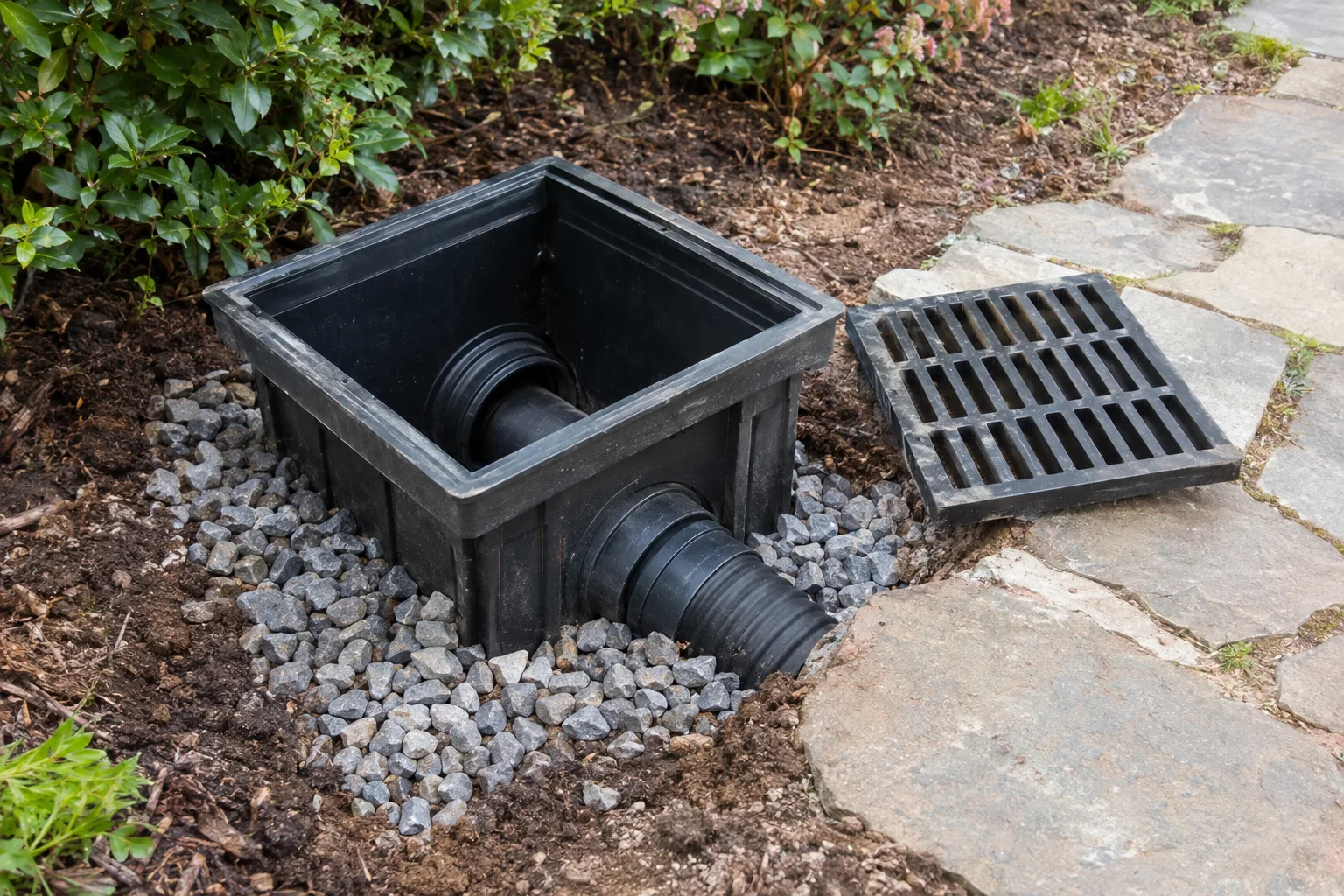
Find the true low point
The basin belongs where runoff actually gathers. A grate set a little too high can leave water pooling beside it. The nearby lawn or paving needs to direct water toward the inlet, rather than around it.
Size the basin and the pipe together
A larger grate is not useful if the connected pipe cannot carry the collected water. Basin size, pipe connections, debris, and outlet conditions all need to be considered as parts of the same system.
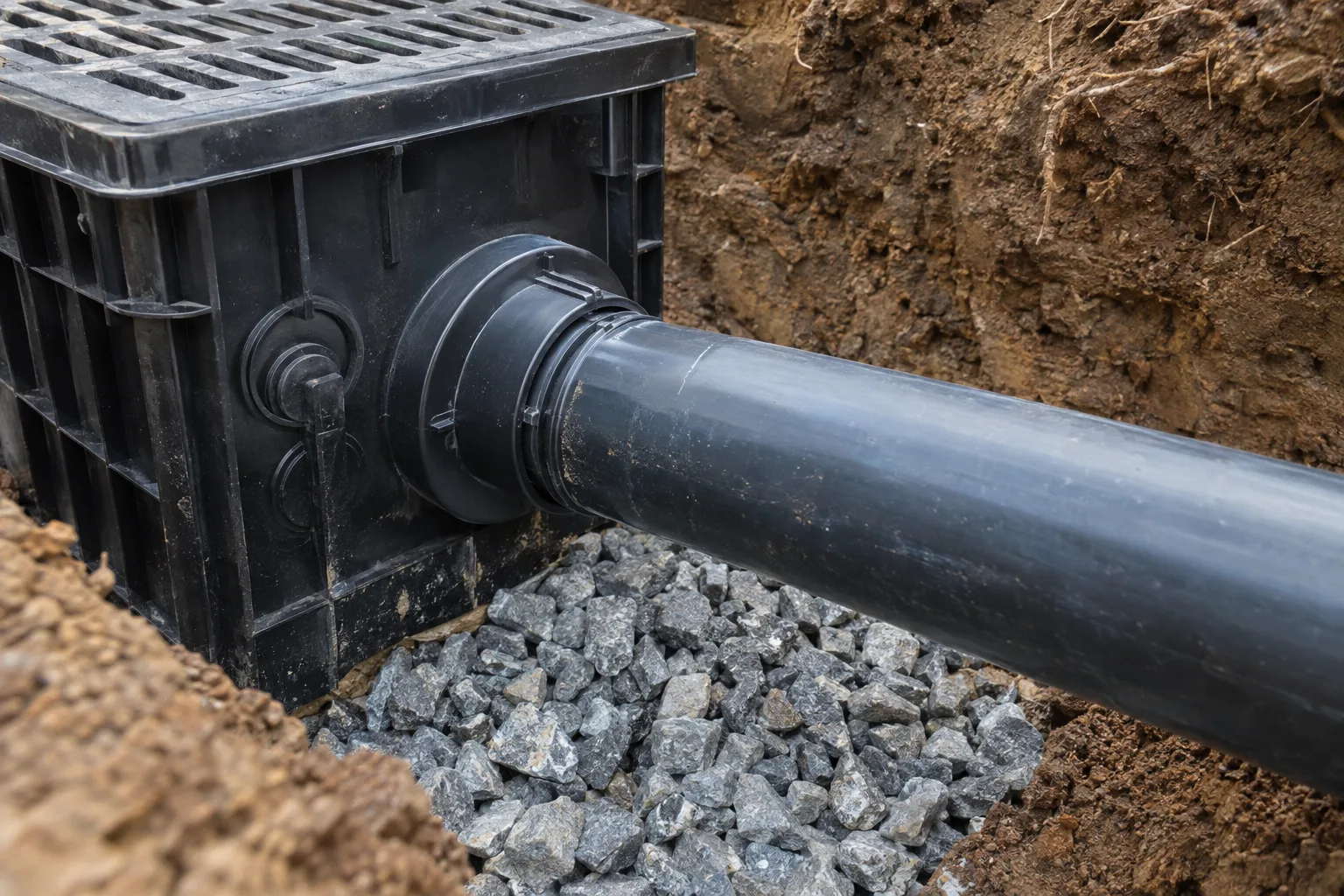
Set the grate at the right height
Installation includes preparing a stable base, setting the basin and pipe connections at the planned levels, and restoring the surrounding surface. The finished grade should guide water into the grate without leaving an awkward dip or raised edge.
When a basin will not solve the problem
A basin collects surface runoff. It generally will not solve water moving through soil below the inlet. It also cannot compensate for a blocked, submerged, or uphill discharge route.
Why a basin overflows
A blocked grate, silt in the box, a damaged connection, or a restricted pipe can each cause overflow. Checking both the basin and the route to the outlet helps avoid replacing a good component while leaving the actual problem untouched.
Make cleaning straightforward
The grate needs to be removable and reachable. Leaves can collect at the top, while heavier sediment settles inside the basin. Landscaping should leave enough access to clear both without disturbing nearby paving or plants.
What affects installation cost?
The number and size of basins, pipe length, depth, access, and any concrete work affect the estimate. Restoration should be included in the discussion, especially where excavation crosses a lawn, patio edge, or planting bed.
Catch basin, channel drain, or French drain?
A basin collects water at a point. A channel drain intercepts flow along a longer edge. A French drain handles subsurface water. These components can work together, but they should not be treated as interchangeable.
Set the grate where water can reach it
We look at the finished surface around a proposed basin, not just the spot with the deepest puddle. Runoff may approach from a walkway on one side and a sloping lawn on another. The inlet needs to receive those flows while remaining accessible for mowing and cleaning. A basin installed before final sod or mulch goes down can end up surrounded by a raised lip. We account for the finished landscape height when setting the grate so the collector does not become an island above the water.
A single basin can be useful where runoff converges in one place. Several isolated low spots may need separate collection or grading between them. Simply adding more grates is not enough: the connected line still has to carry the combined flow. We check the receiving route before deciding which basins can share a pipe. On an Arlington yard where roof runoff also enters the proposed system, that additional source belongs in the layout discussion rather than being connected as an afterthought.
Plan for sediment and future access
Water moving across bare ground can carry soil into the basin. Leaves may stop at the grate, while finer material settles below it or travels onward. We consider where that debris comes from and whether the surrounding ground needs stabilization. Cleaning a basin is much easier when the grate can lift clear and the opening is not trapped beneath a fence or overgrown shrub. The installation should leave enough working space to remove accumulated material without damaging the landscape every time.
Connections deserve the same attention as the box. A pipe entering at an unsuitable level can leave standing water that has nowhere to go, while a loose connection can allow soil to enter around the joint. We establish the planned elevations, support the basin on a prepared base, and check the connected route before backfilling. A water check can reveal obvious connection or routing problems, but it does not prove that a small inlet will handle every possible storm. The surrounding overflow path still matters.
When comparing estimates, ask whether each price includes the same receiving pipe, outlet work, surface adjustments and restoration. An isolated basin price is different from a complete drainage connection. If an existing system will receive the new basin, its condition needs to be checked first. We can discuss a focused addition where the downstream system works, or a broader repair when a new inlet would otherwise feed a restricted line. That decision keeps the work tied to the actual drainage problem.