Follow the water across the paving
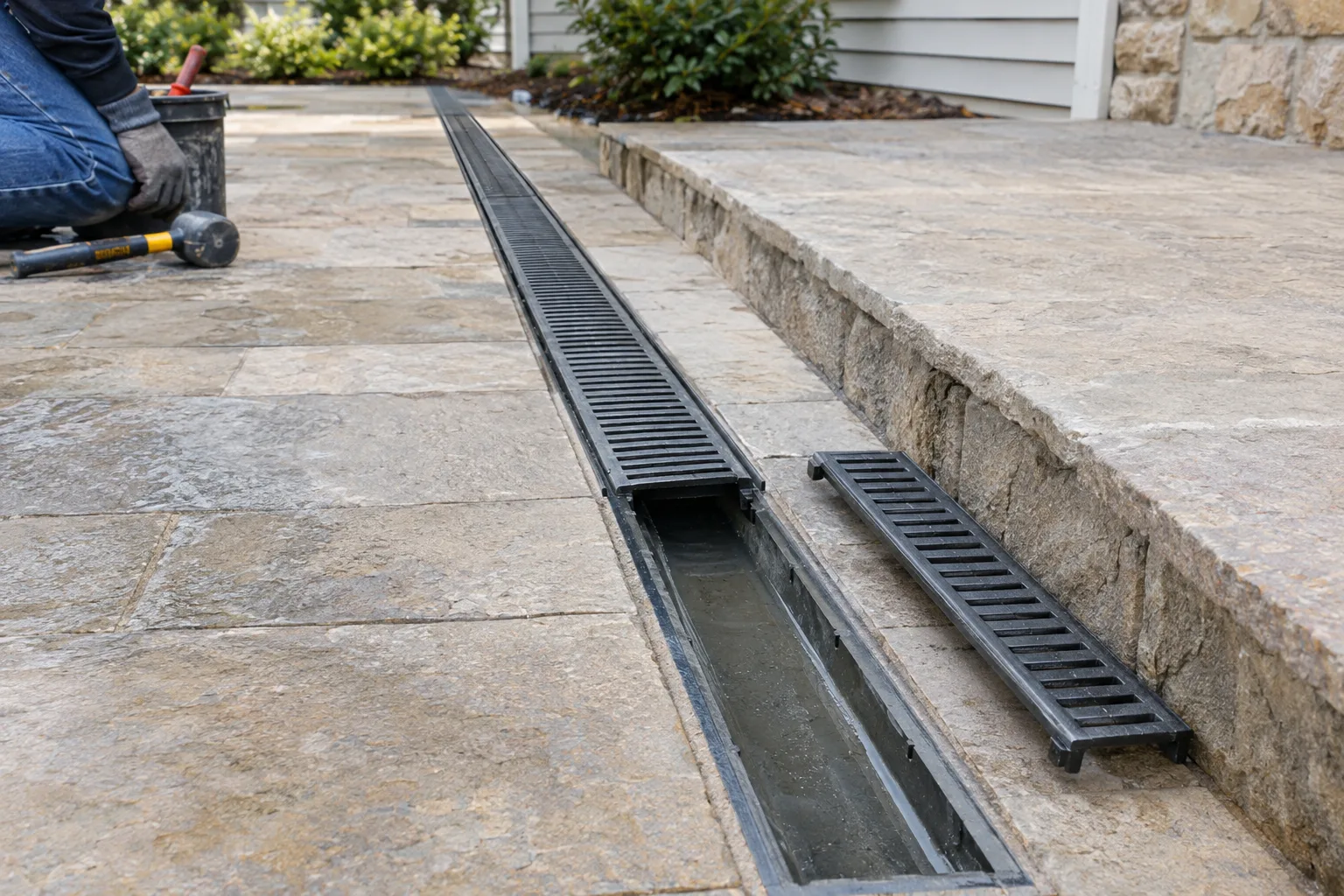
The channel needs to cover the part of the surface that carries runoff. If water can go around its ends, a longer grate alone may not fix the problem. The surrounding paving levels help determine the best position.
Choose a channel and grate for the surface
A walkway and a driveway place different demands on a drain. The channel, grate, and supporting installation need to suit the expected traffic, along with the amount of water and debris reaching them.
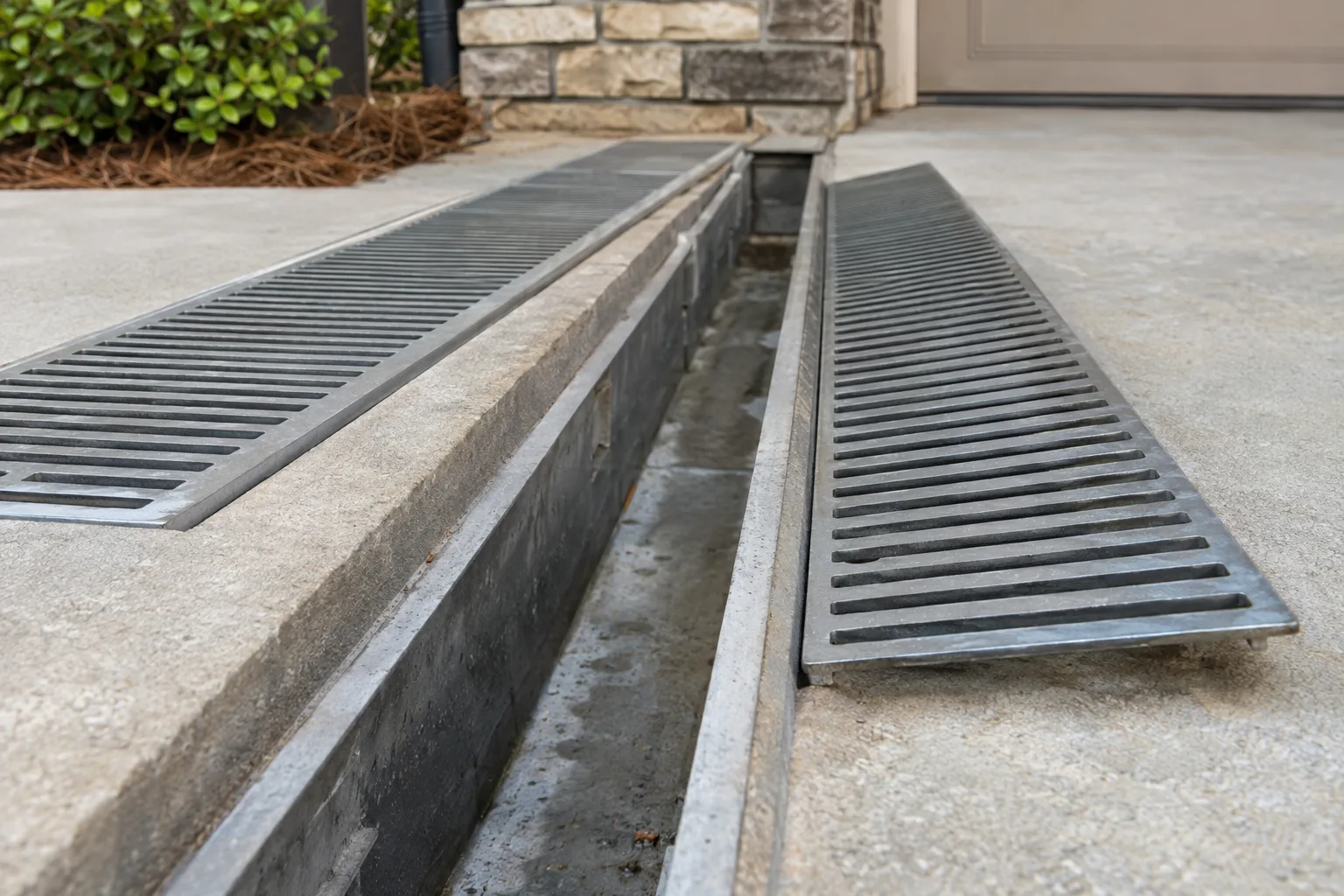
Plan the concrete and pipe work
Work may include cutting existing paving, preparing support for the channel, connecting the outlet pipe, and repairing the adjoining surface. The finished height matters: water needs to enter the grate without creating a raised edge or unwanted low spot.
Check the outlet before cutting concrete
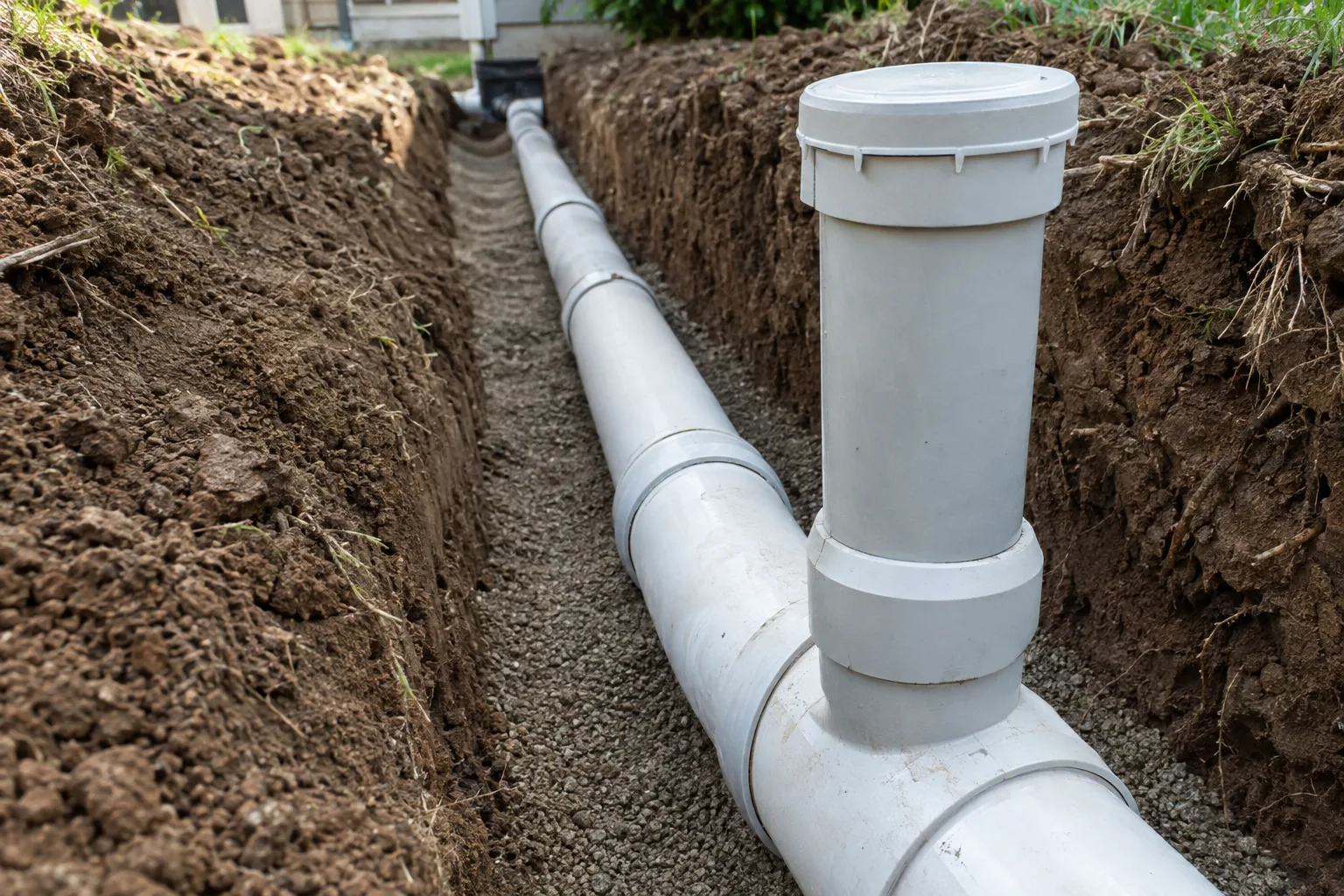
The channel needs a route to empty. A pipe with too little fall or an outlet that backs up can leave water in a clean channel. Those conditions should be checked before permanent concrete work begins.
Why water bypasses a channel
Water may bypass a channel set above the surrounding surface or one that does not cover the full runoff path. Settled paving can also redirect flow. Debris is another possibility, but it is not the only one.
Keep the grate and trough clear
Leaves, grit, and sand can build up along the trough. Removable grates provide cleaning access. Water remaining in the channel after the surrounding area clears may be a sign to check the pipe and outlet.
What affects channel drain cost?
Length, grate strength, paving removal, support, pipe depth, and restoration affect the price. A short channel requiring substantial concrete work can involve more labor than a longer installation in a more accessible location.
When a point drain makes more sense
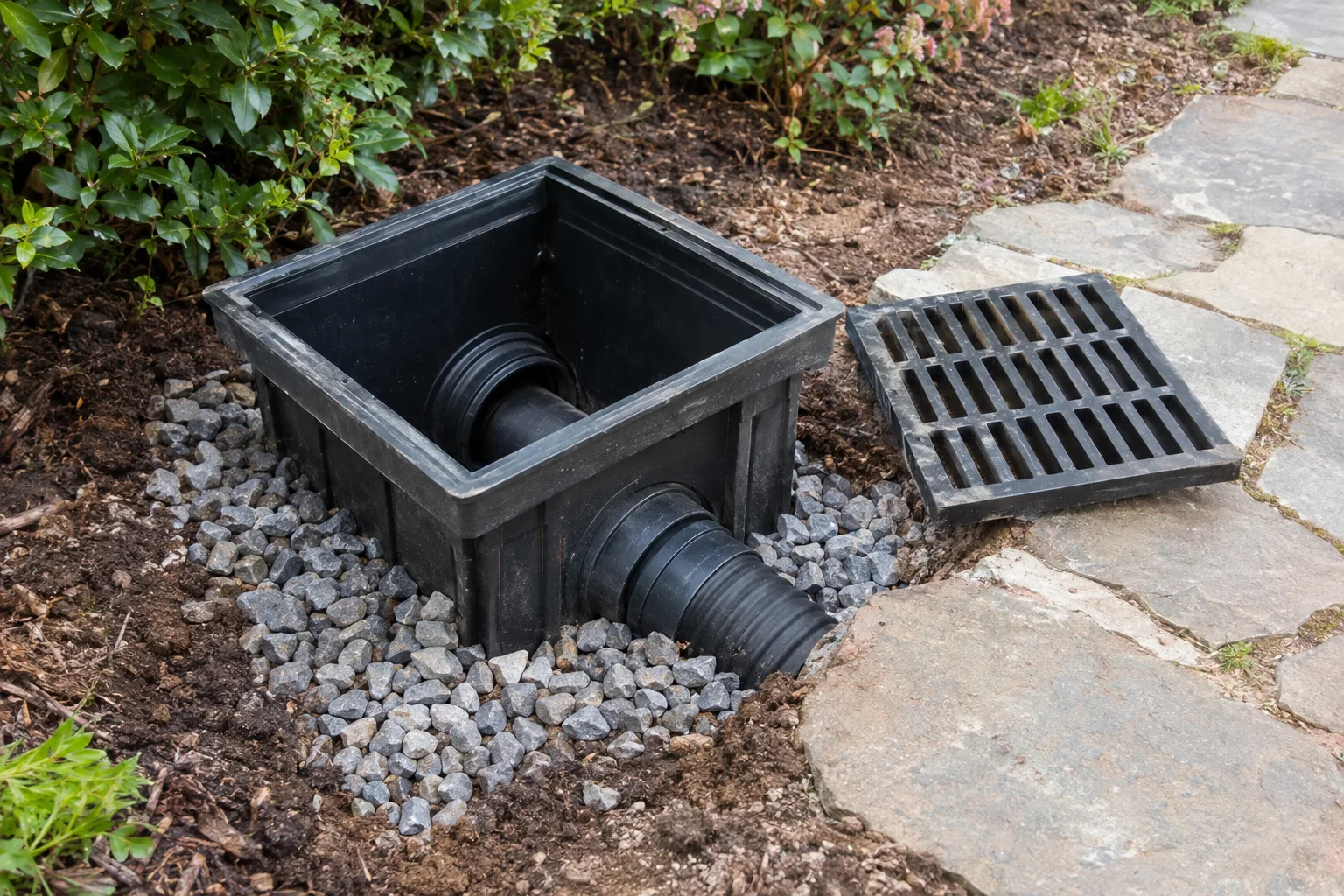
A catch basin may be a simpler option where runoff gathers at one defined low point. A channel makes more sense when water arrives across a broader paved edge and needs to be intercepted along that line.
Intercept runoff before it reaches the entrance
We check the approach to a channel from both ends and across the pavement. Water can travel along a garage threshold, around the end of a grate, or through a low joint that misses the proposed collection line. The drain position needs to interrupt that route before runoff reaches the vulnerable area. On a patio, furniture and walking paths also affect the location. We want a grate that collects water while remaining practical to walk over, clean and reach after the area is back in use.
Existing concrete can limit how much the surface can be adjusted. We discuss whether the work involves a narrow cut around the channel or a larger area of pavement correction. A channel following a low strip may work well, but installing it across a surface that slopes away from the opening will not collect that runoff. The surrounding levels and outlet elevation are checked together before choosing the channel position. This is especially useful when an Arlington driveway already has several patches or settled sections.
Choose the channel and connection together
Grate appearance is only one part of the selection. Foot traffic, vehicle wheels, cleaning access and the way the drain is supported all affect the choice. A product intended for a landscaped pedestrian area is not automatically appropriate at a driveway entrance. We consider the intended use along the whole channel, including places where a vehicle might turn across an edge. The installation detail needs to suit that loading as well as the adjacent concrete or paving that will support the drain.
The trough collects water along a line, but the outlet connection concentrates it into a pipe. We look at that transition and the route beyond it before construction. A clean, empty grate can still overflow if the connecting pipe cannot discharge. Where the route crosses existing paving, the estimate should identify the crossing and how the surface will be rebuilt. Work around a garage entrance also needs a clear access plan so the owner understands which parking or entry routes will be affected.
Once the channel is installed, removable grates let you reach debris before it accumulates farther down the system. Check the trough after heavy leaf fall or nearby landscape work that could introduce soil. If water consistently remains at one end, record where it stands rather than assuming the whole drain needs replacement. A blocked outlet, a low connection, or movement in surrounding paving can produce different repair needs. We assess those clues before recommending another concrete cut.