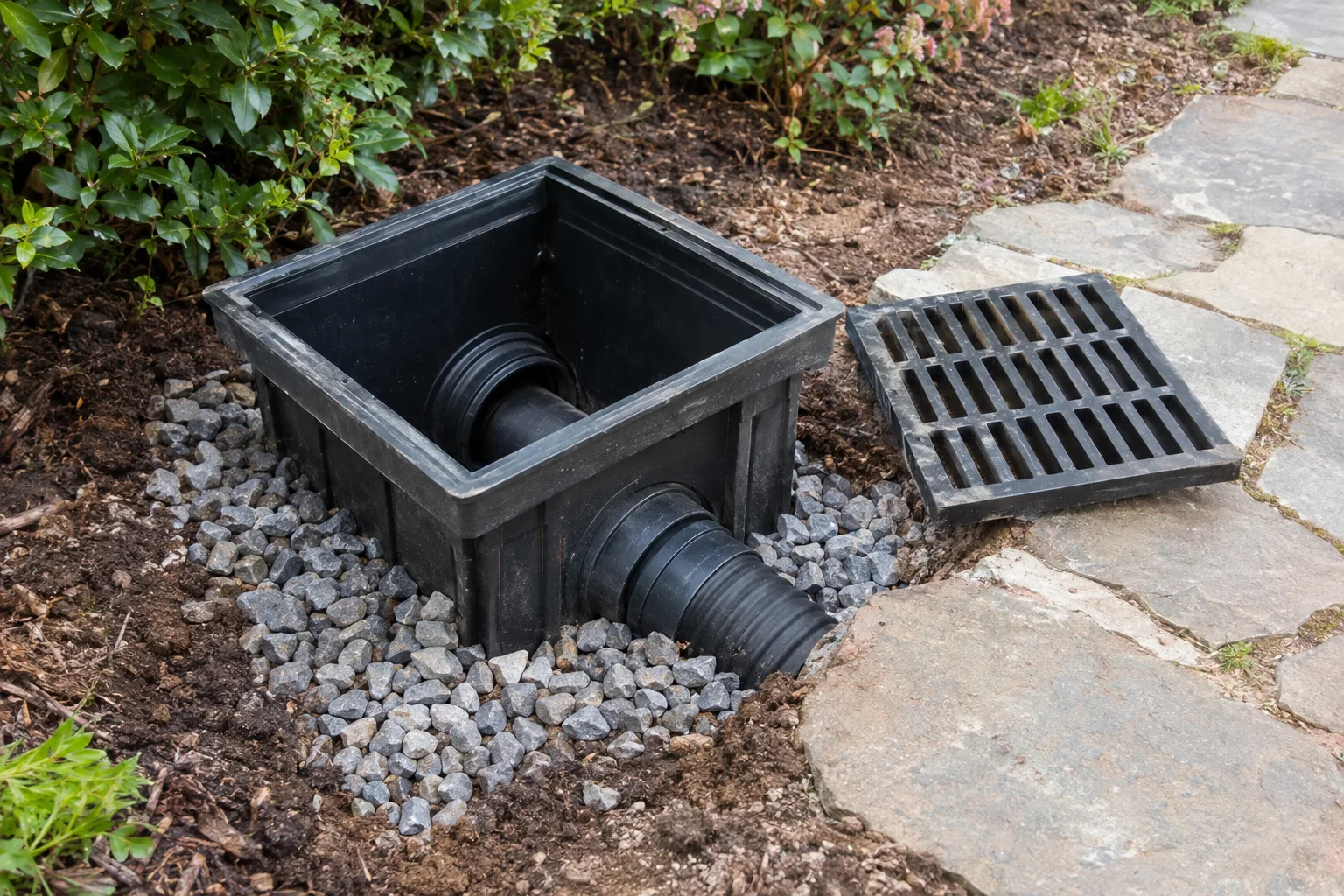
Check the roof water route
The gutter and downspout need to work before an extension can help. Overflow at the roof edge may point to a gutter issue; pooling at the bottom may point to the discharge location. The assessment follows both parts of that route.
Choose the pipe and outlet
Solid pipe is commonly used to transport roof water without releasing it into the soil along the way. The pipe size, bends, connections, and outlet need to account for the water coming from the connected roof areas.
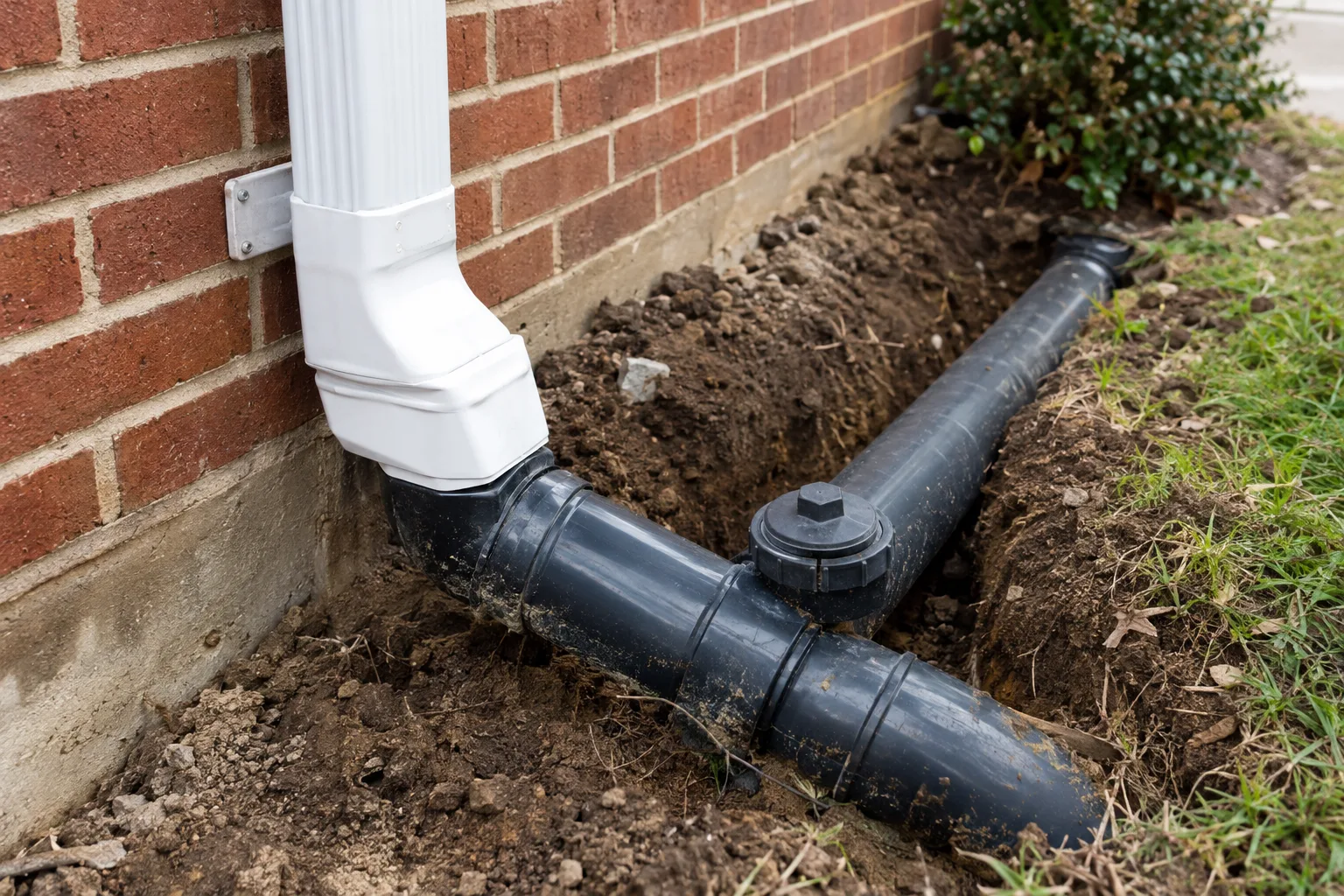
Plan the trench and connections
A buried extension needs a planned trench, suitable fall, and room to work around utilities, roots, and hardscape. The connection at the downspout and any cleaning access should remain reachable after the yard is restored.
Avoid an outlet that sends water back
Moving an outlet a few feet is not enough if water still flows back to the wall or into the same low spot. The receiving area needs to handle the discharge without creating erosion or a new wet area nearby.
Why buried downspouts back up
Leaves from the gutter, sediment, a buried outlet, or a damaged line can cause a backup. Several downspouts sharing a pipe can also place more demand on the line than the original layout allowed.
Allow access for cleaning
The route should allow debris to be removed without digging up the whole line. Accessible transitions and cleanouts may help, depending on the layout. The outlet should be easy to find and check.
What affects extension cost?
The number of downspouts, route length, depth, hardscape crossings, fittings, and outlet work all matter. The estimate should also explain how the trench will be backfilled and how disturbed lawn or beds will be restored.
Keep roof runoff and groundwater in mind
A downspout line carries collected roof water. A perforated French drain collects water from the surrounding soil. Combining those jobs without considering the flow and outlet can leave a system doing neither very well.
Separate the roof problem from the yard problem
We start at the roof edge and follow the discharge down to the ground. Water spilling over a gutter before it reaches the downspout is a different problem from a working downspout emptying beside a wall. A buried extension addresses the second route; it does not repair the gutter above it. Tell us whether the problem happens during every shower or only when rain is heavier. Photos of the ground-level discharge can help explain the pattern without anyone climbing a ladder during a storm.
The amount of roof feeding each downspout matters when several outlets are being combined. A line serving one short extension should not be assumed suitable for additional roof areas. We review the proposed connections, bends and final destination together. In a narrow Arlington side yard, routing several downspouts may also compete with air-conditioning equipment, gates, utilities and planting beds. The shortest route on a drawing can be the hardest one to install or maintain once those obstacles are considered.
Keep a buried extension serviceable
A good connection is secure but still allows the drainage route to be inspected or serviced where needed. We discuss how leaf debris will be kept from accumulating in inaccessible sections and where cleaning access belongs. An extension hidden beneath a new patio is much harder to investigate than one with a reachable access point. The outlet also needs a known location. Covering its end with sod or mulch can make a previously useful line back up at the downspout.
We look beyond the pipe end when choosing the discharge point. Water leaving onto a steep bare patch can wash soil away, and an outlet in a flat hollow may simply create another puddle. A route that sends water back toward the house defeats the purpose of the extension. We compare available receiving areas and discuss how the ground will be restored around the chosen end. Where no suitable gravity route exists, that limitation needs to be resolved before committing to excavation.
For an existing buried extension, the visible downspout connection can conceal several different faults. A loose joint, settled pipe, root entry or obstructed terminal can each reduce flow. We assess the accessible route before deciding between cleaning, a local repair and a replacement section. If you know where an old line runs, keep that information available even when the outlet cannot be found. A rough location and the history of the backup can narrow the investigation and reduce unnecessary disturbance.