

Choose from the water problem you can see
We offer drainage installation, repair, inspection and maintenance for Arlington homes and commercial properties. You do not need to identify the correct drain before contacting us. Tell us where water appears, whether it moves across a surface or stays in the ground, and what part of the property it affects. Those observations help us narrow the first checks. The service list describes different parts of the work, but the plan for a property may combine more than one of them.
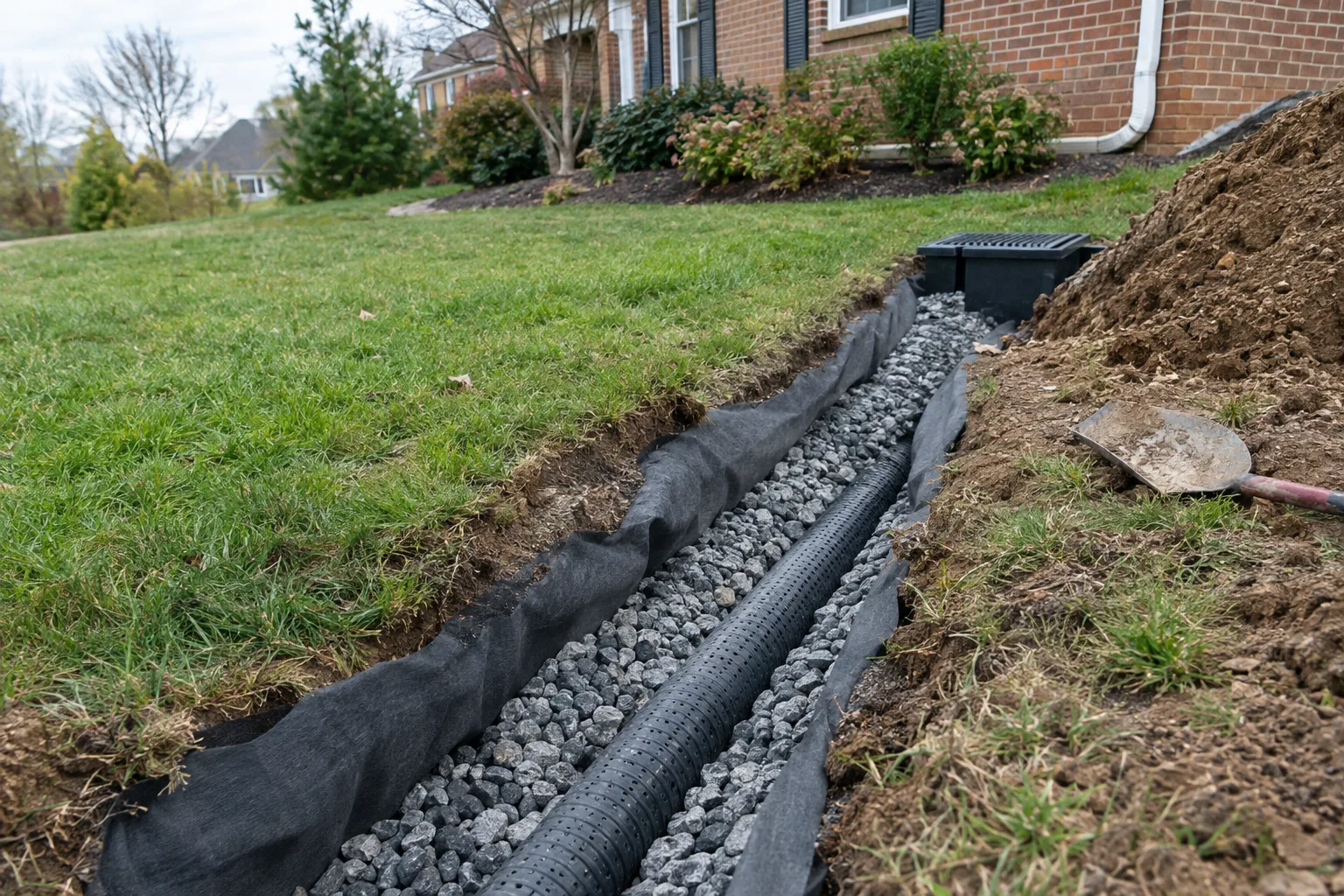
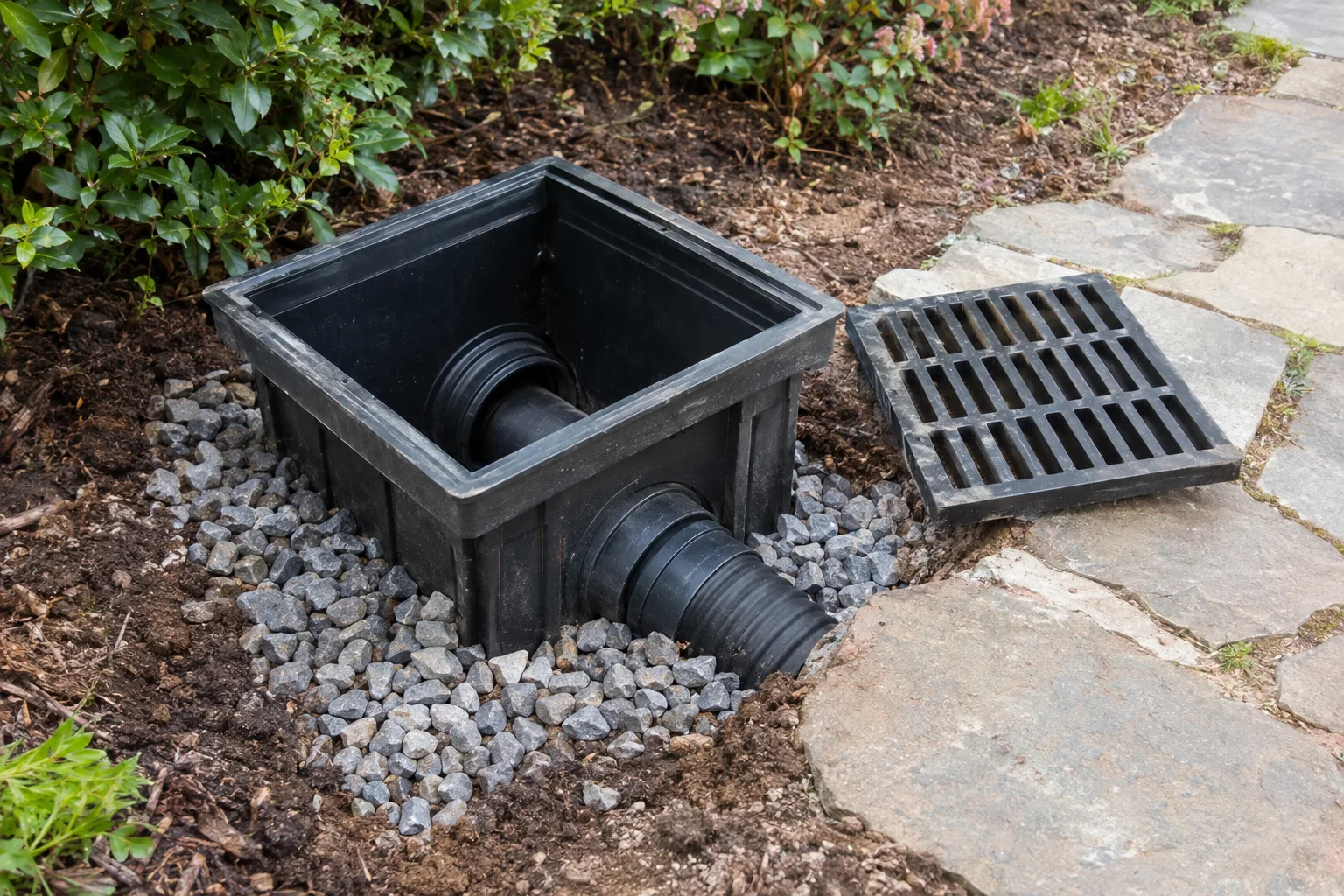
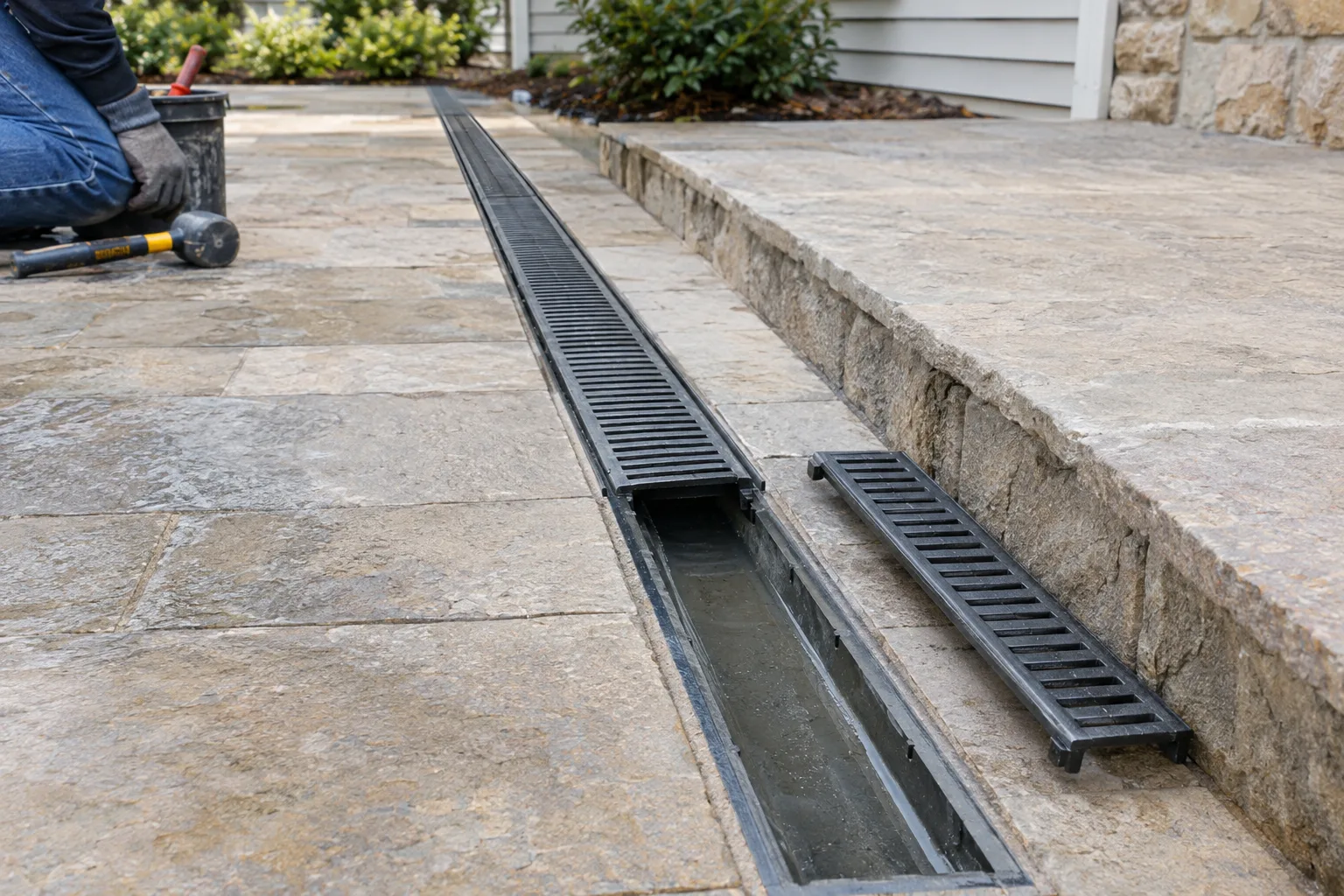
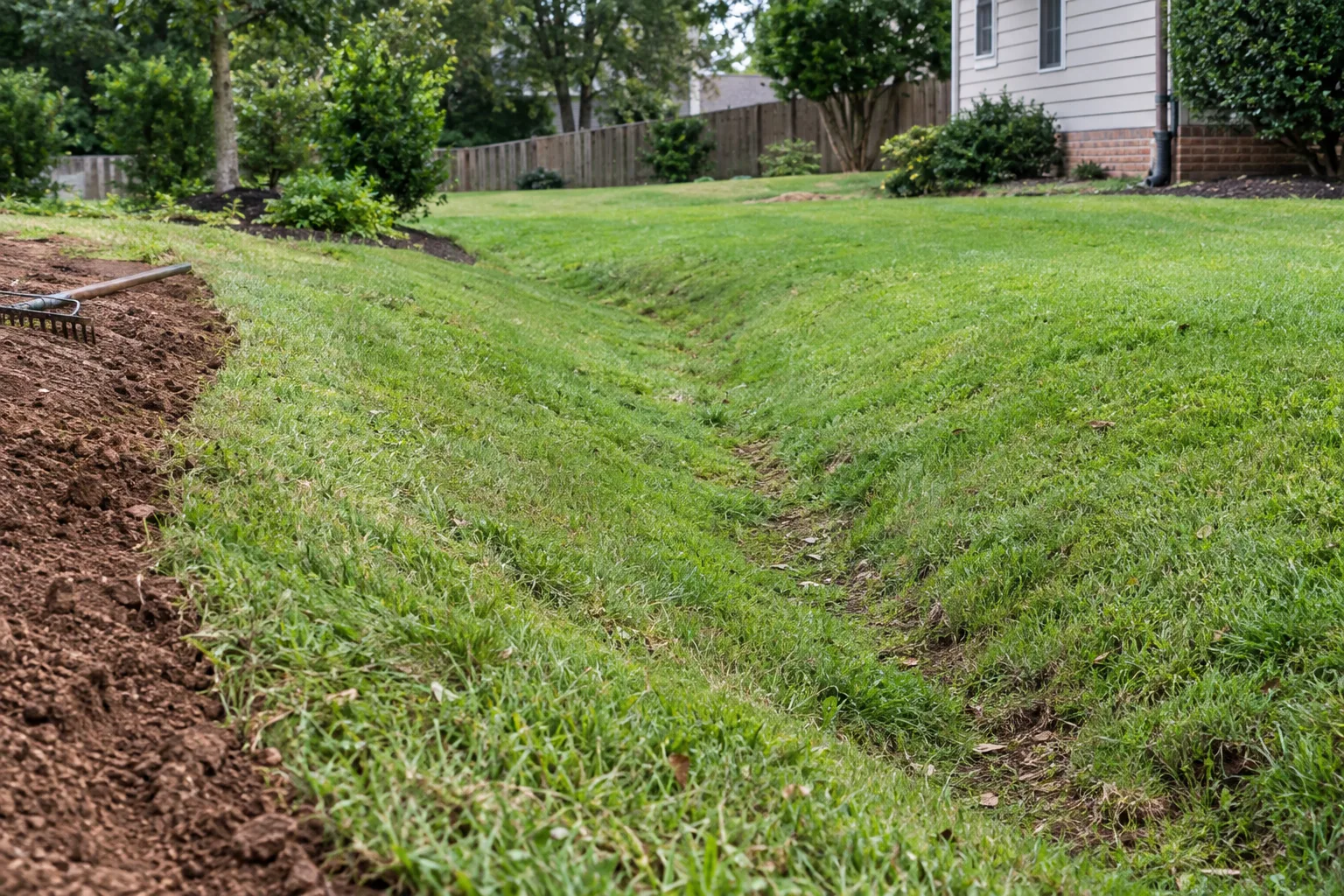
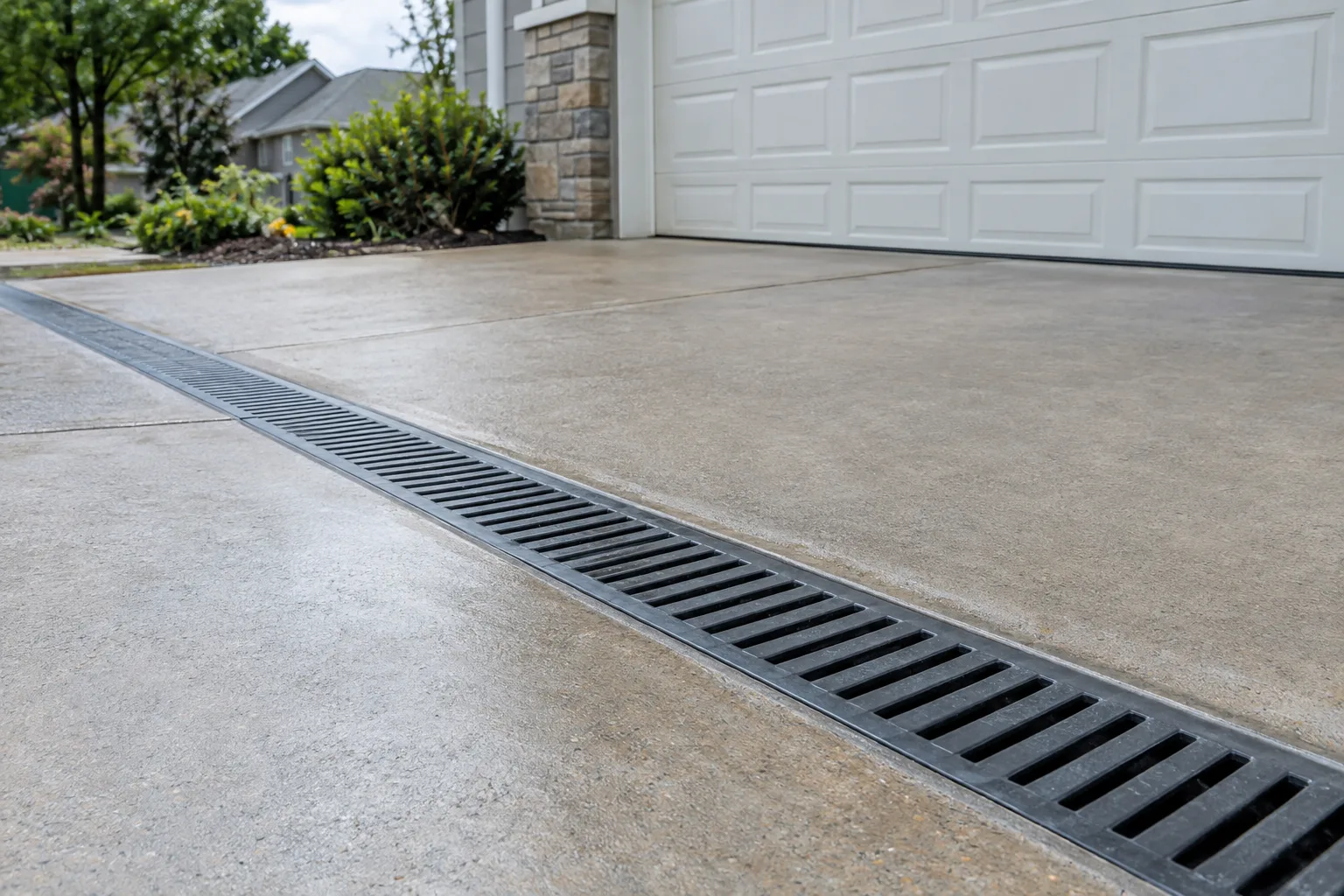
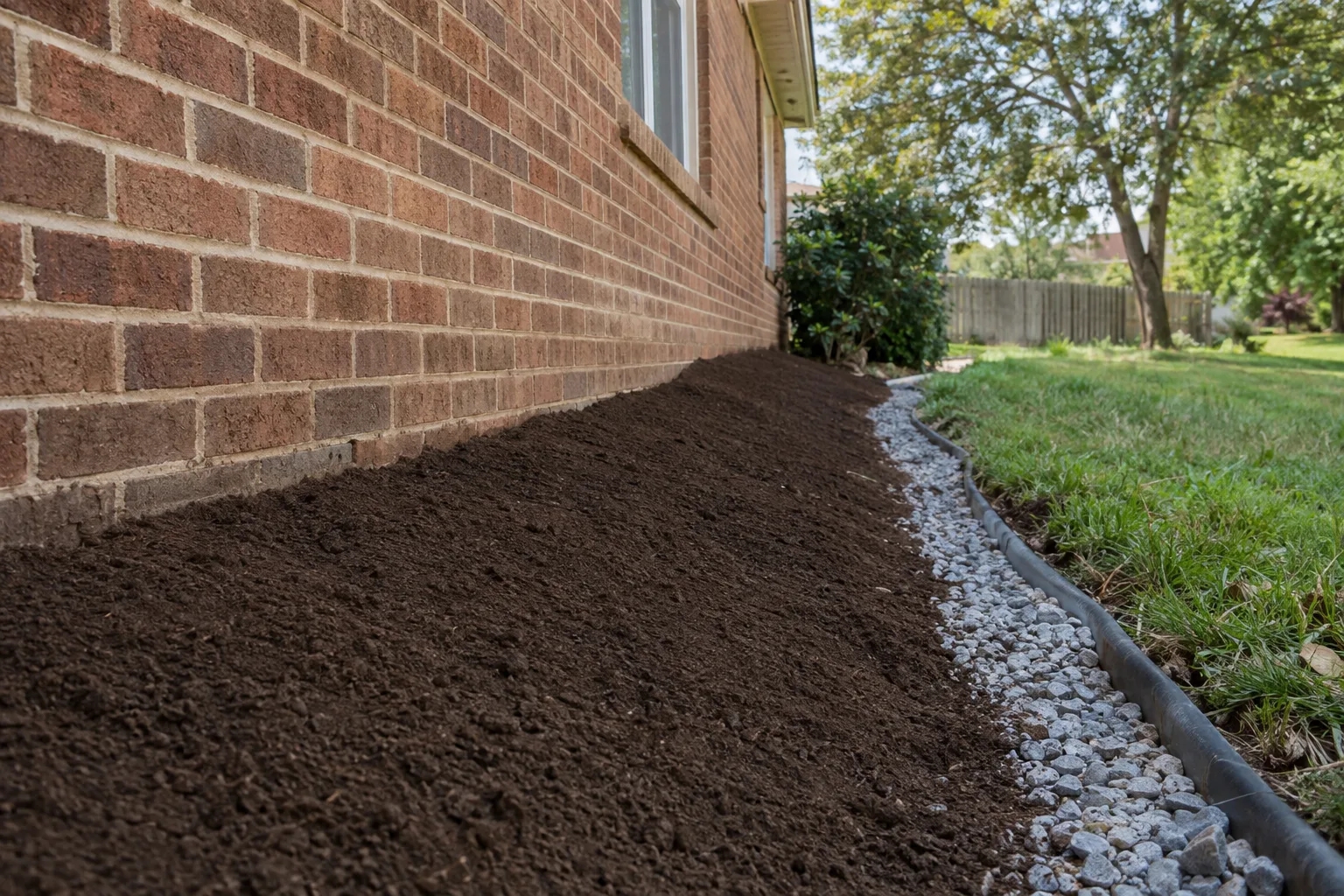
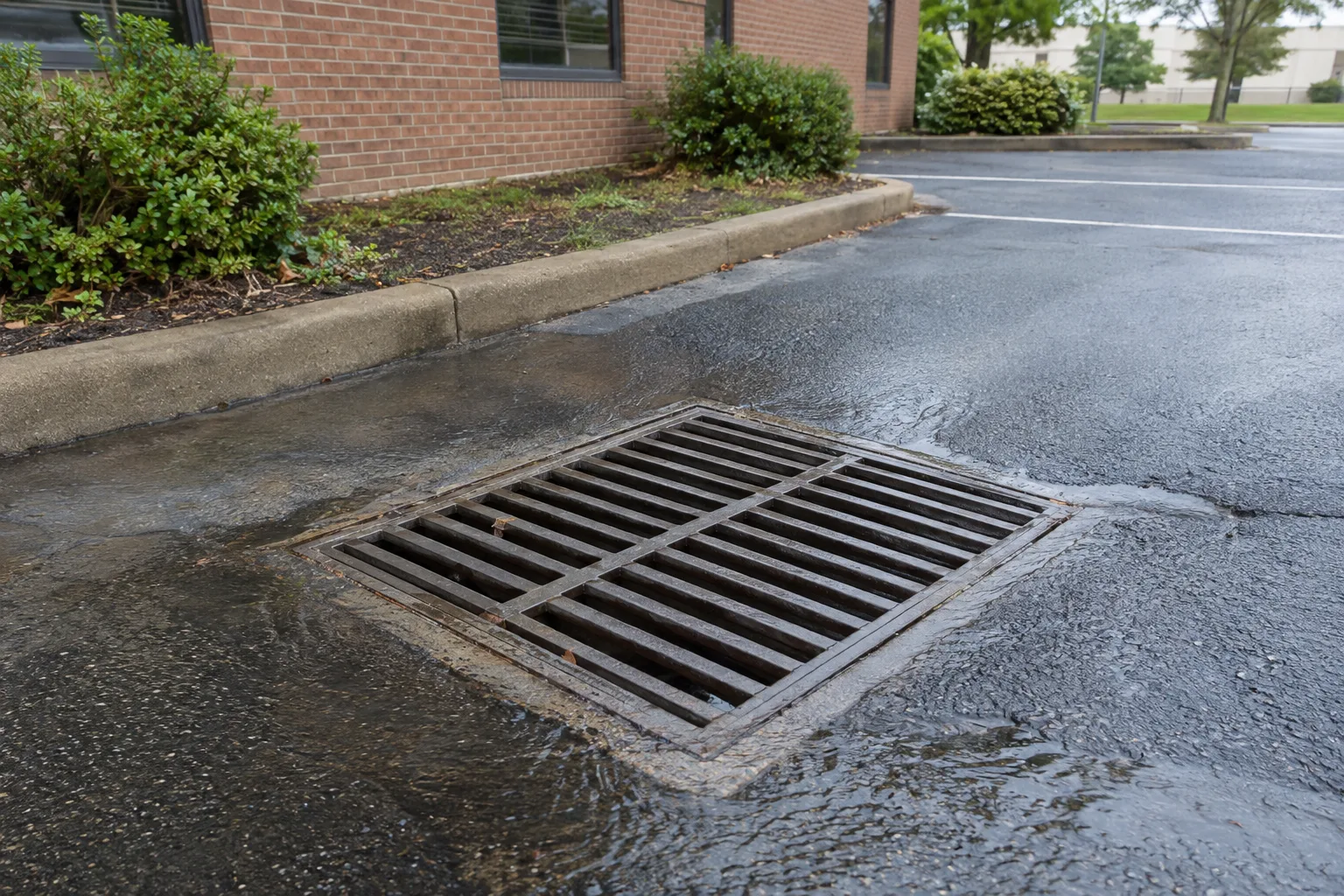
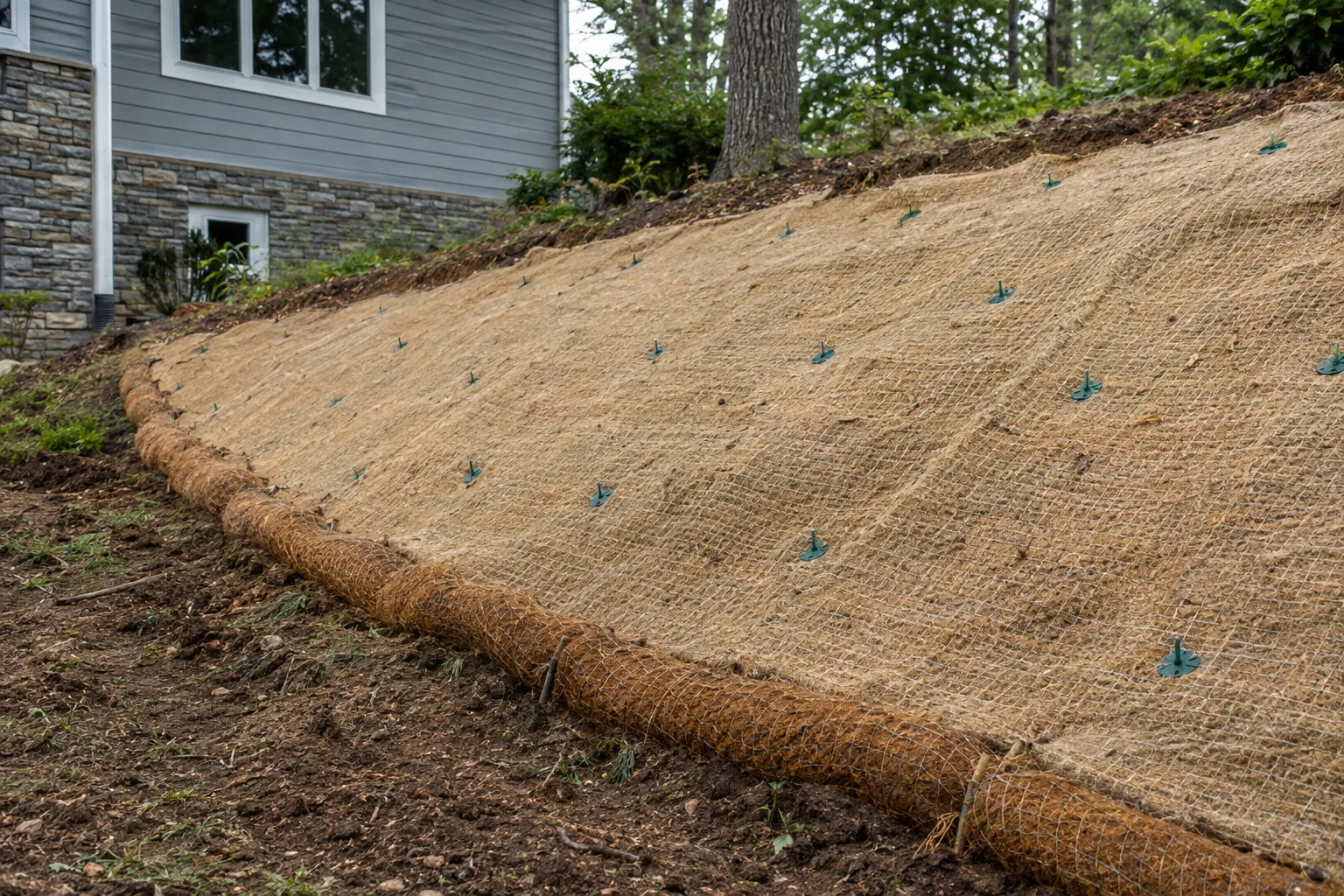
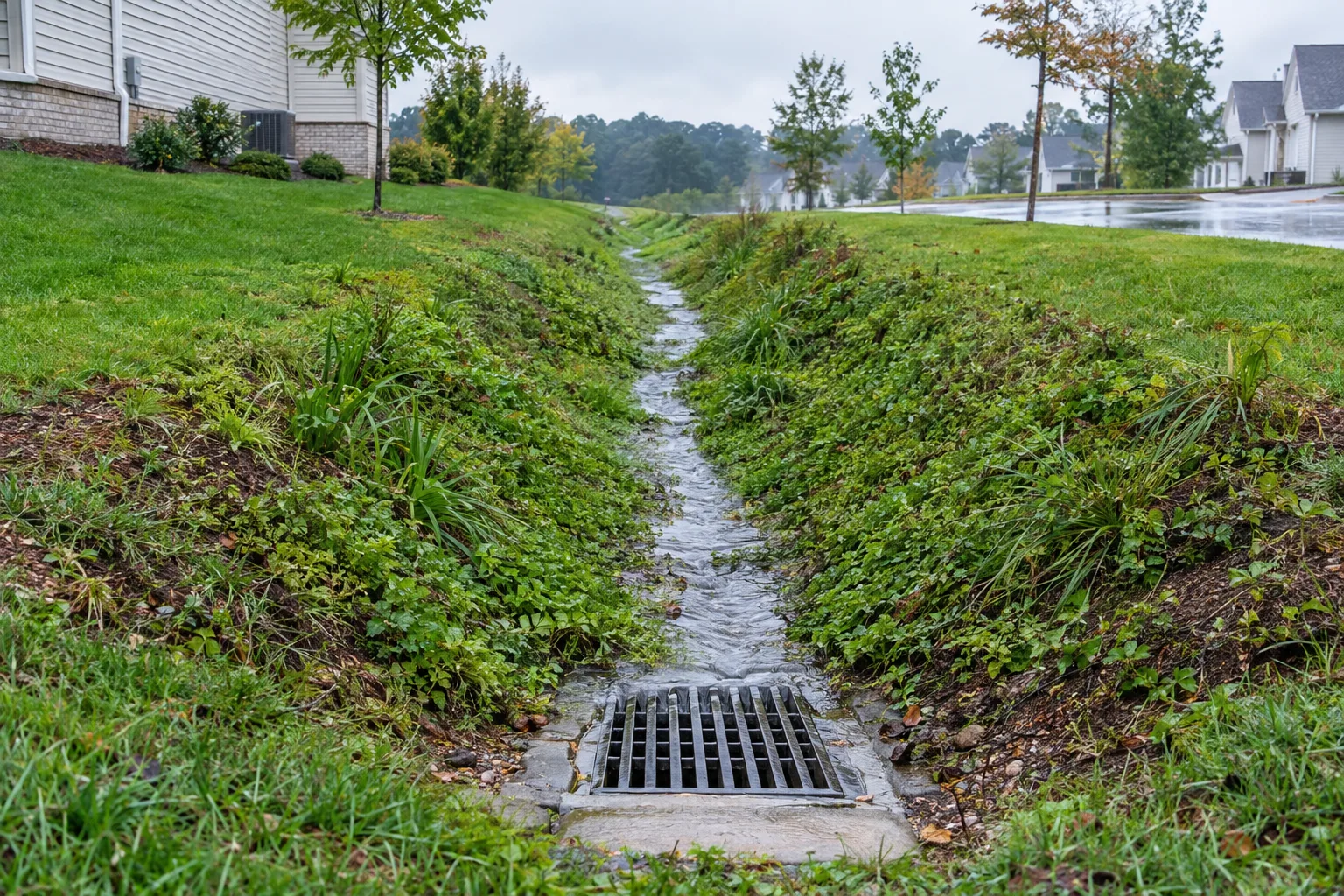
For runoff moving across lawns and paving, we compare surface grading, swales, catch basins and channel drains. Grading changes the route over the ground. A basin collects at a point; a channel intercepts along an edge. French drains serve a different role by collecting water within soil. We explain that distinction because installing a familiar product is not the same as addressing the source of a puddle. The collection method needs to match how the water reaches the affected area.
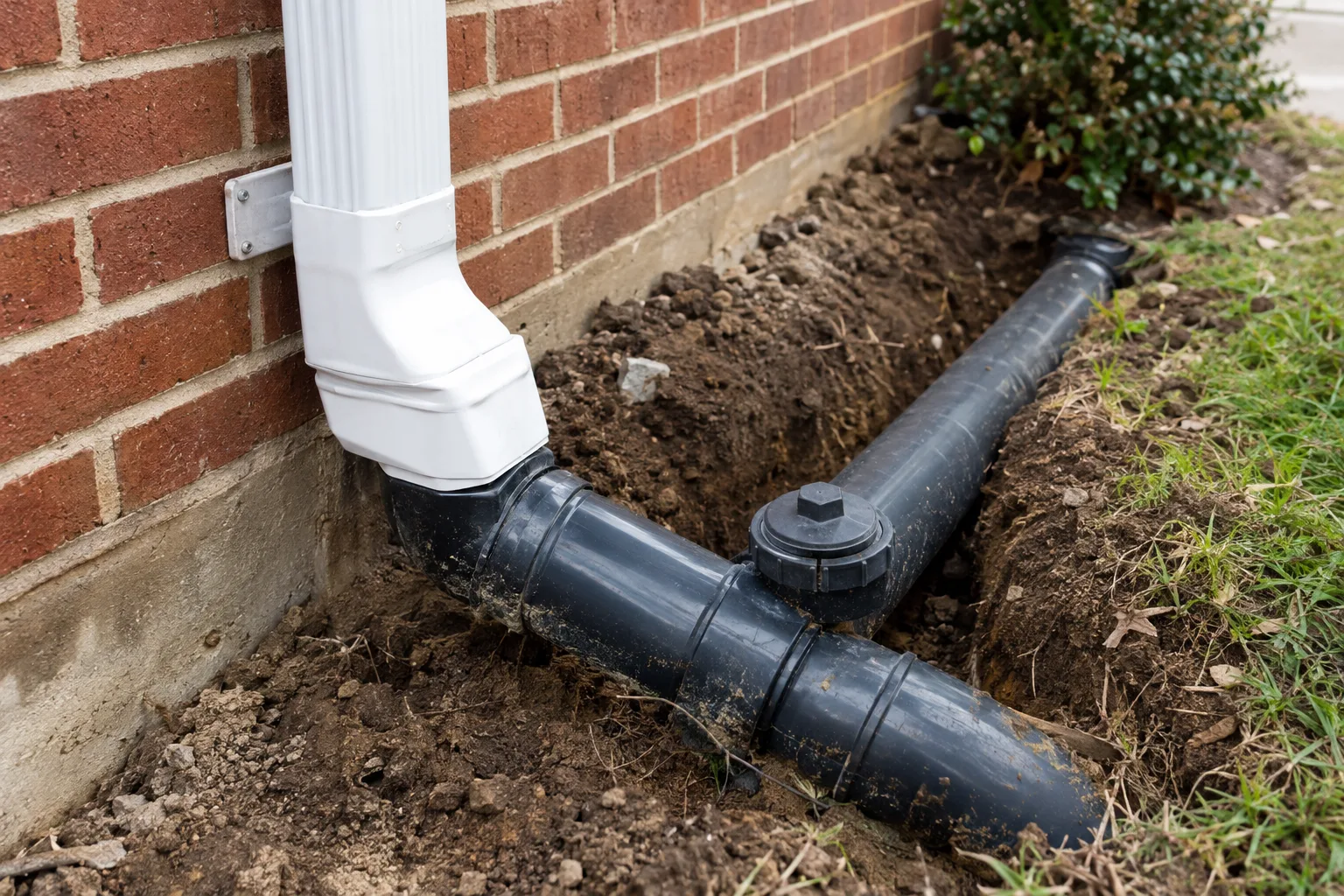
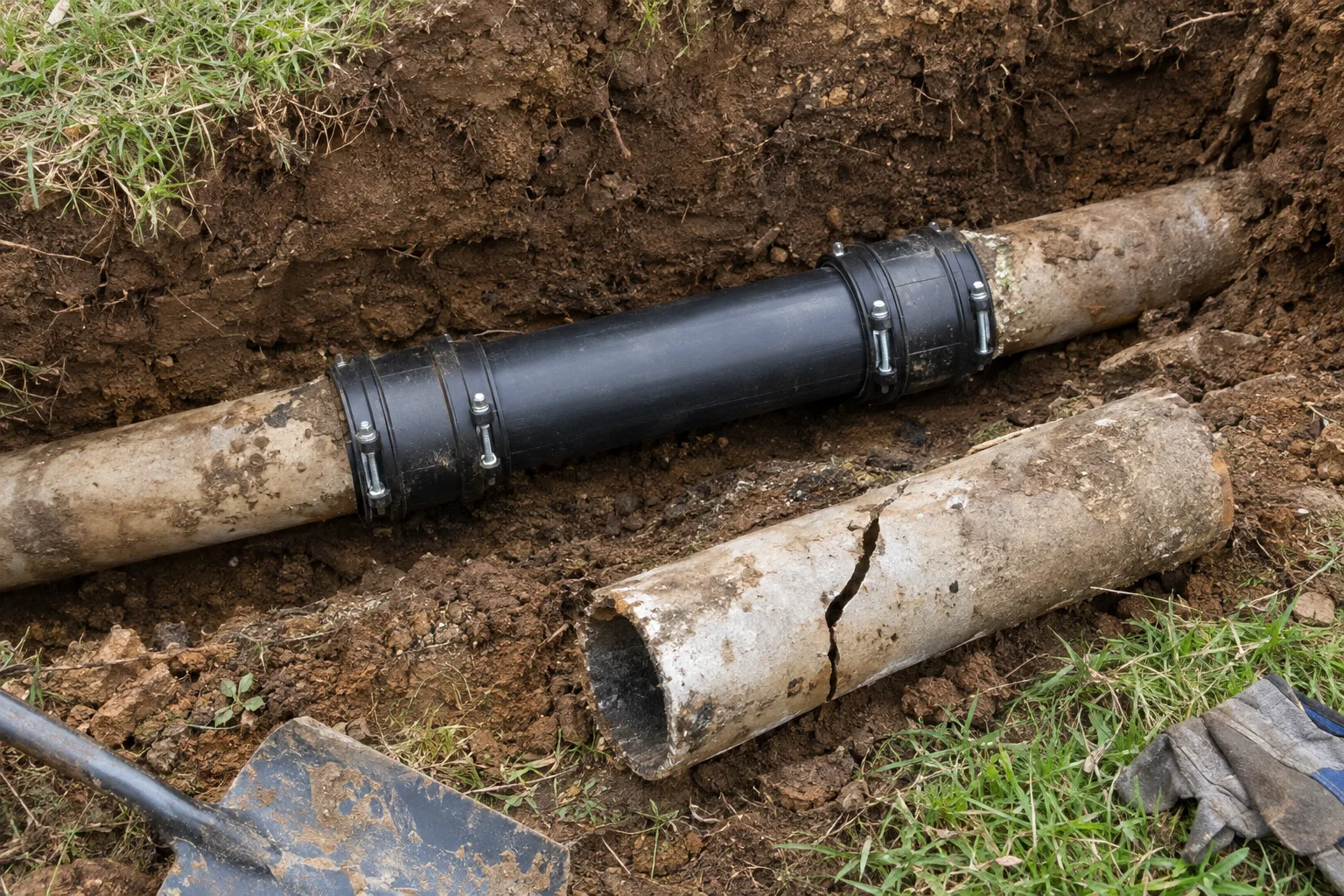
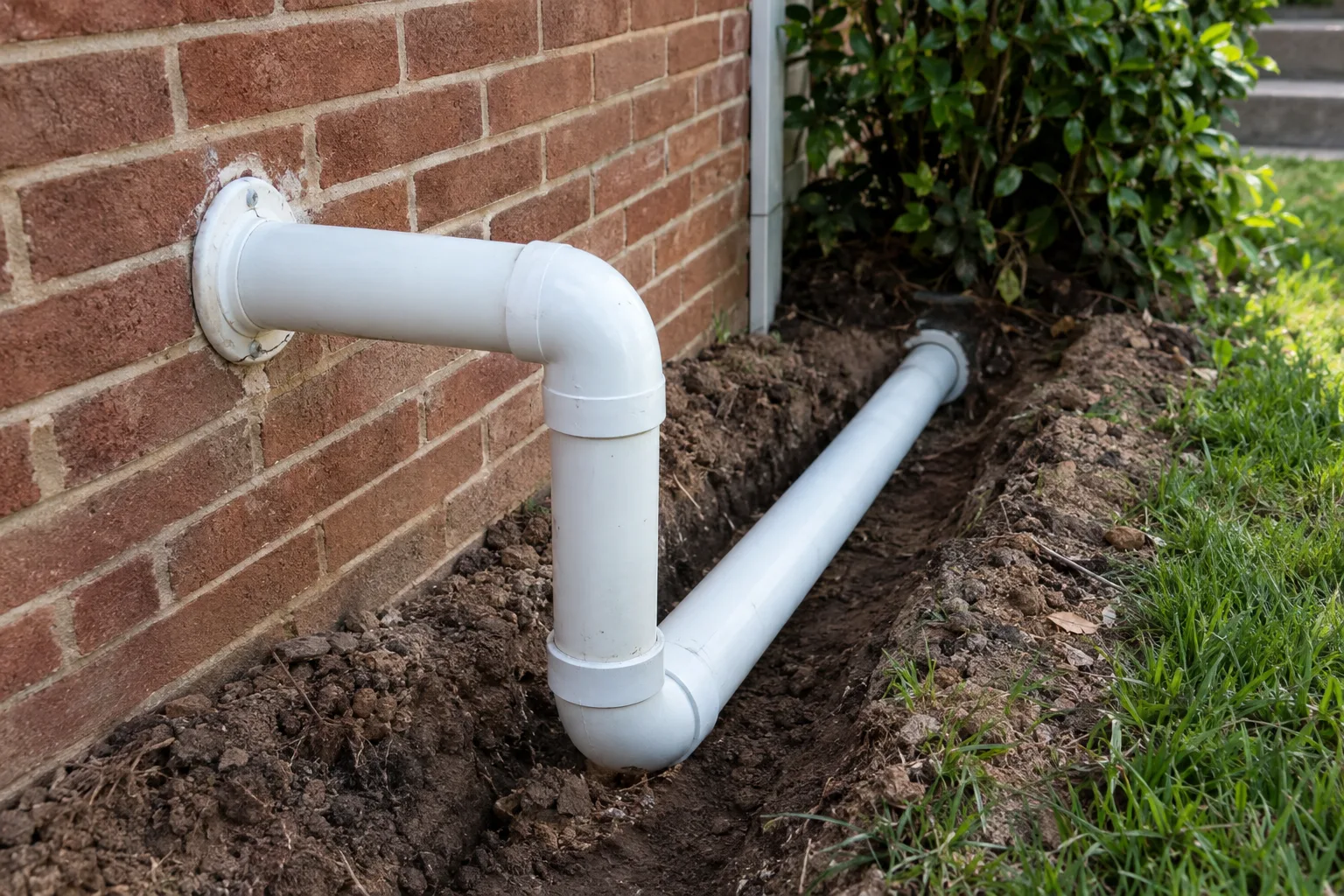
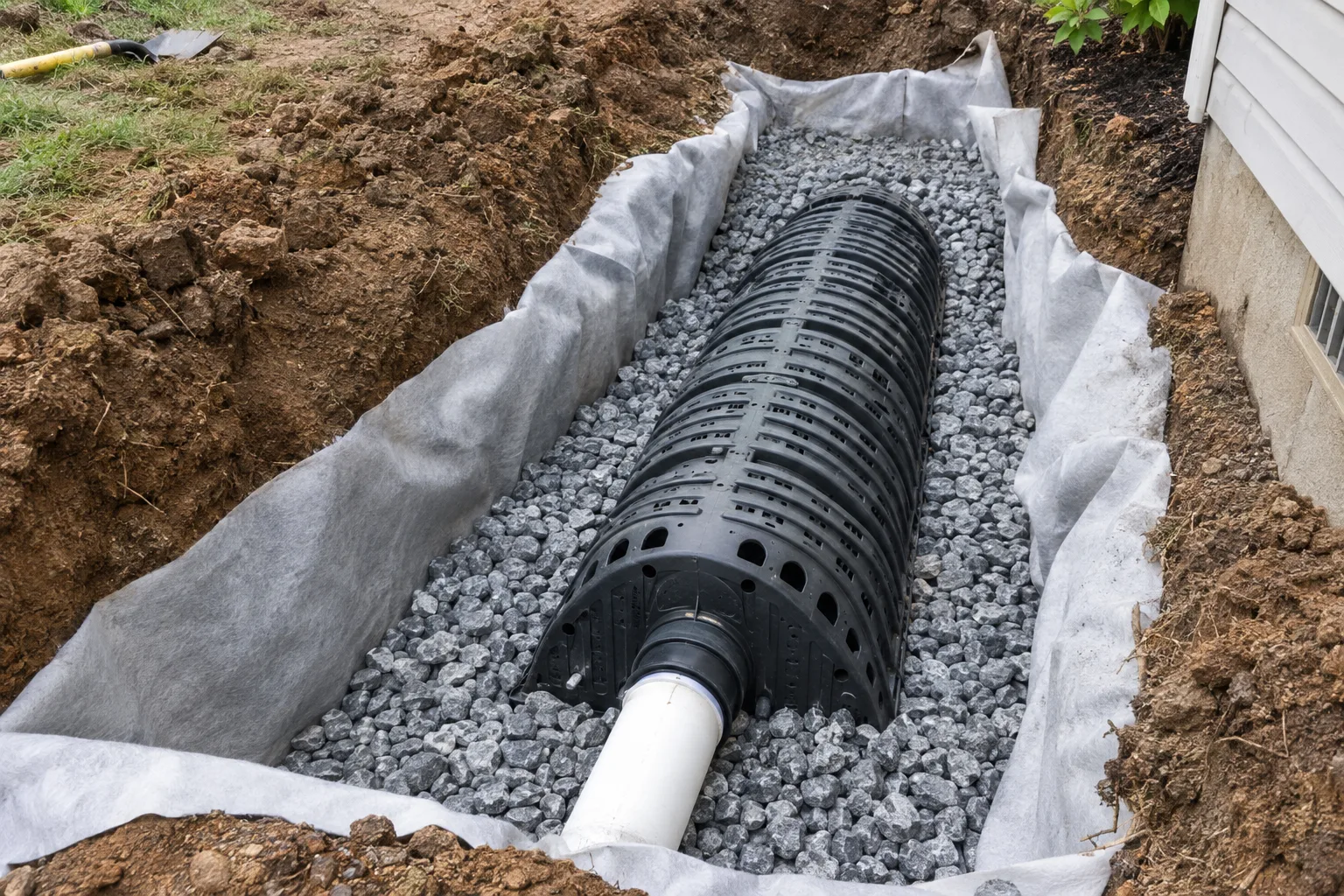
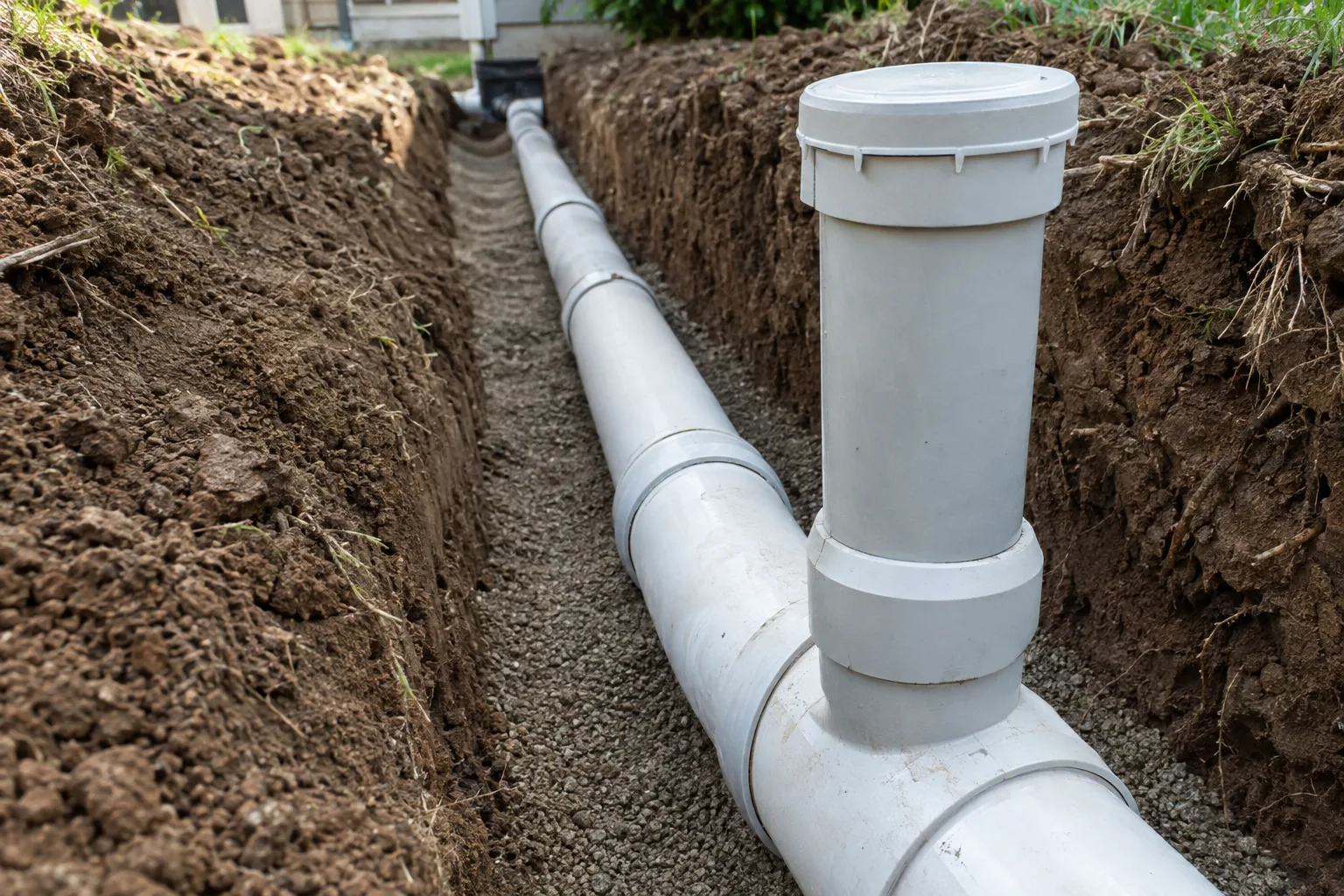
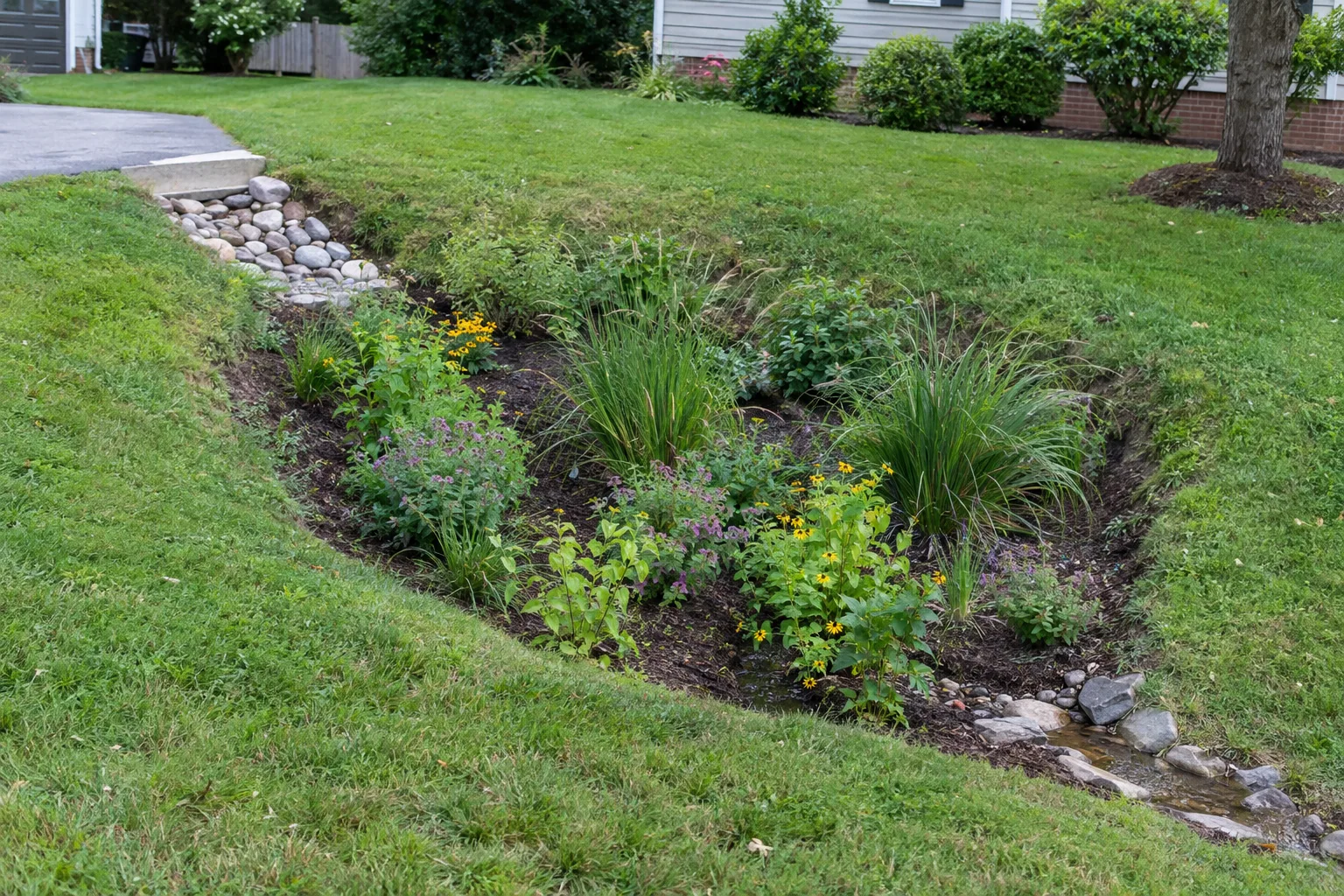
Downspout extensions and underground solid lines transport water that has already been collected. Their routes need suitable fall, connections and an outlet that remains usable. Dry wells and rain gardens depend on infiltration instead, so the receiving soil and overflow route need assessment before those options are selected. We do not treat underground storage as an automatic answer for every wet yard. Each method has limits, and the proposal should explain why the property supports the approach being recommended.
Existing systems deserve an assessment before replacement
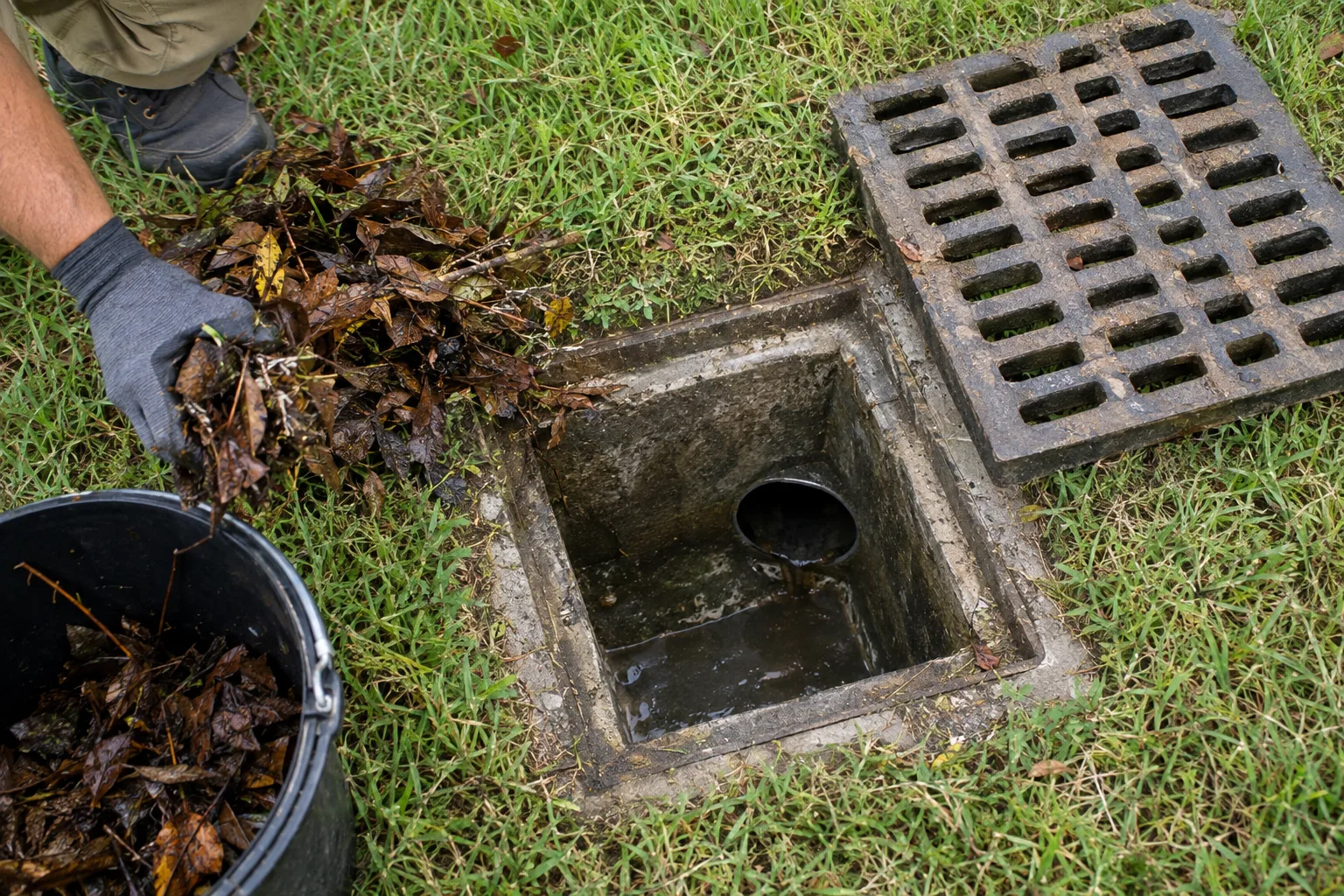
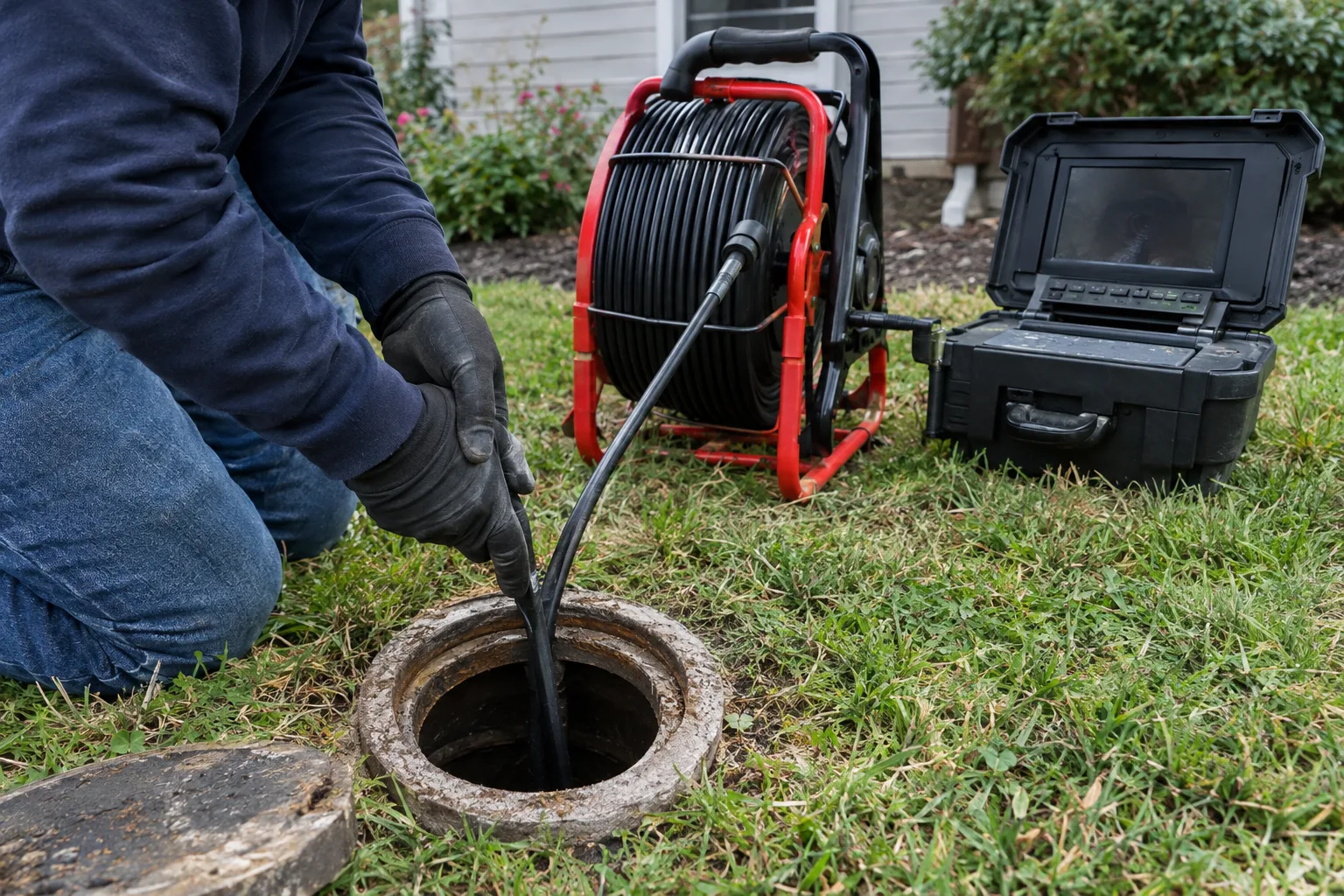
When a drain backs up, we distinguish routine buildup from damaged components and problems with the original layout. Cleaning can remove accessible debris. Repair can correct an identified defect while preserving usable sections. A route with too little fall or an unsuitable outlet may need a different plan. The history matters: tell us whether the system ever worked, what maintenance has been attempted and whether the trouble followed new paving, landscaping or a change to roof discharge.
Access and restoration are part of every scope. A shallow line in open lawn differs from work under a driveway or beside a house with utilities and equipment in the way. We discuss the affected area, the route for excavation and the finish after the ground is closed. Commercial projects also need to account for entrances, deliveries and traffic. The estimate should connect those details to the proposed drainage improvement so you can compare complete scopes instead of isolated prices for pipe or grates.
A drainage assessment can also show where separate expertise is needed. Structural movement, electrical problems with pumping equipment and certain broader stormwater changes extend beyond an ordinary yard-drain installation. We keep those boundaries clear while explaining the drainage portion of the work. Your next step may be maintenance, a local repair, additional investigation or a new system. The useful result is a clear reason for that recommendation, with the water source and receiving route understood before construction begins.