How a French drain works
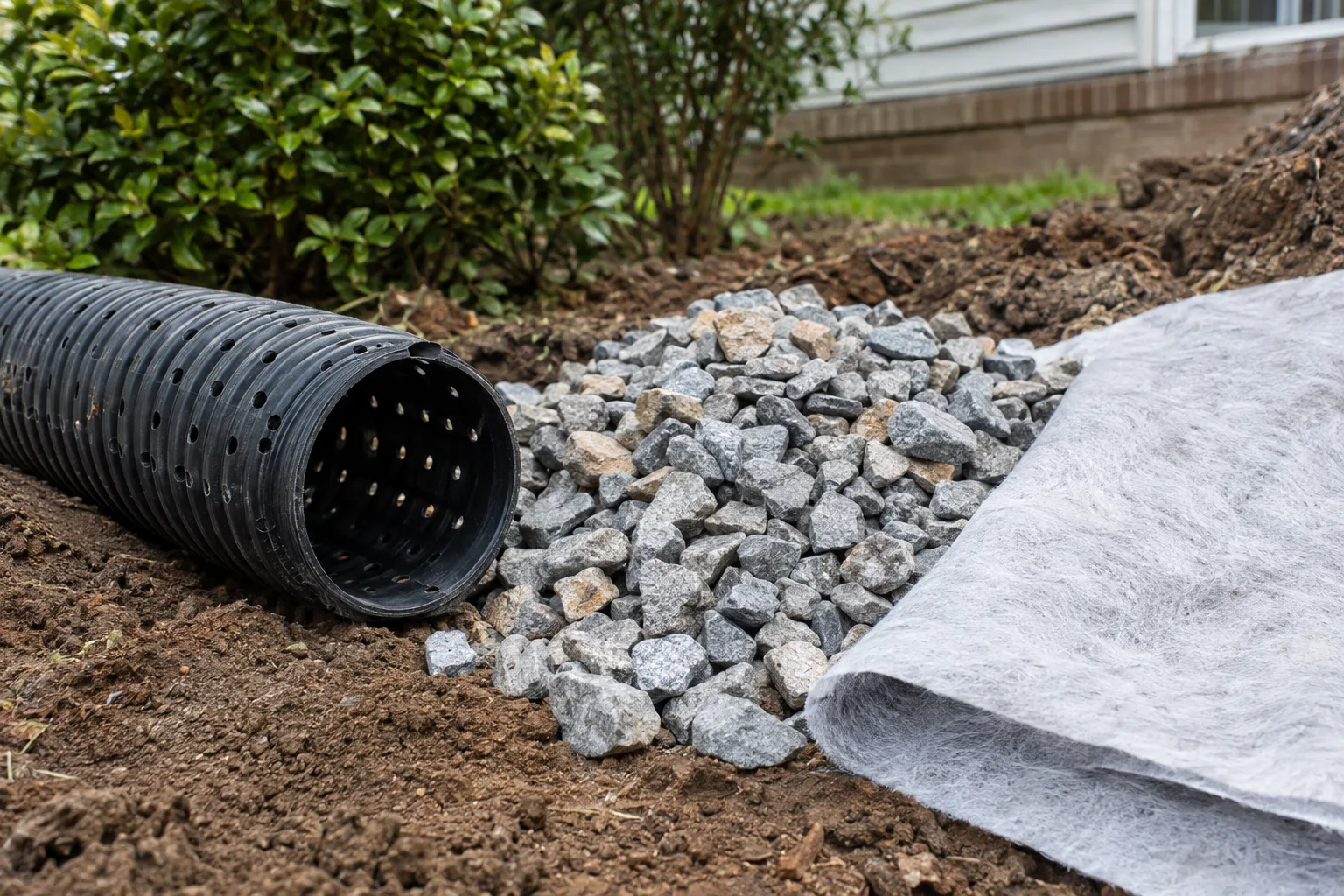
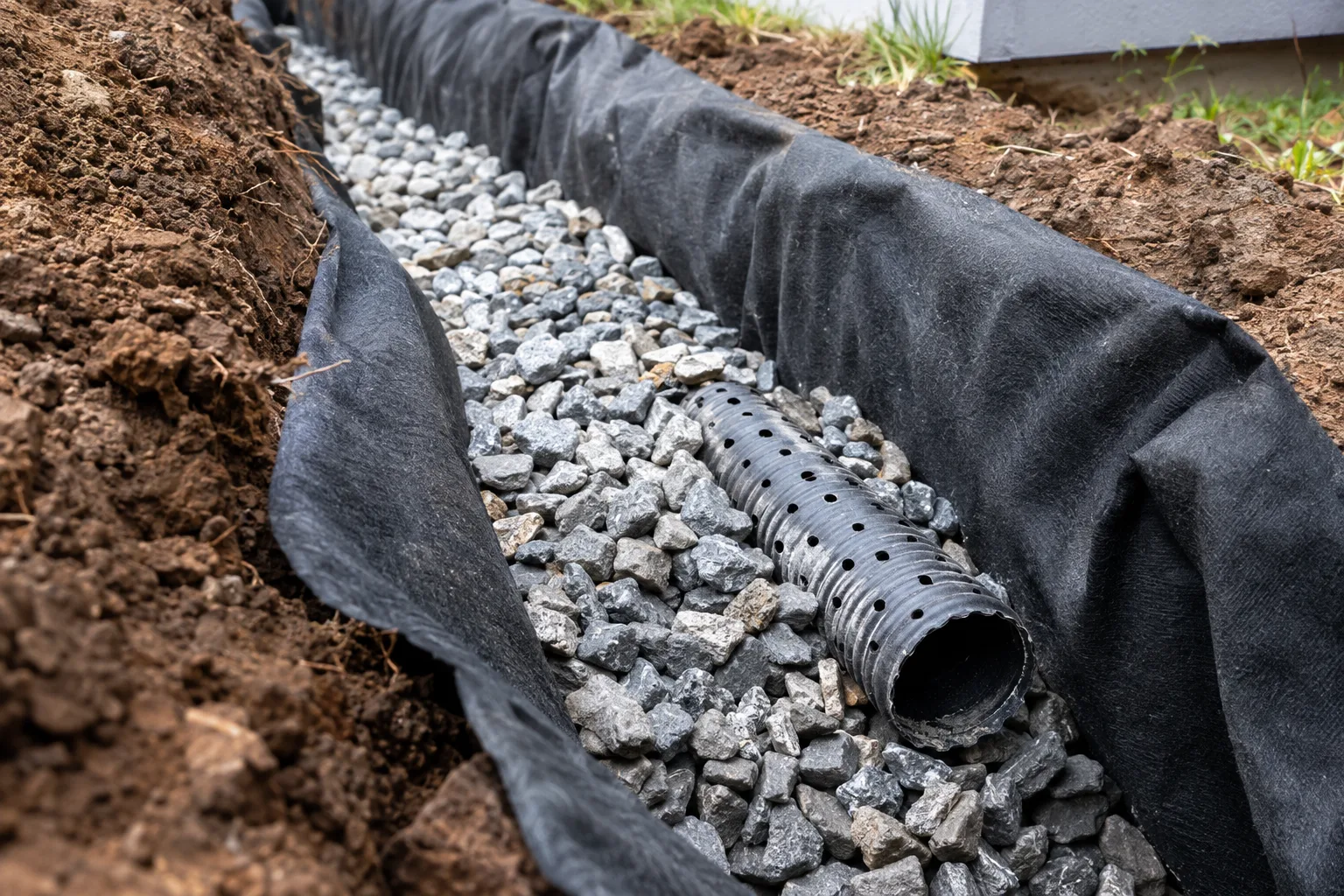
A typical French drain uses a gravel-filled trench and a collection pipe, often perforated along the section intended to capture subsurface water. The aggregate creates space for water to move toward the pipe; the surrounding filter arrangement is designed to limit sediment intrusion. Collected water then needs a pipe route to an appropriate outlet. The exact arrangement depends on soil, expected flow, trench elevation, pipe type, and available discharge options.
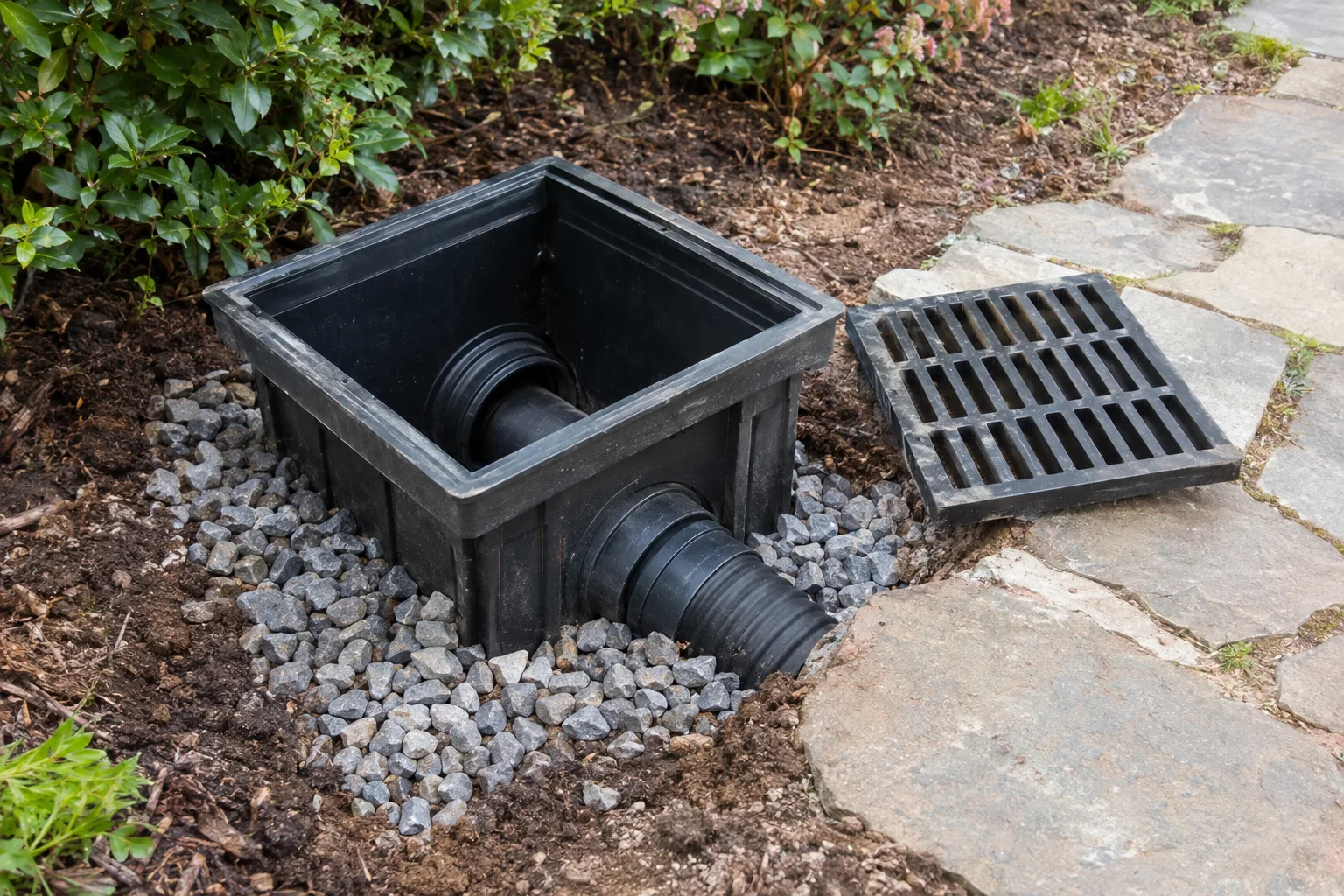
A French drain should not be confused with a buried solid pipe carrying roof runoff away from a downspout. A solid pipe is usually intended to transport water without collecting groundwater along its route. Nor is a French drain the same as a trench or channel drain: those are typically surface inlets that collect runoff along a driveway, garage threshold, or paved edge. These distinctions matter because using the wrong collection method can leave the original wet spot unchanged.
Is the wet area caused by groundwater or runoff?
We inspect the pattern, starting with where water arrives and how long it stays. Does water flow visibly across a slope and settle in a low lawn area? Are multiple downspouts concentrating water in one bed? Is the soil persistently soft next to a retaining wall or foundation even after surface water has drained? Are there old underground lines, buried obstructions, or nearby changes to grade?
We also check where the collected water would go after leaving the trench. If a proposed trench has no workable outlet, collecting more water underground may create a different problem. In some settings, regrading or adding properly positioned surface inlets is more direct. On other properties, a dedicated subsurface drainage line may be justified, sometimes alongside other improvements. We choose the collection method from those findings and the available outlet.
Planning the collection and discharge route
French-drain performance depends heavily on elevations. The collection zone must be positioned where it can intercept the unwanted subsurface movement. The pipe route needs appropriate grade or another engineered means of moving the water. Before excavation, we identify utilities, obstructions, hardscape crossings, trees, access restrictions, and the likely restoration footprint.
A proposed outlet is not automatically acceptable simply because it is downhill. Discharge may be constrained by property boundaries, drainage easements, local rules, erosion concerns, or neighboring properties. We identify the intended destination and any permissions or professional review needed before construction. We also plan access for later inspection and cleaning.
What installation involves
Once we have confirmed the water source and outlet, we plan the work around utility-location coordination, layout and elevation checks, excavation, preparation of the collection trench, placement of an appropriate filter and aggregate system, and installation of the drainage pipe. The collection section is then connected to its discharge route, inspected as appropriate, backfilled, and restored. Site conditions can change this sequence, particularly around foundations, buried services, paving, or restricted access.
The details are important. A drain installed at the wrong elevation may not intercept the water causing the problem. An unsuitable filter arrangement can permit fine sediment to migrate into the collection zone. A pipe without a functional discharge route can hold water rather than move it away. Likewise, replacing an old pipe will not fix a system that was incorrectly routed in the first place. Installation quality starts with a credible plan.
How soil affects the design
Arlington is not one uniform soil type. The broader area includes soils with different infiltration and drainage behavior, and individual lots can vary because of grading, fill, compaction, and previous development. Clay-rich soil in one yard and more freely draining material elsewhere should not be assumed to behave the same way. An installation copied from a nearby house may fail to account for the conditions on your property.
This is particularly important when considering whether water can soak into the ground or should instead be conveyed to a designated outlet. A French drain is an interception and conveyance approach, not a guarantee that the site can absorb unlimited water. Any suggestion that it discharge into an infiltration feature, such as a dry well, needs a separate suitability assessment. Local municipal requirements and property-specific conditions should be checked before choosing a discharge method.
When another drainage solution makes more sense
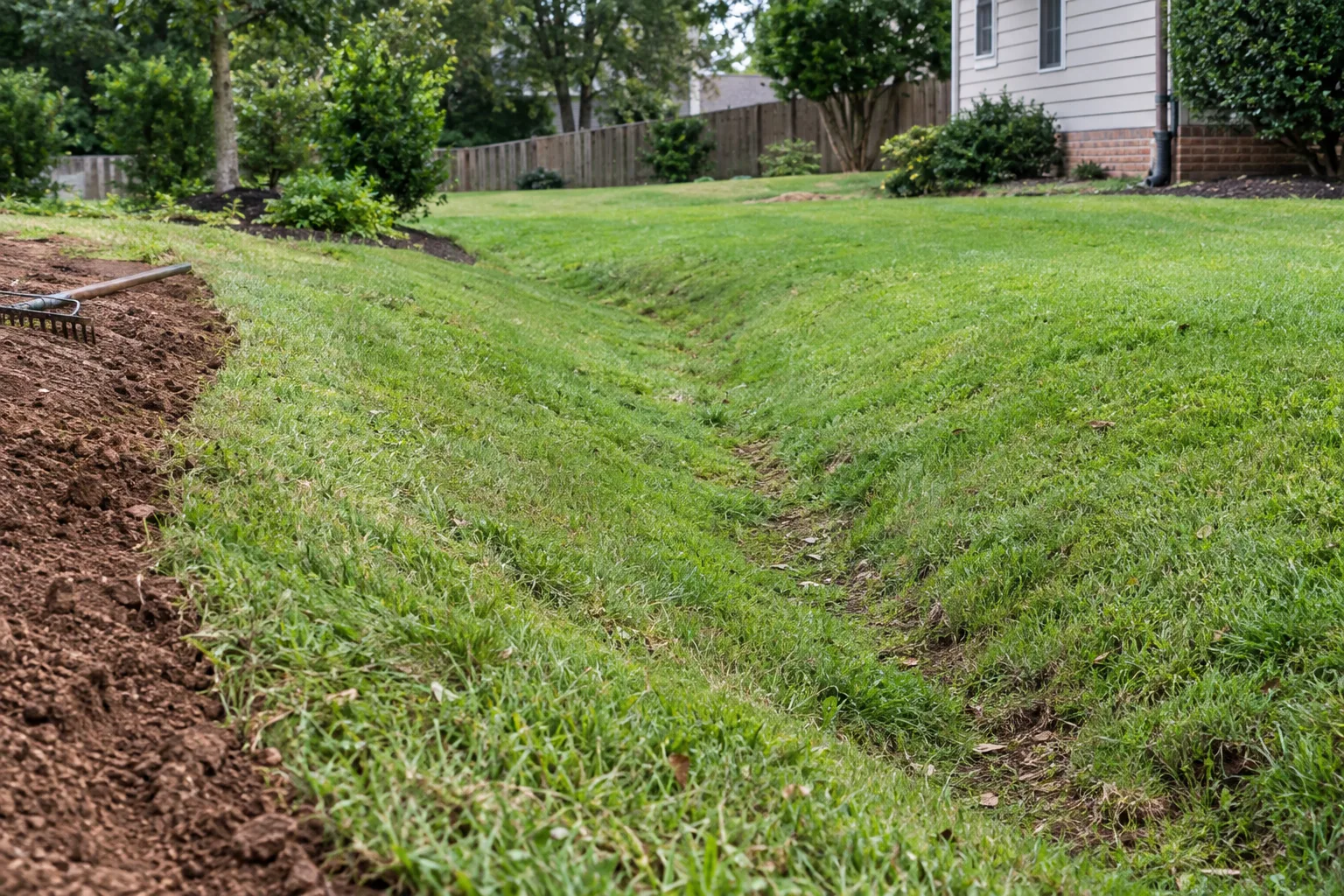
If rainwater rushes off a patio or across a driveway, a channel drain, catch basin, or revised grading may address the actual path of flow better than a subsurface collection trench. A downspout depositing water at the foundation may call for a roof-water pipe route. A depression in the lawn may need reshaping and a safe outlet. Sometimes a combined solution is justified, but separate problems should not be blended into one generic recommendation.
We explain why the proposed collection method fits your property before you agree to excavation. If the primary cause remains uncertain, additional observation or evaluation is preferable to committing immediately to excavation.
Why existing French drains fail
A failed system is not always a failed pipe. Fine sediment can reduce the permeability of the collection aggregate or enter the pipe. Roots, crushed sections, changes in grade, and obstructed outlets can also impair performance. Some systems were installed too high or too far from the subsurface water they were meant to intercept. Others are simply asked to handle surface runoff that should have been collected elsewhere.
When we troubleshoot an existing French drain, we start with its symptoms, accessible components, discharge point and original route if known. Cleaning may help an accessible blockage; rebuilding a failed collection zone or rerouting the line may be necessary in other cases. We explain both the defect found and the reason it may have developed, so the repair addresses more than the visible symptom.
What affects the cost of installation?
Length alone doesn't explain a drainage estimate. Trench depth and accessibility, obstructions, excavation method, pipe and filter materials, the need to cross hardscape, soil handling, discharge requirements, and landscaping restoration can all influence the scope. A straightforward open-lawn route is different from work alongside paving, utilities, large roots, or a sensitive foundation edge.
Compare written proposals on the proposed water source, exact collection area, route to outlet, materials, site restoration, inspection access, and any exclusions. Unexplained estimates based solely on linear footage can conceal important differences. The local planning ranges in our cost guide help with budgeting; we confirm the route, access and restoration before preparing a property-specific estimate.
What to include in the estimate
Ask what evidence shows the water is moving through soil rather than simply running over the surface. Ask where it will be intercepted, what elevation is available, and where collected water will be discharged. Clarify whether the proposed work includes downspout connections, paving replacement, soil removal, lawn restoration, and future access for maintenance. Finally, check who is responsible for identifying relevant utility, property, and discharge restrictions. Those questions make competing proposals easier to evaluate and reduce the risk of installing the wrong system.