Where is the water coming from?
The puddle shows where water ends up, but not always where it starts. Roof runoff, a higher part of the yard, paving, or irrigation can feed the same low spot. When the water appears and how long it stays help narrow down the cause.
Choose the right way to collect water
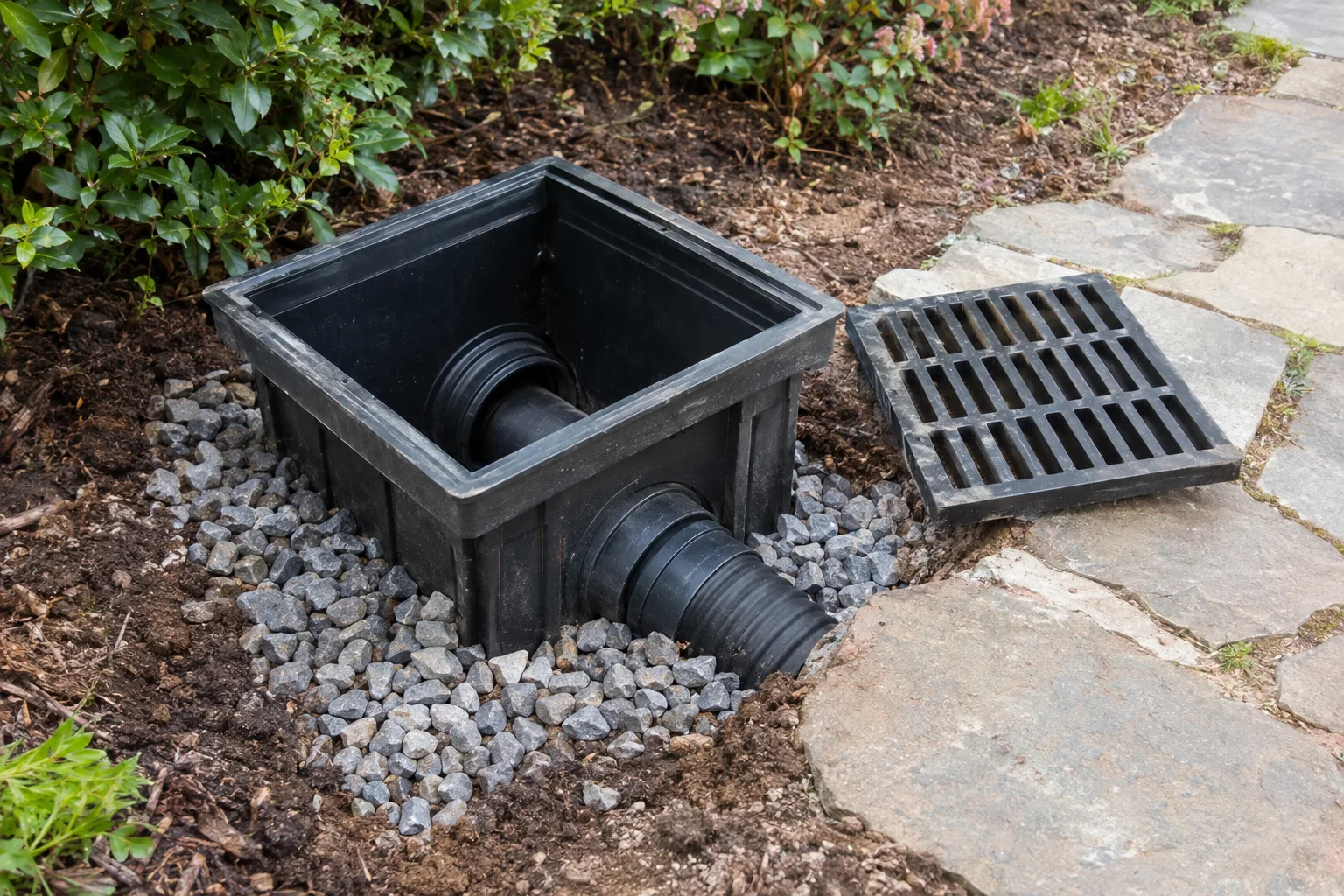
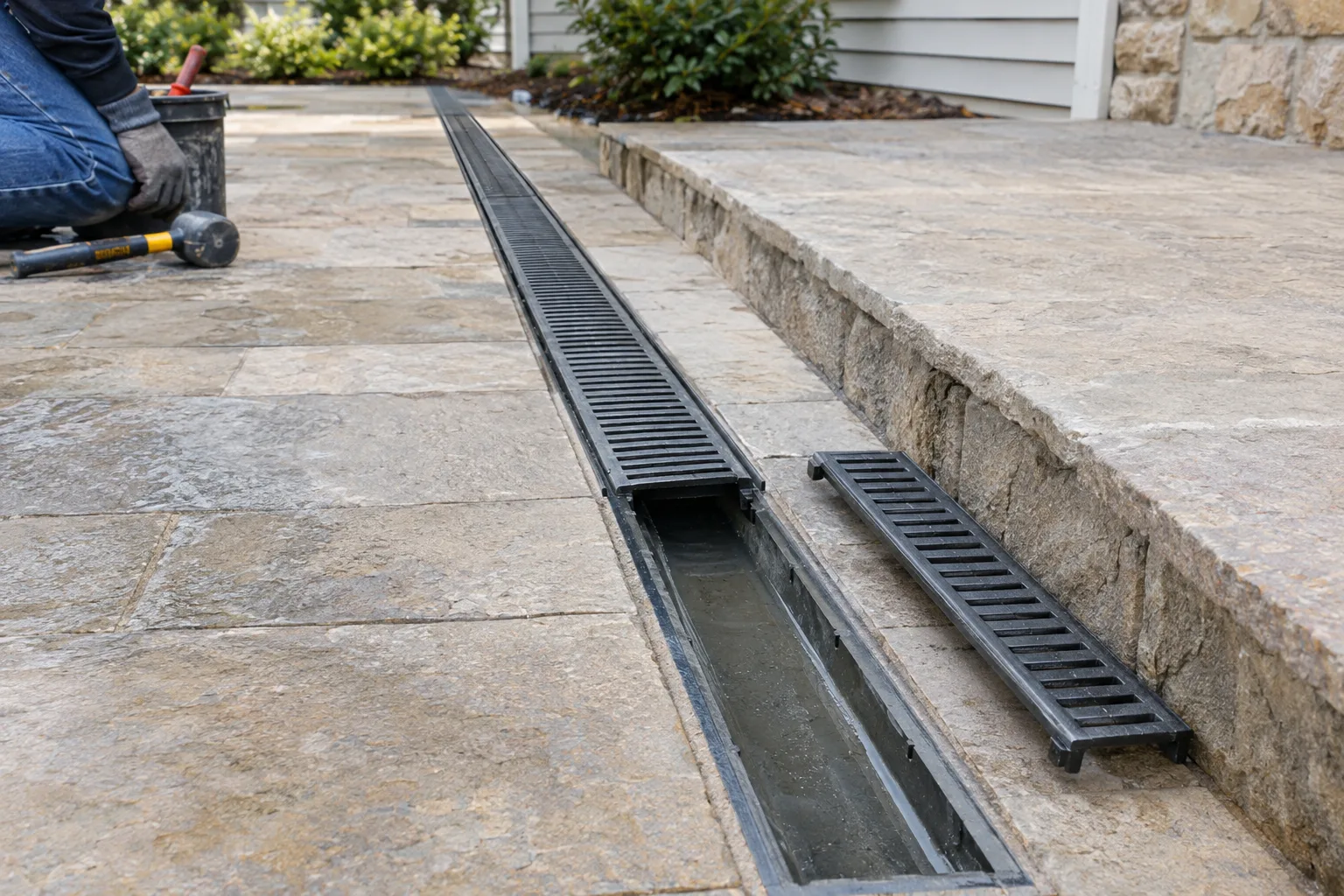
Surface drains collect runoff moving over the ground. French drains collect water moving through soil. Grading changes the surface route. A property may need one of these approaches or a combination, depending on how the water reaches the wet area.

Plan the work around the yard
The layout needs to account for gates, trees, beds, paving, and buried utilities. The scope should show the proposed route and what will happen to excavated soil, grass, and other disturbed surfaces.
When a single drain is not enough
A drain cannot empty by gravity if the outlet is too high. A low yard with no workable receiving point may need a different approach. The downstream route needs to be resolved before the collection points are installed.
Why a yard drain can back up
Leaves at a grate are one possibility. Sediment, a disconnected pipe, a settled section, or an obstructed outlet can also leave water behind. Finding where flow stops helps distinguish routine cleaning from a repair.
Keep the flow path clear
Grates, cleanouts, and outlets should remain accessible after landscaping is restored. Changes such as new edging, a raised bed, or added sod can alter surface flow, so it is worth checking what happens after those changes.
What affects the price?
The number of collection points, route length, trench depth, available access, and restoration all affect the work. The estimate should explain the improvement being made and the areas that will be disturbed.
Compare yard drainage options
A shallow swale may be enough where the surface can be reshaped. A catch basin may suit a fixed low point, while a French drain may suit persistent subsurface wetness. The choice follows the water problem rather than the name of a product.
Follow the water before adding a drain
We start a yard drainage assessment by separating water arriving from above from water already held in the ground. Watch a downspout during rain from a sheltered place: does its discharge run straight toward the puddle, or does the lawn become wet before that flow arrives? We also look for a strip of higher soil along fencing or paving that traps water. This sequence helps us avoid digging a collection trench where correcting one roof outlet or opening a surface route would address the source more directly.
Arlington yards can have different soil and fill conditions within the same property. A recently disturbed planting bed may absorb water differently from a compacted side passage. We compare those areas with the finished levels rather than treating every wet patch as a clay problem. If water remains during a dry spell, irrigation and other possible sources need attention too. Adding a rainwater drain without checking that pattern could leave the owner paying for the wrong improvement.
What a workable yard plan includes
Before choosing collection points, we work backward from the proposed outlet. The plan needs to show how water will reach that destination, where the pipe can pass, and how the surface will look afterward. A basin placed in the middle of the lawn may collect well but make mowing awkward; a nearby bed might be easier to maintain if the surrounding levels can guide runoff into it. We discuss those tradeoffs while the route can still be changed, before a trench fixes the layout in place.
For a yard with several wet areas, we check whether they share a cause. Roof runoff might feed a narrow side yard while a separate depression holds water beyond the patio. Combining them into one line is useful only if the downstream route can accept both flows. Sometimes the better scope is a downspout extension at the house and a shallow grade correction farther away. We explain which part of the work addresses each symptom so the estimate is more useful than a list of pipe and fittings.
After installation, water should be able to reach the collector without having to rise over a ridge of new soil or sod. We review the restored ground around inlets and the discharge area as part of the finished route. Keep a note of the collection points and outlet before landscaping conceals the pipe. If a later fence, patio, or raised bed changes the flow, that record makes it easier to work out what changed instead of starting the investigation again from a puddle.