Find the slope that is holding water
Small changes in level can keep water against a bed, walkway, or wall. The assessment looks at low pockets, higher ground, door thresholds, and the route toward the receiving area. Photos help, but the actual levels need to be checked.
Shape a continuous surface route
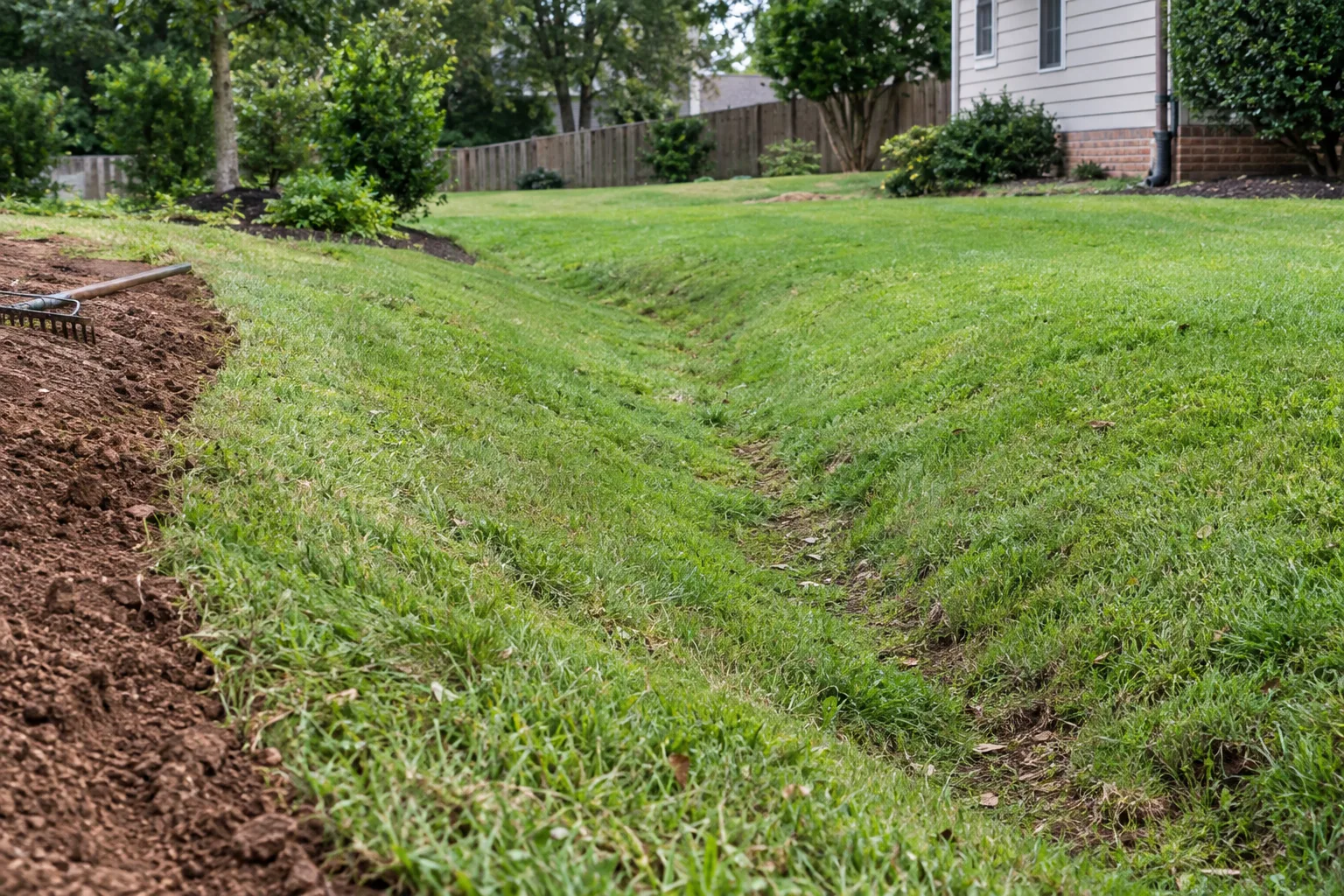
A swale is a broad, shallow route through the landscape. It needs enough fall to move water and enough space to do so without directing runoff toward a building or creating erosion at the end.
Plan excavation and turf restoration
Grading may involve moving soil, removing excess material, and rebuilding disturbed turf or planting areas. Tree roots, utilities, and access can limit the work. The agreed scope should explain the intended surface and restoration.
When there is not enough fall
A very flat lot or a confined space may not have enough room for useful surface reshaping. Nearby paving and low thresholds can also limit the change. In those cases, collection and piping may need to be considered.
Why a swale stops draining
New edging, raised beds, added soil, or settlement can interrupt a swale. Water follows the lowest route available, so even a small obstruction can cause it to pool or turn toward a different part of the yard.
Protect the finished grade
Keep the intended route open when adding mulch, replacing sod, or changing landscaping. Watch for erosion and new depressions after rain. Established vegetation can help protect the surface, but it should not block flow.
What affects grading cost?
Soil volume, equipment access, material removal, turf replacement, and protection around structures and roots affect the work. A useful estimate describes the finished levels and receiving area, rather than only the amount of dirt moved.
When to add an inlet or pipe
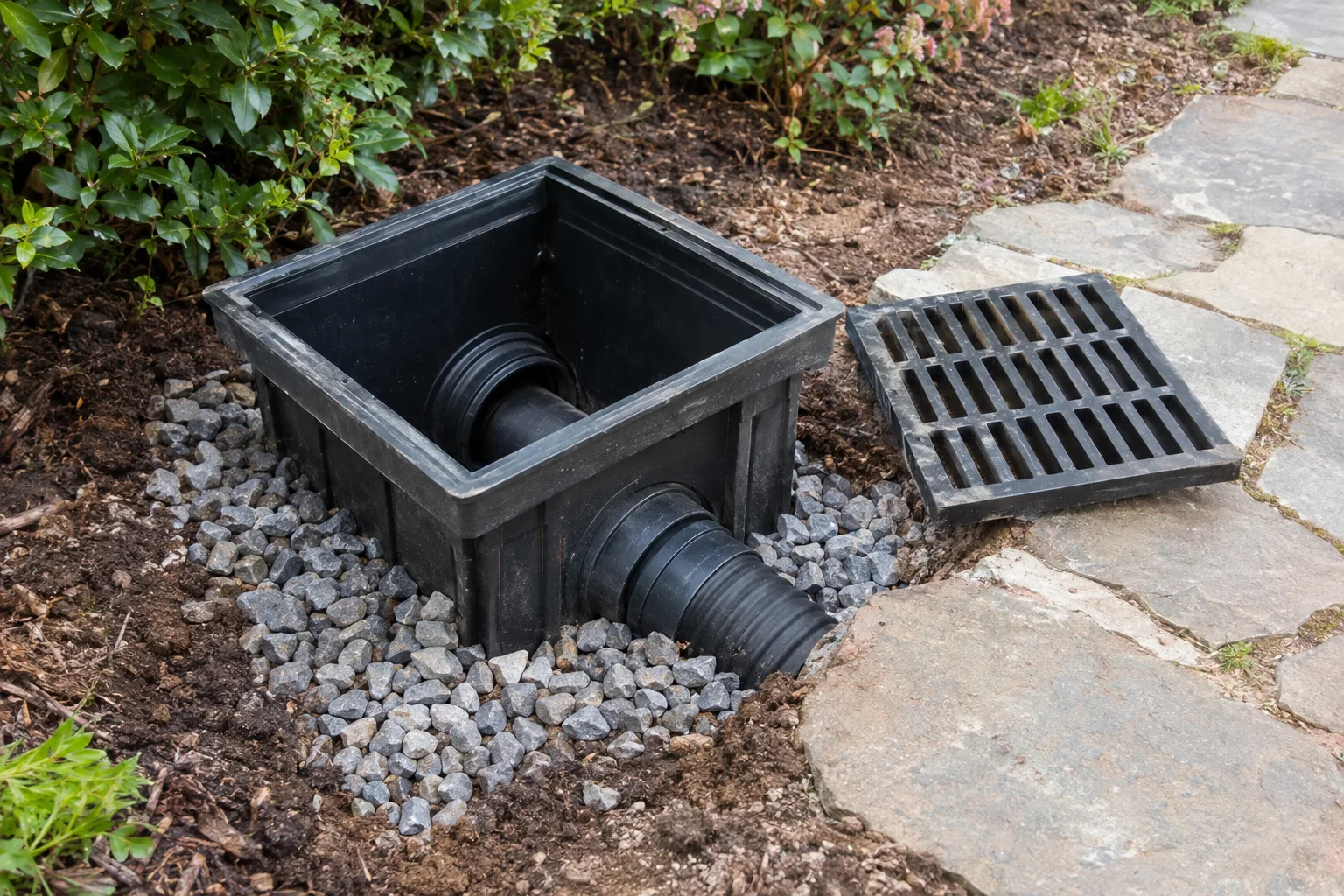
A surface inlet can collect water where paving or a fixed low point prevents a continuous swale. Underground pipe may then carry it across the property. The inlet still needs to match the surrounding finished grade.
Make the surface route continuous
We read the yard as a set of connected levels. A useful swale cannot stop at a fence line, raised bed or walkway without a way for water to continue. The low point at the start, the route across the yard and the receiving area all need to work together. We also check nearby doors, patios and building edges before moving soil. Raising one part of the lawn can remove a puddle there while sending more runoff toward a place that was previously dry.
A swale does not have to look like a deep ditch. Where the available space and elevations allow it, a broad shallow depression can carry water while remaining part of the lawn. Its shape still needs to suit the flow and the way the yard is used. We discuss mowing, walking routes, trees and planting areas before setting the layout. A narrow passage with fixed paving on both sides may offer less flexibility than an open rear lawn, even on neighboring Arlington properties.
Plan soil work around the finished yard
Grading involves more than spreading new soil over an uneven surface. We consider where material must be removed, where it can be reused and what needs to leave the property. Existing grass, compacted ground and buried obstructions influence the work. The estimate should identify the area being reshaped and the planned finish, including any turf or bed restoration. This helps distinguish a drainage correction from a cosmetic topdressing that improves appearance but leaves the water route essentially unchanged.
Trees and established landscaping can limit how much ground can be raised or lowered. We avoid assuming that a grade change can simply pass through major roots or bury the base of a tree. Buried utilities and irrigation also affect the route. When a surface correction cannot continue through an obstruction, we compare a shorter swale feeding an inlet with other layouts. The goal is a continuous drainage route, even when different parts of the property need different methods.
After the ground is restored, protect the intended low route during later landscaping. Extra mulch, edging or a strip of replacement sod can create a small dam. Check for washouts and settlement after rain, especially before vegetation has fully established. If a new depression appears, the location tells us more than a general report that the yard is wet again. We can compare it with the planned surface route and determine whether the finish moved or water is arriving from somewhere else.