Water collecting beside the house
Water collecting against a slab or wall deserves attention because repeated wetting can influence finishes, soil conditions and nuisance moisture. Check whether the adjacent surface actually slopes away or whether a downspout releases at that point. A wet strip can have a different cause from a detached puddle farther down the yard.
Soil and debris left by runoff
Lines of leaves, silt or mulch after rain can reveal the direction of surface flow. Eroded channels show where water accelerates, and deposited sediment shows where it slows. These clues help a drainage evaluator identify contributing areas and whether a shallow swale or interception point would be effective.
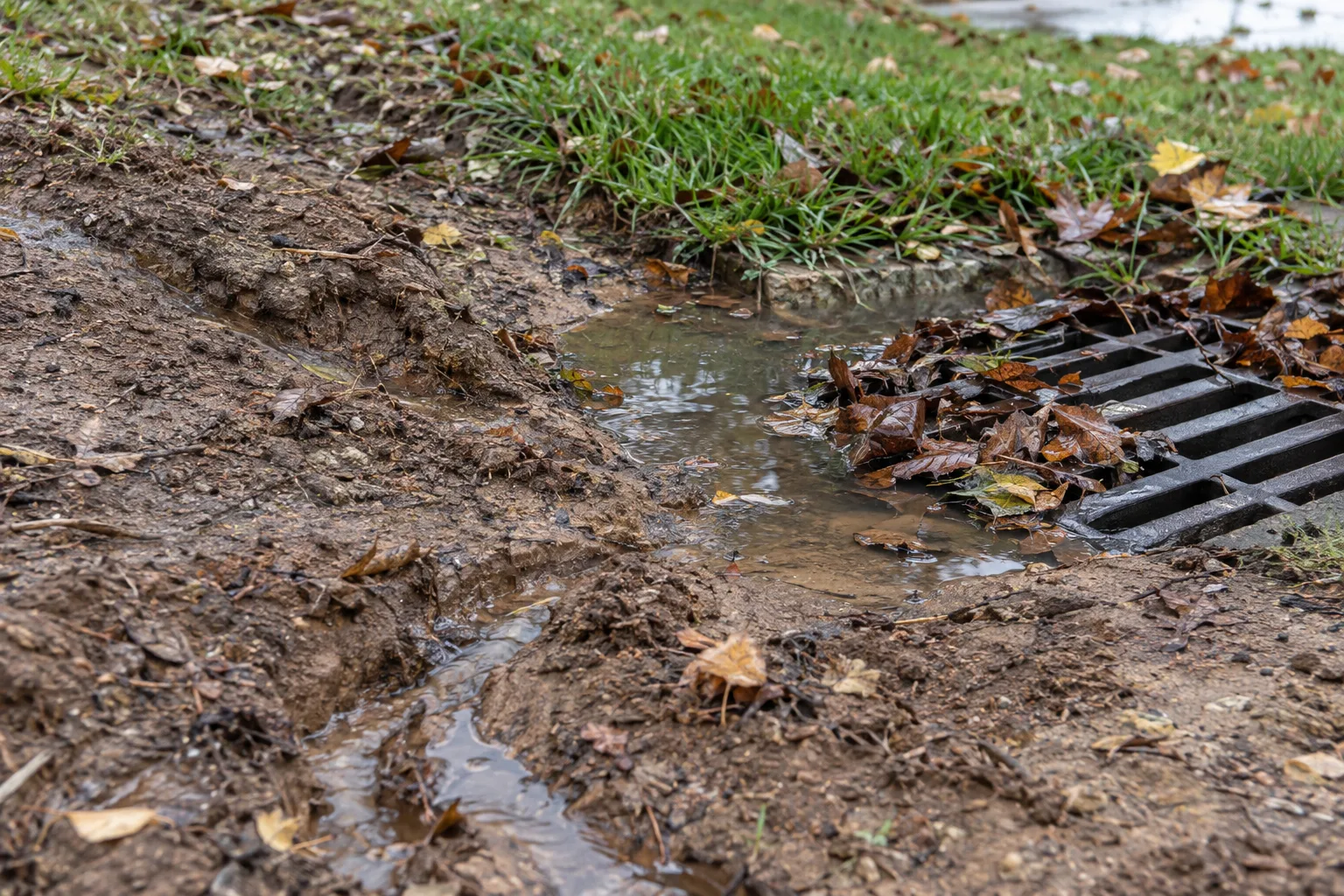
Drains that stay full
A catch basin filled with debris suggests cleaning may restore function, while standing water in a newly installed line may indicate poor grade or a submerged outlet. A pop-up emitter that remains buried under turf will not provide a dependable discharge route. The condition of an outlet is as important as its location.
Wetness that continues between storms
Short-lived ponding directly under a downspout is different from several days of wet turf when no rain is falling. The latter can implicate irrigation leaks, restrictive soil layers or persistent seepage. If water is appearing in dry weather, do not assume it is stormwater without checking possible plumbing sources.
Record what changes from storm to storm
Photograph the same corners during and after several events, include a landmark for scale and record the hours water remains. Note if a neighboring renovation, paved area or raised planting bed coincided with the change, without assigning blame before the flow path is confirmed.
Keep safety ahead of inspection
Avoid exploring flooded pits, entering moving water or handling electrical equipment in wet conditions. If water is actively entering occupied spaces or threatening safety, treat the situation as a safety problem first; detailed diagnostics can follow once conditions allow.
How the clues change the decision
Picture a homeowner noticing three different signs after a storm: a line of leaves below the patio, a puddle under one downspout, and muddy water seeping near a slope a day later. The leaf line points toward surface flow, the downspout puddle suggests concentrated roof discharge, and the delayed moisture deserves a separate investigation of soil water or hidden leaks. Treating all three as one clogged drain could waste effort. A useful photo sequence includes a wide view of the source, an image of the low point, a clear view of any inlet, and a shot after the water recedes. The report can note storm timing, recent landscape changes and whether any existing drainage line worked previously. Only a field assessment can determine whether these clues share a cause. The homeowner should avoid flooded electrical equipment and any area where water is moving rapidly.
Read the pattern left after the water recedes
We look for the direction indicated by sediment, flattened grass and debris. A line of leaves can show where surface water slowed, while a fresh channel through soil can identify a concentrated flow. Those clues help reconstruct the route after the rain has stopped. They do not establish the condition of a buried pipe on their own. Photograph the wider area before cleaning everything away if you can do so safely, then note which downspouts, paved surfaces or higher ground could have supplied that flow.
Compare the timing at different places. A puddle forming immediately beneath a downspout suggests a different starting point from water appearing along a slope much later. Wetness continuing through dry weather also deserves a check for irrigation or another source. We use that sequence to avoid treating every symptom as one blocked drain. Several signs on the same property may share a cause, but they may also call for separate corrections. The investigation needs to establish the connection before combining them in one project.
Know what information to bring to an assessment
Tell us whether an existing system once worked and whether anything nearby changed. A replaced fence, added mulch, new paving or a covered outlet can redirect water without a pipe failing. Mention repairs and cleaning attempts, including whether they improved the problem briefly or made no difference. That history helps distinguish recurring debris from a layout issue. If you have a sketch of the old route or know where a cleanout is hidden, keep it available. It can reduce uncertainty when the accessible components do not explain the backup.
Prioritize observations that affect people or buildings, such as water reaching an entrance, fresh erosion near a structure or a flooded walking route. Do not enter moving water, flooded pits or areas around wet electrical equipment to gather evidence. Once conditions are safe, we can discuss what needs to be assessed and whether the concern extends beyond yard drainage. A useful next step identifies the question to resolve, rather than jumping from a frightening storm photograph directly to a large construction recommendation.