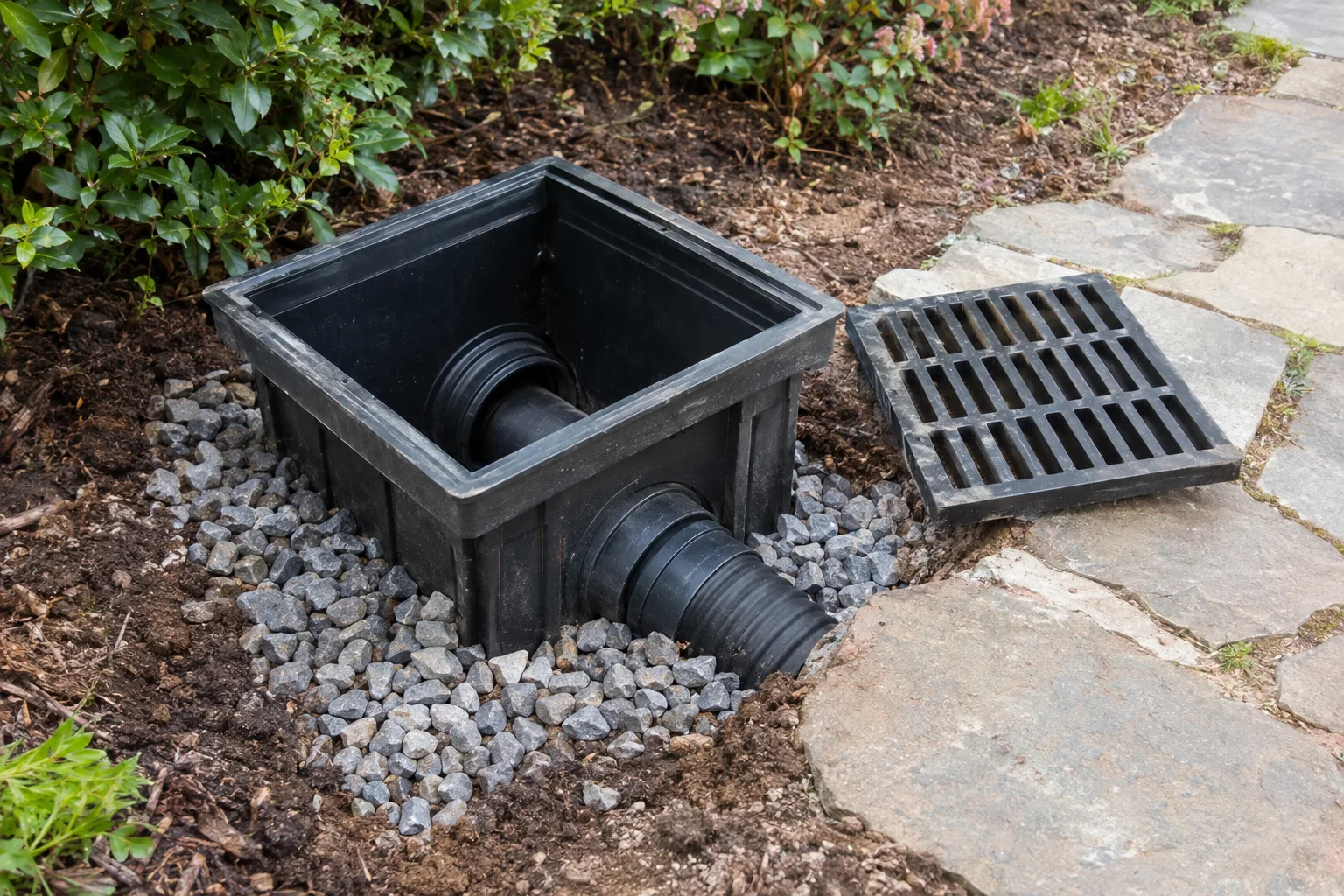
Find where debris collects
Leaves gather at grates, heavier material can settle in basins, and sediment may collect farther down a line. Checking the accessible parts of the system helps identify where buildup is affecting flow.
Choose the right cleaning approach
The cleaning method needs to suit the component and its condition. Removing debris from a grate is different from clearing a buried line. Damaged parts should be identified before equipment is used on them.
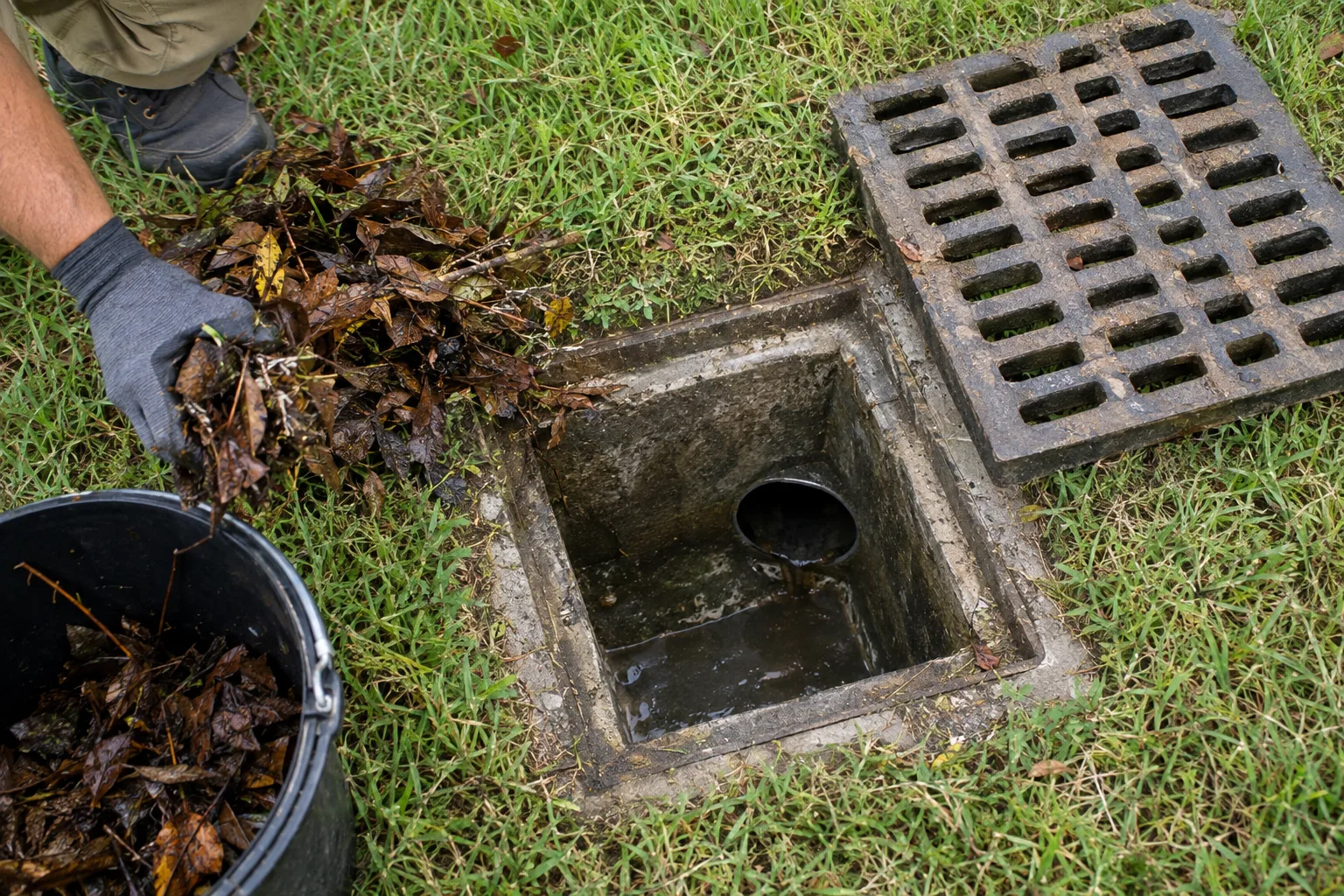
Plan access to basins and lines
Grates, cleanouts, basin openings, and outlets need to be reachable. The maintenance scope should state what is included, what can be inspected, and whether additional investigation is needed for inaccessible sections.
Know when cleaning will not help
Cleaning cannot restore a collapsed pipe or correct a line with inadequate fall. Repeated buildup may also point to sediment entering upstream. Those issues need a repair or design discussion rather than endless repeat cleaning.
Why blockages keep returning
A nearby source of bare soil, heavy leaf cover, root entry, or an outlet restriction can cause recurring trouble. Keeping a record of where buildup returns helps decide whether a change to the system is warranted.
Set a useful inspection routine
Check accessible inlets and outlets after significant storms and when seasonal debris accumulates. The useful schedule depends on the property’s trees, sediment sources, and past performance, rather than one interval for every drain.
What affects maintenance cost?
The number of access points, type of components, amount of debris, disposal needs, and equipment involved affect the service. The estimate should distinguish routine cleaning from investigation or repair.
When maintenance becomes repair
Cracks, loose connections, settlement, and repeated overflow may indicate more than a maintenance issue. Findings should be explained clearly so you can decide whether a separate repair is needed.
Match cleaning to the part that needs it
We distinguish debris on a grate from sediment inside a basin and a restriction farther down a pipe. They can produce similar surface symptoms but require different access and methods. A clear grate does not prove the buried line is clear, and a full basin does not automatically mean the pipe has collapsed. We check the accessible route and ask how performance changed. That helps us define a maintenance visit around the affected components rather than promising that one cleaning method will solve every drain.
The condition of the system matters before equipment is introduced. Loose fittings, broken grates or damaged pipe may need repair instead of aggressive cleaning. We explain what can be reached and what remains uncertain in buried sections. If the outlet cannot be located, that limitation is part of the investigation. It is better to identify missing access than to describe an entire system as serviced when only the inlet was cleaned. The scope should make that distinction clear to the property owner.
Reduce the material entering the drain
Maintenance lasts longer when the source of recurring debris is addressed. Bare soil beside a basin can keep washing into it, while mulch placed against a channel may migrate into the trough. We look at those entry points as well as removing the material already inside. A small landscape correction may reduce repeated cleaning, but changes should preserve the inlet's ability to collect water. Blocking the opening with a makeshift screen can create a new restriction even if it keeps larger leaves out.
Useful maintenance timing depends on what the property sends into the system. Tree debris, nearby soil work and the drain's past behavior provide better guidance than a universal schedule. Check reachable grates and outlets after significant runoff and after landscaping that might cover them. Keep a record of where material accumulates. If the same basin repeatedly fills with sediment while others stay clear, that pattern can help identify an upstream source or a local connection problem that deserves separate attention.
We discuss findings that fall outside routine maintenance before treating them as additional repair work. A collapsed line, a settled section or an unsuitable outlet cannot be corrected by removing leaves. The owner should know what was cleaned, what could be inspected and why further work is being recommended. After service, watch the next rain from a safe place and note whether water enters the collector and leaves the outlet. That observation complements a cleaning check without pretending it proves performance under every storm condition.