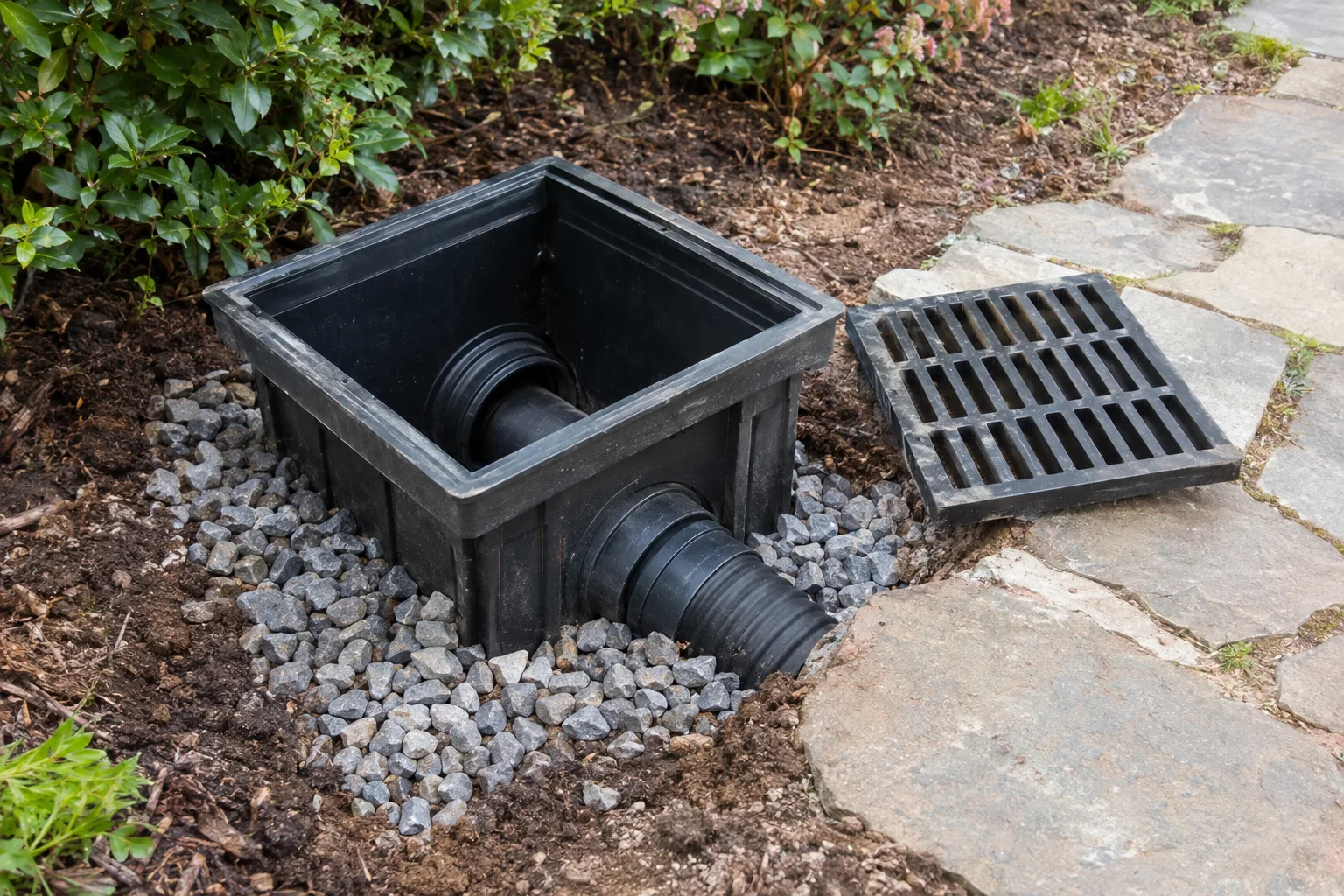
Test how the soil absorbs water
A dry well depends on the ground around it. If the soil absorbs water too slowly, the chamber can remain full until the next storm. Infiltration testing and site conditions help determine whether the approach is practical.
Allow for storage and overflow
The system needs enough temporary storage for the planned runoff, a way to limit sediment entry, and a route for overflow. Chamber size alone does not establish how quickly the ground can take the water.
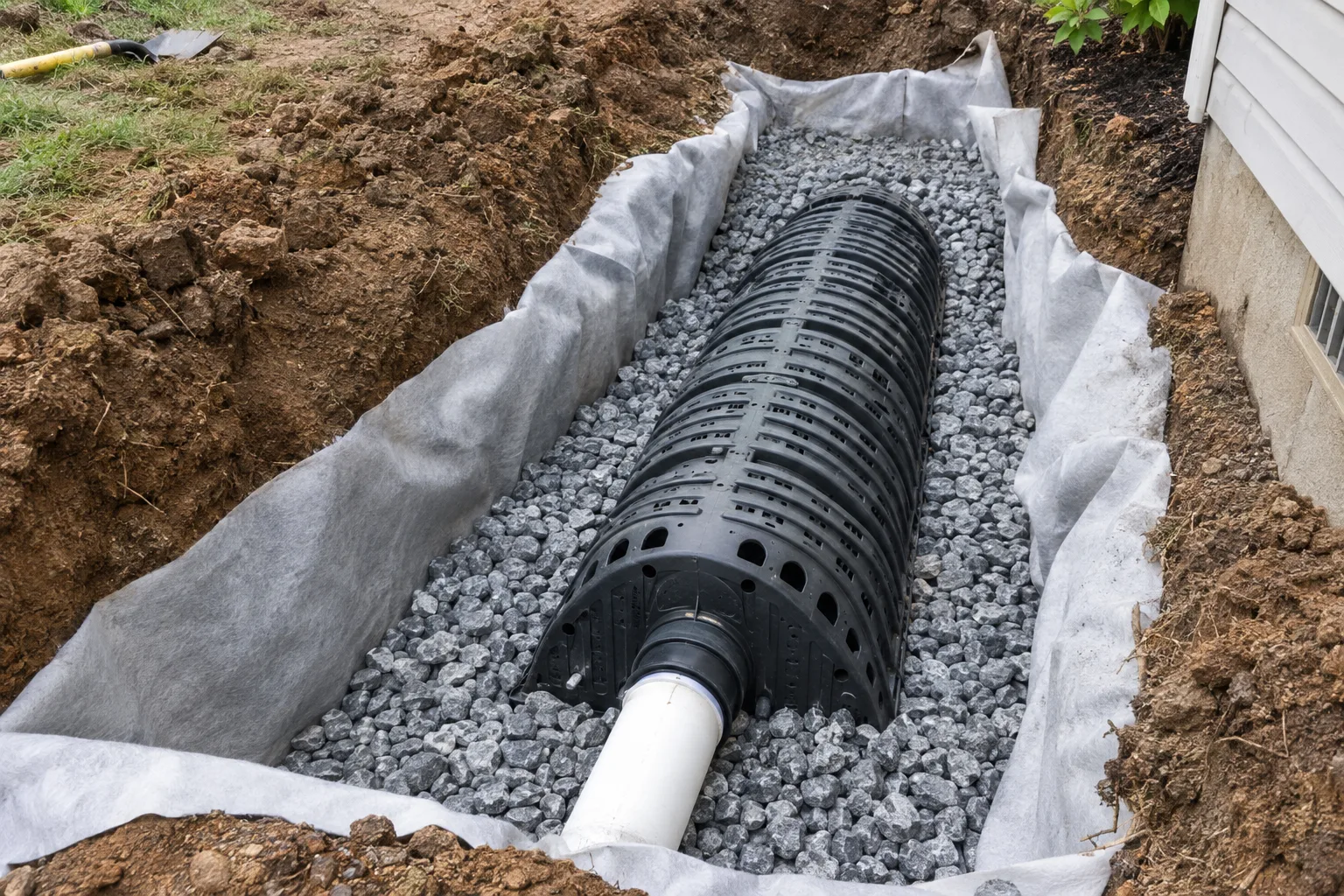
Plan the chamber and inlet
Installation involves excavation, placement of the selected storage system, connections, and restoration. Utilities, access, soil removal, and clearances around structures affect where the work can take place.
When a dry well is a poor fit
Slow infiltration, high groundwater, limited space, or unsuitable clearances may rule out a dry well. In those conditions, a larger chamber may only delay the backup rather than solve the drainage problem.
Why a dry well stays full
The surrounding soil may be saturated, sediment may restrict flow, or the connected area may deliver more water than expected. Checking those conditions helps distinguish maintenance needs from a system that does not suit the site.
Keep sediment out of the chamber
Sediment control and accessible inlet components matter. Leaves and soil entering the storage area can reduce useful capacity and make maintenance harder. The plan should explain how the system can be inspected and serviced.
What affects dry well cost?
Testing, excavation, soil disposal, chamber choice, pipe connections, overflow, and restoration all affect cost. Establishing suitability first helps avoid paying for an installation that cannot drain as intended.
Compare infiltration and piped discharge
Surface grading, a swale, or a drain connected to a suitable outlet may be preferable where infiltration is limited. A rain garden may be another option where the soil, space, and landscape support it.
Check that storage can empty between storms
We consider a dry well only after looking at the water source and the ground that must absorb it. The underground space provides temporary storage; the soil provides the way out. If stored water cannot leave at a useful rate, adding another chamber may only postpone overflow. We discuss the contributing roof or paved area, soil conditions at the proposed depth and what happens during a sequence of rain events. A dry-looking lawn on the day of an estimate does not establish how the ground behaves when saturated.
Arlington does not have one uniform soil condition on every lot. Fill, compaction and changes below the surface can affect the proposed location. A shallow observation somewhere else in the yard is not enough to size an underground infiltration system. Appropriate testing needs to inform the design, including whether conditions are suitable at all. We explain that decision before treating chamber selection as a shopping choice. When the evidence does not support infiltration, we compare a surface route or a drain to another suitable destination.
Plan the inlet, storage and overflow as one system
Leaves and soil entering a dry well can reduce useful storage and make maintenance difficult. We look at how runoff will enter, where debris can be intercepted and which components can be reached later. A system that is easy to bury but impossible to inspect can become expensive to troubleshoot. The proposed layout should identify accessible connections and any service points before landscaping covers the work. Keeping sediment out is especially relevant where runoff passes over bare ground before reaching the inlet.
The chamber location must also make sense relative to buildings, utilities and surrounding property. Water leaving the storage area still moves into nearby ground; it does not disappear at the chamber wall. We consider where saturation or overflow could cause another problem. A defined route for excess water is needed when incoming runoff exceeds the available storage and absorption. That route should be discussed openly, rather than presenting the dry well as a guarantee that no water will ever reach the surface.
A complete estimate separates the suitability assessment from the installation work. Excavation, removed soil, the selected storage system, inlet connections, overflow and finish restoration all affect scope. We explain which items are included and what conditions could change the plan. After installation, follow the agreed maintenance approach for debris collection and access points. If water repeatedly backs up despite clear inlets, the investigation needs to consider soil recovery and the amount of runoff entering, not just another round of surface cleaning.