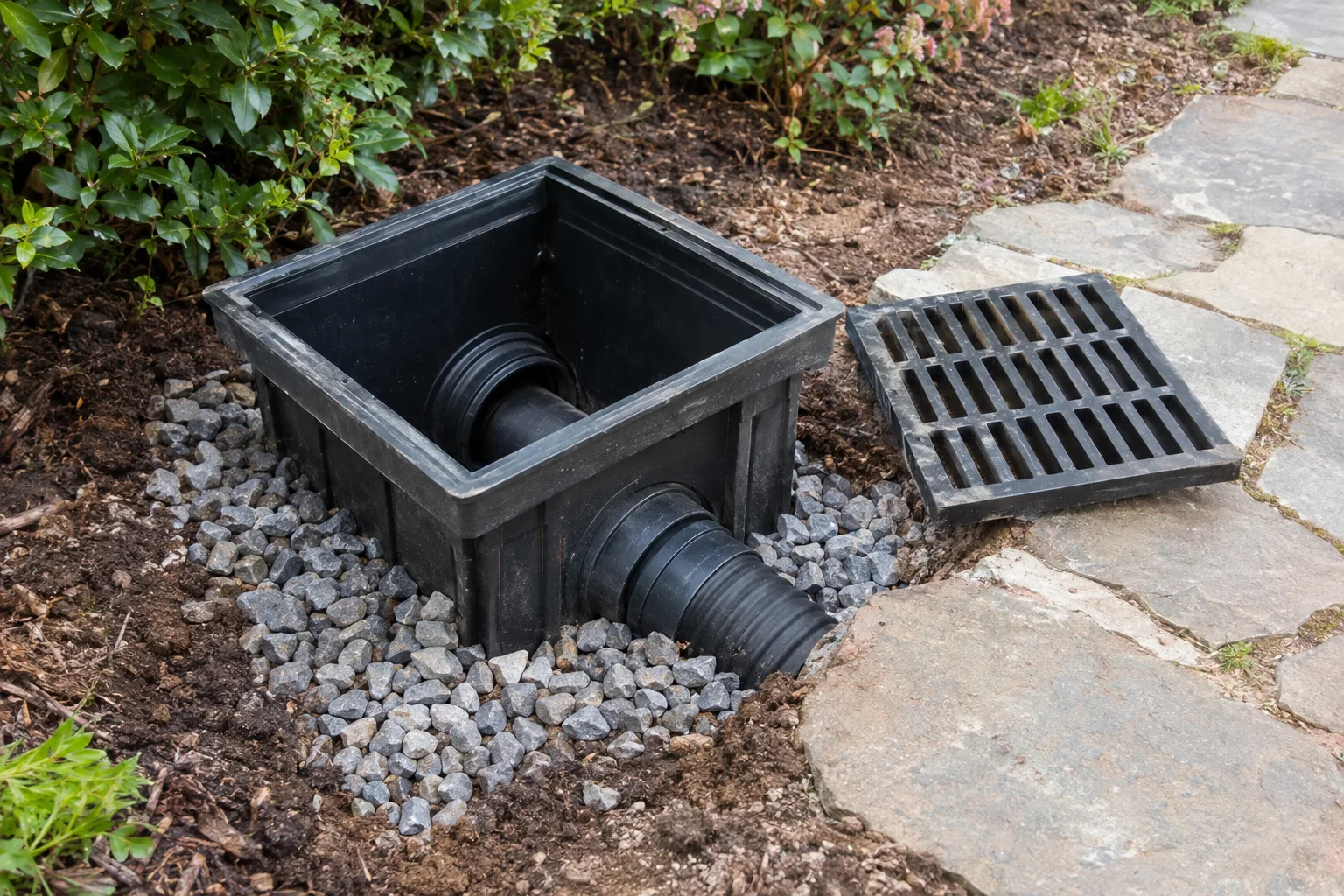
Trace the concentrated runoff
The damaged patch may be below the source of the problem. Roof runoff, a steep section of ground, or a concentrated outlet can send water toward it. The assessment follows the flow uphill as well as examining the washout.
Match protection to the slope
The slope, soil, water volume, and available space determine the protection needed. Vegetation, surface coverings, grade changes, and outlet protection serve different purposes. Their use should follow the conditions at the affected area.
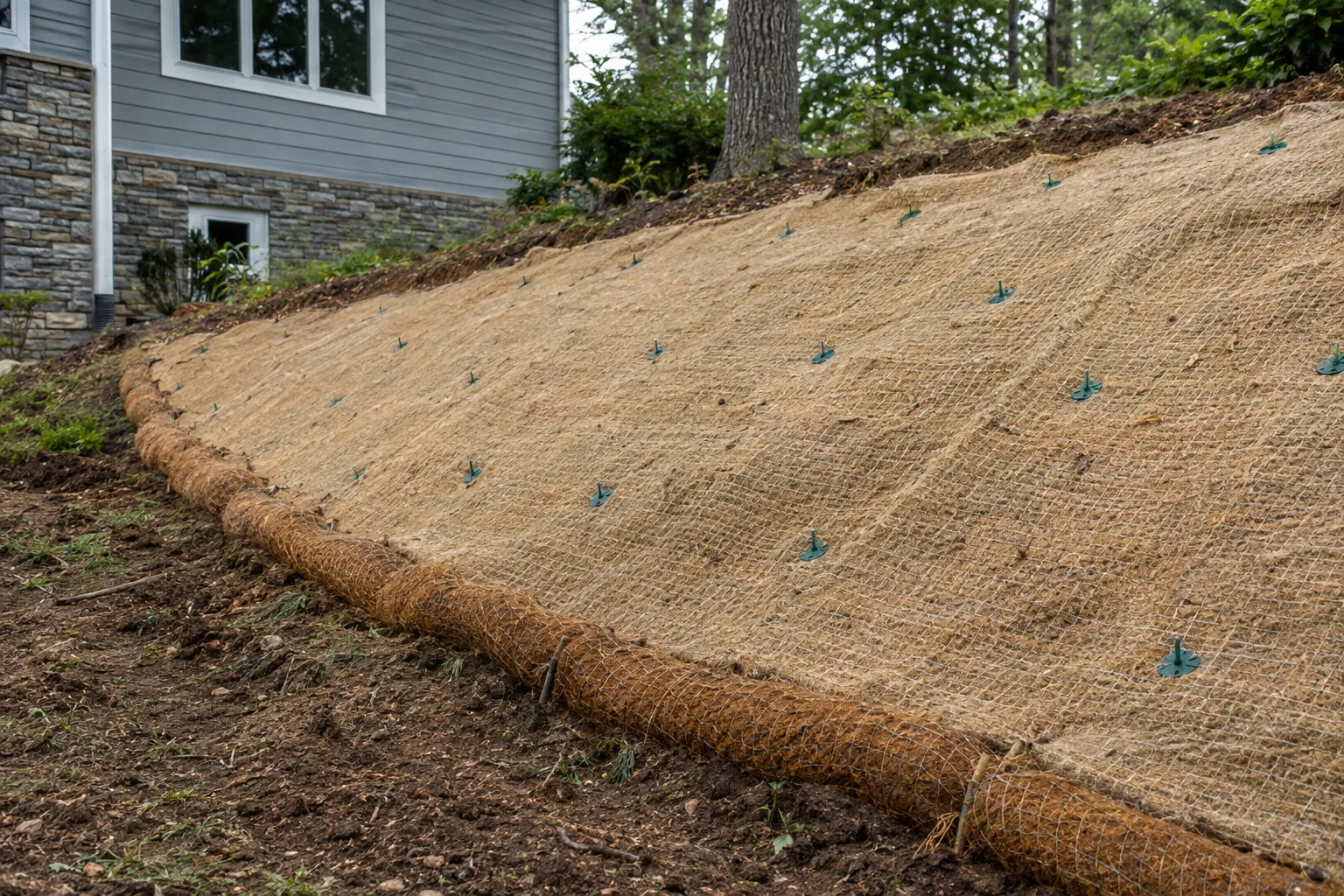
Plan flow control and restoration
The work may combine changes to the water route with soil repair and surface stabilization. Temporary protection can matter while vegetation establishes. The scope should identify the damaged area and the source being addressed.
When surface protection is not enough
New mulch or grass can wash away again if concentrated runoff is left unchanged. A failing retaining wall or structural issue may also need separate expertise. Surface treatment alone should not be presented as a fix for those problems.
Why washed-out areas return
Water may still be arriving too quickly, crossing bare soil, or discharging onto an unprotected slope. Finding that continuing source helps explain why repeated surface restoration has not lasted.
Check the area after rain
After rain, look for fresh channels, displaced material, or sediment below the repaired area. During establishment, the planting and protective materials may need attention. Any overflow should follow the intended route.
What affects erosion control cost?
The affected area, access, slope, soil handling, drainage changes, surface protection, and restoration all influence the scope. Larger or steeper sites may need additional design and construction planning.
Combine drainage and soil protection
Moving runoff and protecting soil often go together. A pipe can relocate water but still cause erosion at its outlet. A stable receiving area and appropriate flow control are part of a complete solution.
Find what is carrying the soil away
We follow the washout uphill to see where the water gains volume or becomes concentrated. The source may be a roof outlet, a paved edge or a route across higher ground. Fresh sediment below a slope can help show how far the flow traveled, while a narrow groove may identify a concentrated stream. Replacing the missing soil without tracing that source can lead to another washout. We first establish which part of the problem is water routing and which part is protection of the ground surface.
A gentle bare patch and a steep eroding slope need different consideration. The amount of runoff, soil condition, vegetation and room for a stable receiving area influence the approach. We discuss whether the flow can be spread or redirected and whether the affected surface needs protection while plants establish. Rock placed over a washout is not automatically a complete repair. Water can move around it or undermine the edges if the route and supporting ground have not been addressed.
Connect the drainage repair to the landscape repair
An outlet can solve standing water upstream while creating erosion where the collected flow is released. We look at the receiving area whenever a new pipe or channel is part of the plan. The finish needs to suit the expected discharge and stay maintainable. If the route simply pushes concentrated water toward another vulnerable area, it has moved the problem rather than resolved it. Property boundaries and existing drainage features also need to be considered before changing where the runoff travels.
Restoring damaged ground may involve removing loose material, rebuilding the surface and protecting it during establishment. The scope should describe those steps and identify which landscape finishes are included. We also discuss access for the work, especially where equipment would cross a usable lawn or narrow side yard. Retaining-wall movement, deep instability or other structural concerns need separate expertise. Surface stabilization should not be sold as a substitute for evaluating a structure that is moving or ground that may be unstable.
After rain, check the repaired area for fresh channels, displaced protection and sediment collecting below it. Early observations help distinguish normal establishment care from continued concentrated flow. Keep the inlet and outlet portions of any drainage changes clear, and avoid later landscaping that redirects water back over the repaired slope. If the damage returns at one edge, document that location. It may reveal a bypass route that needs adjustment rather than a reason to repeat the entire landscape repair without further investigation.