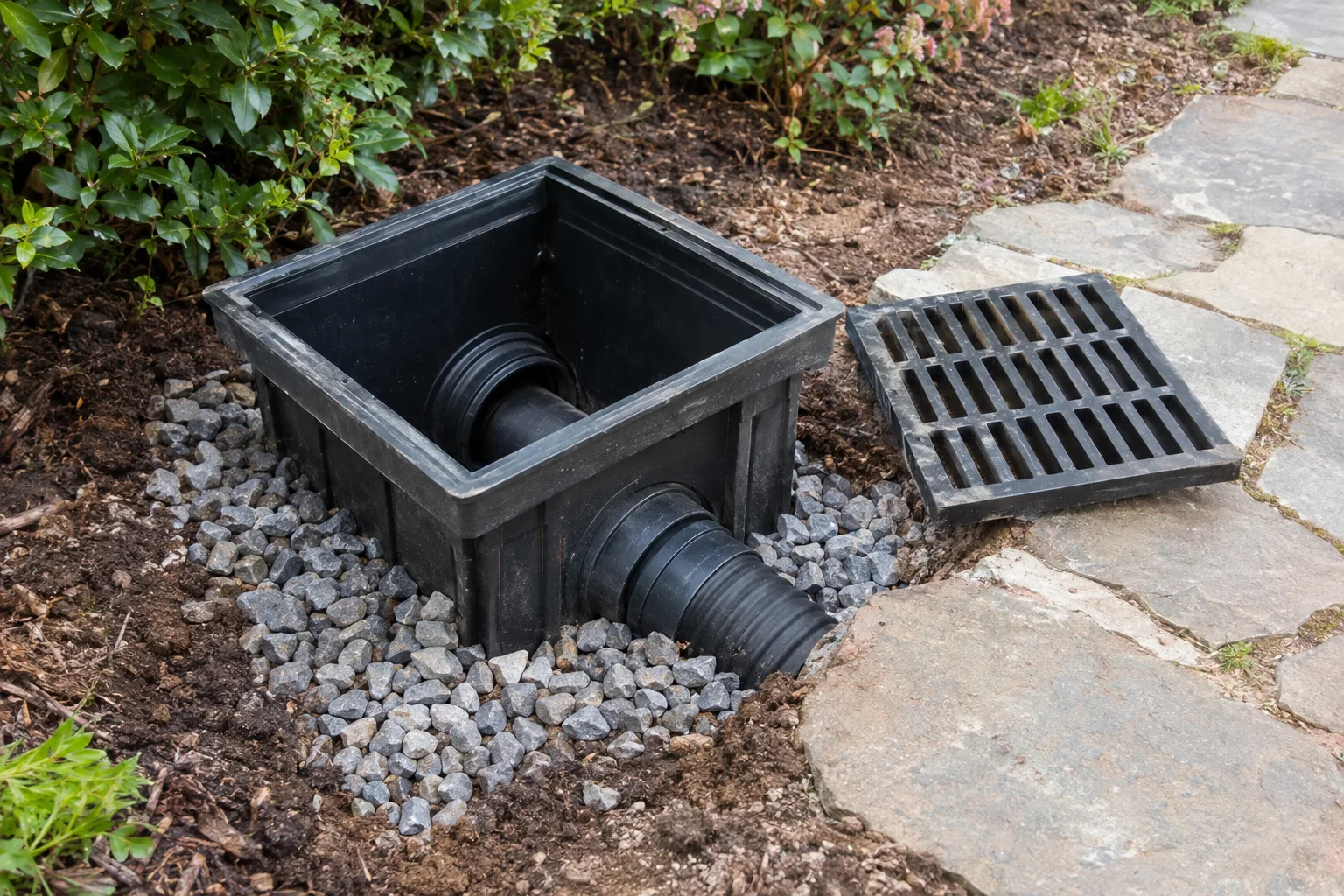
Check runoff and infiltration
The contributing roof or paved area affects how much runoff arrives. Soil testing and site observations help establish whether that water can soak in at a useful rate and whether the proposed location has enough space.
Plan the planted basin and overflow
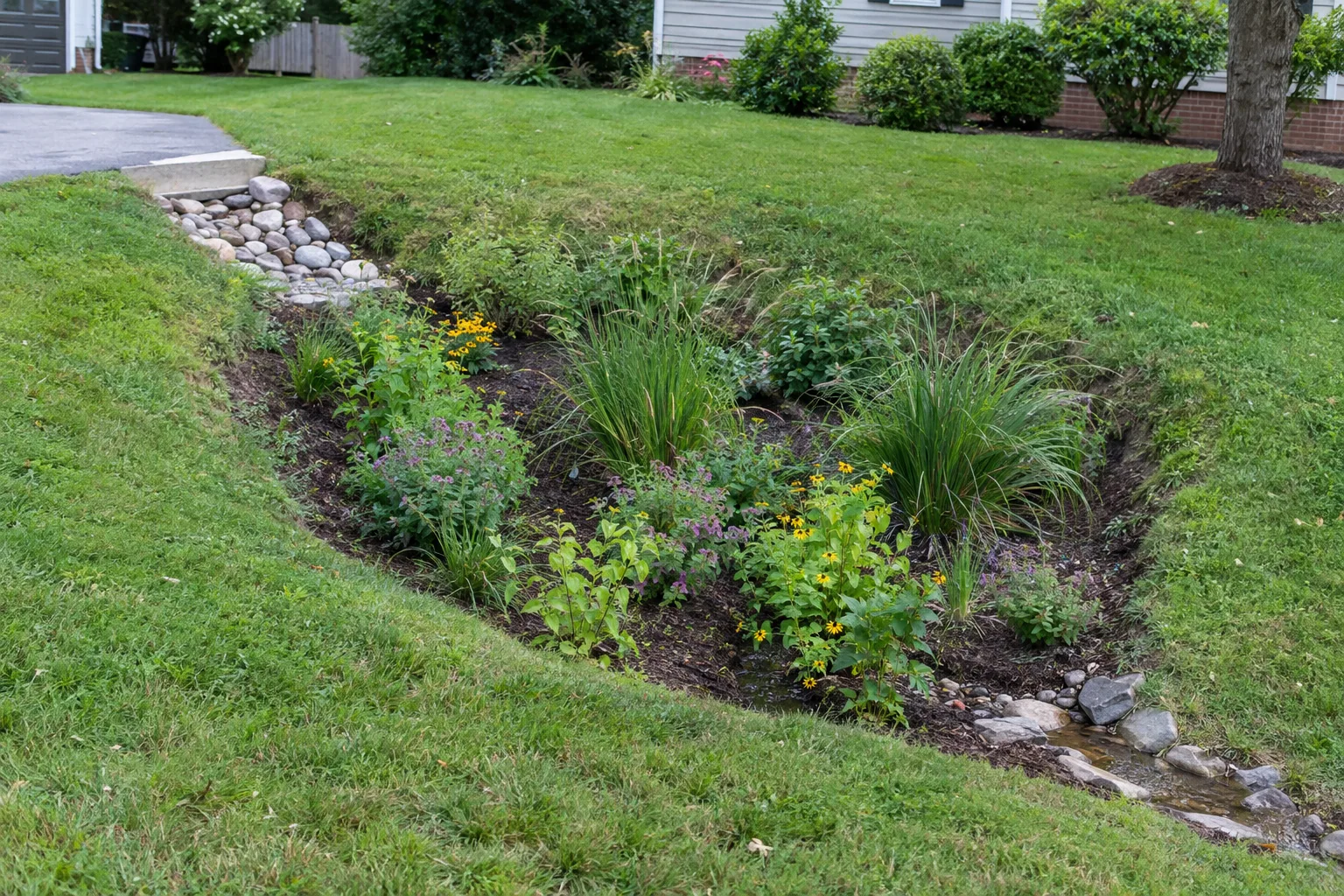
The planted area needs suitable storage, soil preparation, a stable inlet, and a defined overflow route. The layout should keep excess water away from buildings and other vulnerable areas when the basin is full.
Build the soil and planting area
Work may include excavation, soil preparation, inlet and overflow construction, and planting. Utilities, nearby roots, and access affect the location. The scope should also explain what is needed while plants become established.
When infiltration is not suitable
Slow infiltration, high groundwater, limited space, or proximity to structures may make a rain garden unsuitable. Adding plants to a persistently wet depression does not by itself establish a functioning infiltration system.
Why water stands too long
Compaction, unsuitable soil, sediment buildup, or more runoff than expected can leave the basin wet for too long. The source and soil performance should be checked before simply making the planted area deeper.
Care for plants and the inlet
Plants need establishment care, and the inlet must be kept clear of leaves and sediment. Watch for erosion where water enters and for obstructions along the overflow route. Maintenance is part of keeping the feature useful.
What affects rain garden cost?
Assessment, soil preparation, excavation, inlet and overflow work, planting, and establishment all affect the price. The estimate should distinguish construction from ongoing landscape care.
Compare rain gardens and dry wells
A rain garden provides a planted surface collection area. A dry well stores water underground. Both rely on suitable infiltration conditions and need a plan for excess runoff; neither is appropriate for every property.
Use the landscape to receive the right amount of water
We look at the area contributing runoff before discussing plants. A small planted depression receiving one roof outlet has a different job from a bed receiving water across a large paved surface. The inlet, storage space, soil preparation and overflow must fit that contribution. A rain garden should have a clear role in the drainage plan. It is not simply a name for an existing wet spot, and adding moisture-tolerant plants does not establish that the ground can absorb the incoming water.
Soil behavior at the proposed location is central to suitability. Arlington's varied soils and disturbed ground mean that one part of a property may perform differently from another. We use site assessment and appropriate testing rather than assuming a citywide soil label answers the question. Compaction or a restrictive layer can keep water in the basin longer than expected. If infiltration is not practical, we discuss a surface drainage route or another method instead of making the planting area deeper without a clear reason.
Build in overflow and maintenance access
The entry point needs to receive runoff without washing soil or mulch out of the planted area. We consider how water approaches and whether debris needs to be intercepted before it enters. The overflow route is equally important: once the available storage is occupied, additional water still needs somewhere suitable to go. It should not escape toward a building or create a new wet area next door. Those details are planned together with the shape of the basin, rather than added after planting.
Location affects both the construction and long-term care. Utilities, tree roots, nearby structures and the space needed to reach the inlet can constrain the layout. The planting plan needs to suit the intended wet and dry conditions, while establishment care must be clear to the owner. We distinguish drainage construction from ongoing landscape maintenance in the estimate. That makes it easier to understand who will care for new plants and which drainage components need periodic attention after the installation work is complete.
Watch how the feature drains after rain and whether sediment begins building up at the inlet. Persistent standing water may reflect saturated surrounding ground, compaction, a blocked overflow or more contributing runoff than the original plan allowed. The next step is to investigate that change, not automatically excavate a larger basin. Keep the entry and overflow accessible when plants mature or mulch is refreshed. A planted drainage feature can change as the landscape grows, so maintenance needs to preserve the original water route.