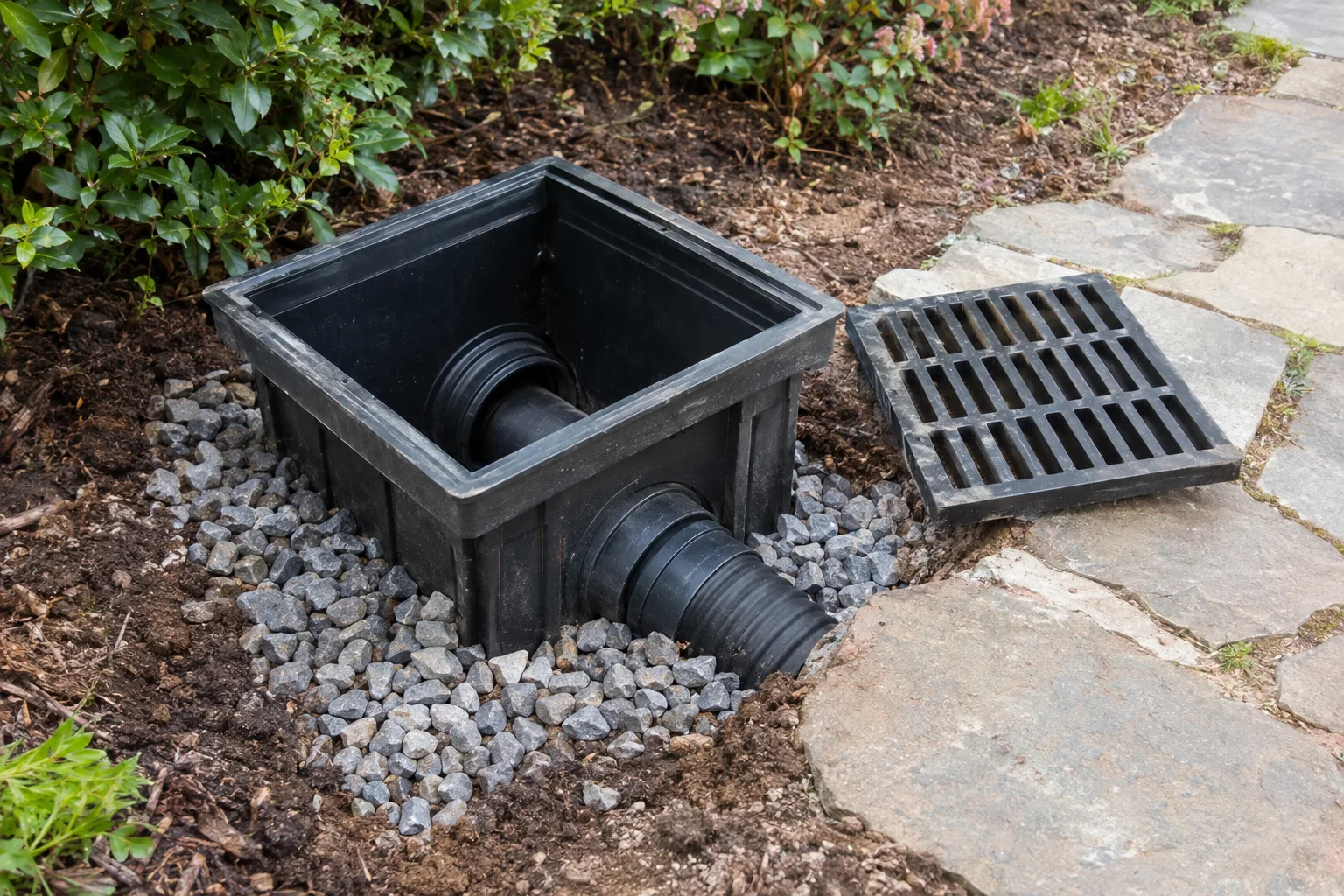
Follow the pumped water
The assessment follows the line from the exterior connection to its end. Water returning toward the collection area, backing up, or pooling at the outlet can point to a discharge problem. Pump performance is a separate question.
Match the route to the pump
The pipe route needs to suit the pump’s requirements as well as the property. Distance, height changes, fittings, and the receiving area all matter. Pump sizing or electrical issues should be handled by the appropriate specialist.
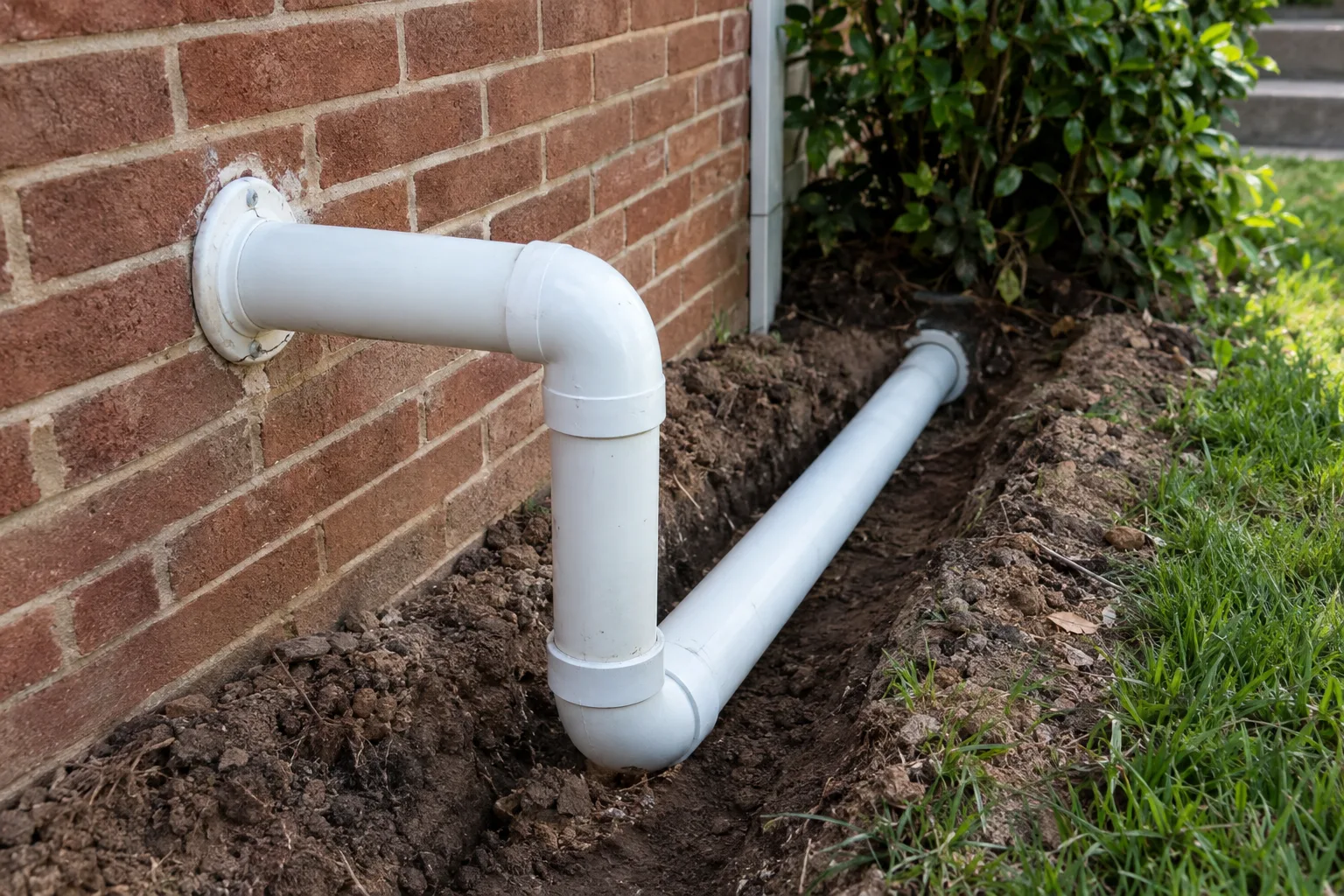
Plan the exterior discharge line
The work may involve extending, protecting, or burying the exterior line. The scope should identify transitions, access needs, the outlet, and any lawn or paving restoration. Pump replacement is separate unless specifically included.
Check the limits of the outlet
The receiving area must be able to handle the discharge without sending it back toward the building. A public connection or another property cannot simply be assumed available. The intended destination should be resolved before installation.
Why discharged water returns
A short extension, blocked terminal, poorly positioned outlet, or unsuitable receiving area can leave water returning to the same place. A new line alone will not fix a failed pump or check valve.
Keep the line and outlet serviceable
The outlet needs to remain visible and clear of soil, vegetation, and stored items. Exposed sections may need protection from damage. Changes in pump operation or repeated backups should be investigated rather than treated as ordinary wet weather.
What affects discharge line cost?
Route length, protection, excavation, hardscape crossings, fittings, and outlet work affect the estimate. It should clearly separate exterior drainage improvements from pump, electrical, or internal plumbing work.
Gravity drains and pumped discharge
A gravity drain relies on the available slope. A pump moves water under different conditions. Connecting or altering these systems requires understanding their roles so one does not interfere with the other.
Check where pumped water goes next
We focus on the exterior discharge route: the connection leaving the building, the line across the property and the place where water is released. A pump may run while its outlet sends water back toward the area being drained. That recirculation can be mistaken for a need to replace the pump. We examine the receiving ground and the timing of the discharge before discussing an extension. Pump controls, electrical supply and internal plumbing need separate assessment when the symptoms point to those components.
A discharge line is part of the pump's operating conditions. Changing its length, height or fittings can change the resistance the pump must overcome. We do not treat it as an ordinary gravity drain that can be extended in any direction without review. The planned exterior route should be coordinated with the pump requirements and any relevant specialist. That distinction is especially useful when an existing line has been altered several times and no one has a clear record of where it now ends.
Keep the receiving area from becoming the next problem
The outlet needs space to release water without washing away soil or creating a persistent wet patch beside a path. We look at the slope and condition of the receiving ground as well as the pipe end. A low area that stays full after rain may not be a useful destination for repeated pumped discharge. Connecting to another drain also needs review of that system's role and capacity. An available pipe opening is not, by itself, evidence that the connection will work.
Where a buried route is appropriate, we plan excavation around utilities, roots and paved surfaces. Exposed transitions need to remain identifiable and protected from routine yard activity. The estimate should say whether the work includes only the exterior line or also involves other equipment through a separate scope. That keeps a drainage extension from being confused with a pump replacement or an electrical repair. We also discuss the outlet finish and how disturbed turf or planting areas will be restored.
After the route is completed, record the location of the pipe and outlet. Keep vegetation, stored items and new soil from covering the discharge point. If the pump begins cycling differently, the outlet stops flowing or water returns toward the building, note the change rather than continuing to add short extensions. Those symptoms may involve the pump, the line or the receiving conditions. We can help assess the exterior drainage portion while identifying where another specialist needs to be involved.