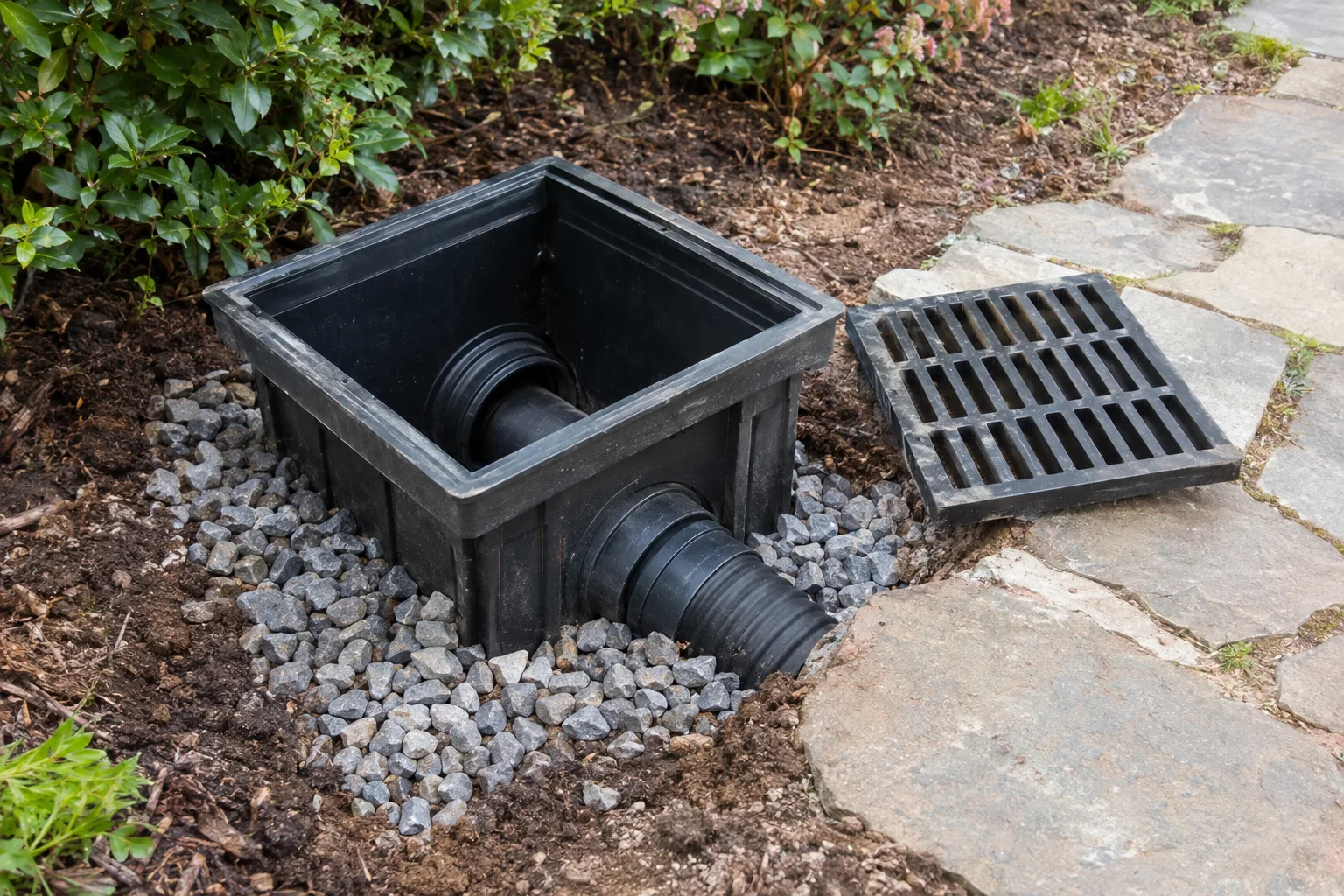
Check the route and available fall
The line needs a route from the collection point to the receiving area. Available fall, distance, roots, utilities, and hardscape crossings determine whether that route is practical and how deep the trench needs to be.
Choose pipe for the job
Solid pipe transports collected water. Perforated pipe collects water through openings and belongs in an appropriate subsurface drainage design. Pipe strength, connections, and exposure to vehicle loads also need to match the installation.
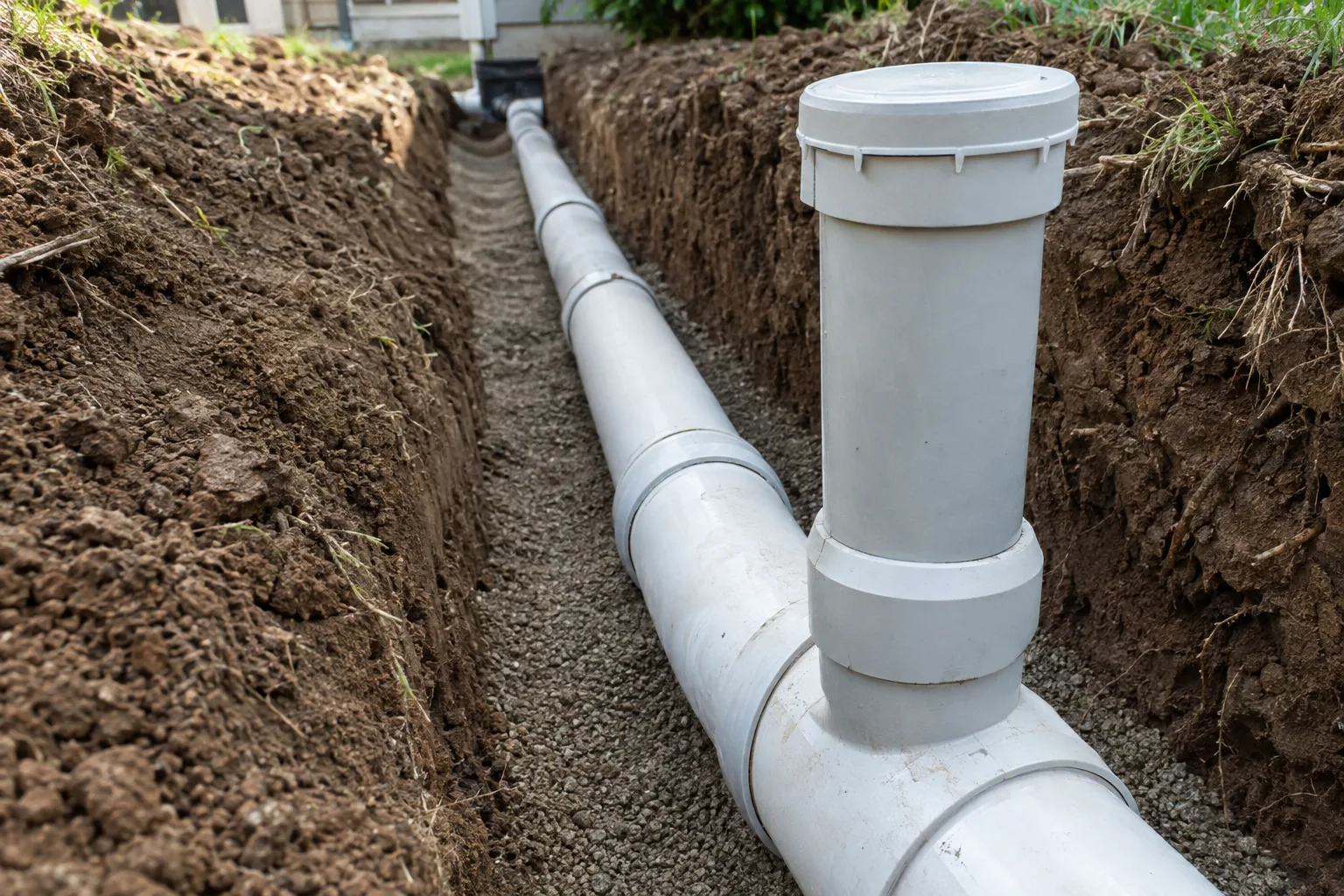
Plan the trench and connections
The work includes preparing the trench, supporting the pipe, making connections, and backfilling without losing the planned alignment. Cleanouts and other access points should be identified before the surface is restored.
Work around utilities and obstacles
Buried utilities, large roots, foundations, and paved surfaces can constrain a route. A short straight line on a sketch may not be the least disruptive option on the actual property. These limitations should be checked early.
Why a buried line backs up
Sediment, roots, damaged joints, or settlement can restrict flow. An outlet that sits too high or becomes buried can cause similar symptoms. Finding the restriction is more useful than assuming every backup needs a larger pipe.
Provide access for cleaning
A buried line should have appropriate access for inspection and cleaning. The location of cleanouts and outlets should remain known after landscaping is complete. Covering them makes future work harder.
What affects pipe installation cost?
Pipe length and type, trench depth, crossings, soil disposal, fittings, and restoration all affect the work. The estimate should describe the collection and discharge connections as well as the pipe between them.
Solid pipe or perforated pipe?
Perforated pipe is not a substitute for a solid transport line. The right choice depends on whether the section should collect water from the soil or carry water away without releasing it along the route.
Establish the route before opening the trench
We begin with the collection and discharge elevations because they determine whether a gravity line has a workable route. A straight path across the lawn may look simple but cross utilities, roots or a low section that changes the needed trench depth. We compare route options before deciding where excavation belongs. The receiving point also needs to remain usable after the ground is restored. Burying the pipe first and looking for an outlet afterward can leave a line that cannot empty properly.
The job of each section determines the pipe choice. Solid pipe carries collected water toward the outlet. Perforated pipe belongs where the design needs to collect water from surrounding soil. Using the two interchangeably can release roof runoff along a route that was meant to transport it, or fail to collect subsurface water where collection was needed. We identify those roles in the plan so the materials list corresponds to the actual drainage problem rather than a preference for one product everywhere.
Support the pipe and preserve access
The trench needs to support the pipe along its planned alignment. Uneven support or disturbed backfill can allow sections to settle, creating places where water and sediment remain. We consider the bedding, connections and backfill as part of the installation rather than treating the pipe alone as the finished system. Where vehicles or other loads cross the route, the materials and installation detail need to suit that use. A lawn installation cannot automatically be copied beneath a driveway without checking the differences.
Bends, junctions and changes in direction affect future inspection and cleaning. We discuss practical access before the line is covered, particularly where several basins or downspouts connect. Cleanouts should remain identifiable after new sod, mulch or paving is installed. An owner who knows the route and access locations can give much better information when a problem develops years later. We recommend keeping a simple record of the installed layout with other property maintenance information.
Before restoring the surface, we review the connected route and check for obvious problems with flow or joints. The finish should also allow water to reach any surface inlets served by the line. A new pipe will not collect a puddle that sits behind a ridge of backfill. The estimate should identify how excavated material, turf and affected paving will be handled. If buried conditions require a route change, we discuss what that means for access and restoration instead of treating the original sketch as fixed.