

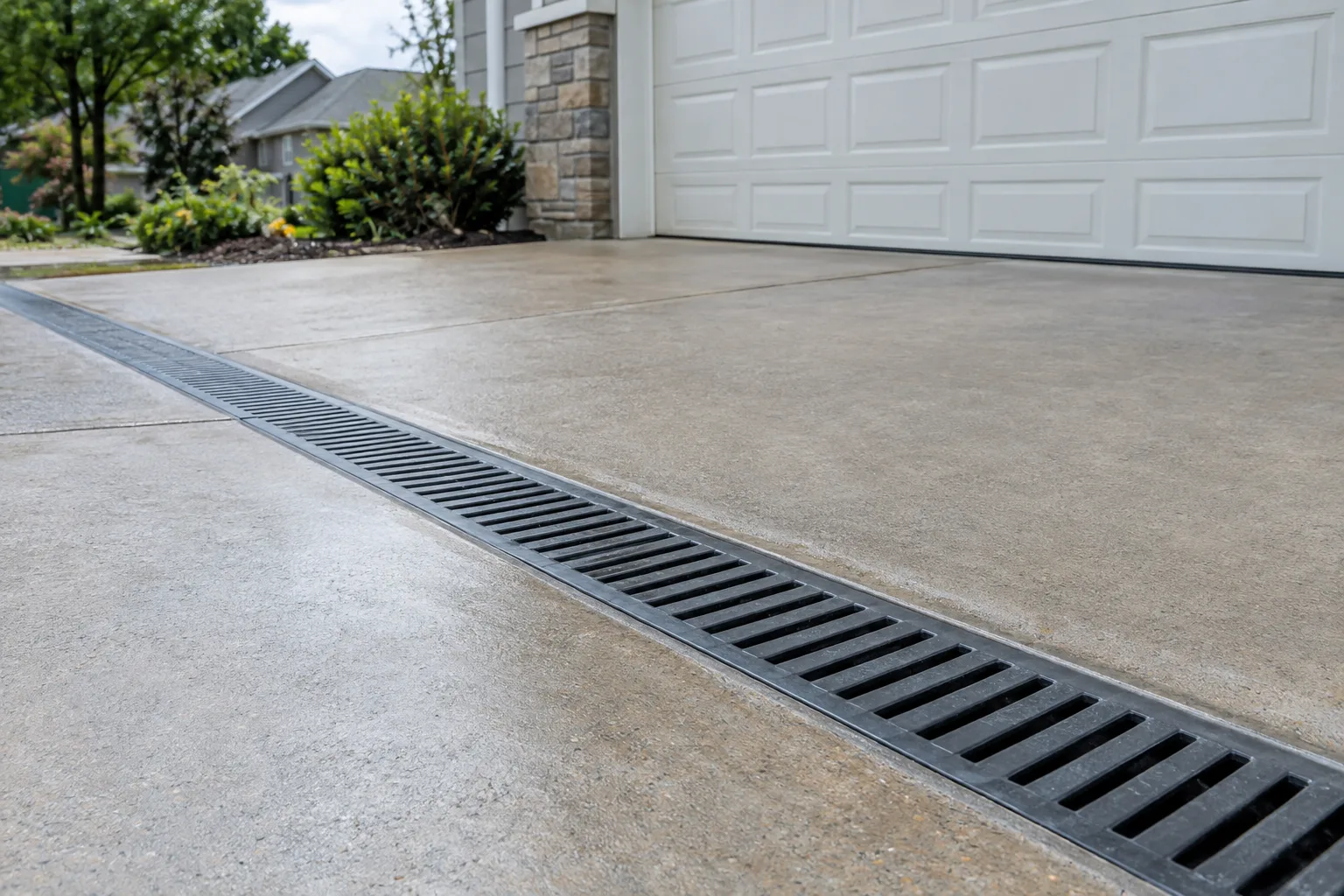
Give water a route through a finished outdoor space
We help Bedford property owners assess water trapped around patios, courtyards and walkways. A hard surface may have a low pocket, or nearby edging may block the route that runoff once followed. We check the finished levels and the direction water approaches before locating an inlet. The most convenient place to install a grate is not always where water can reach it. A useful plan starts with the actual collection point and continues all the way to a suitable destination.
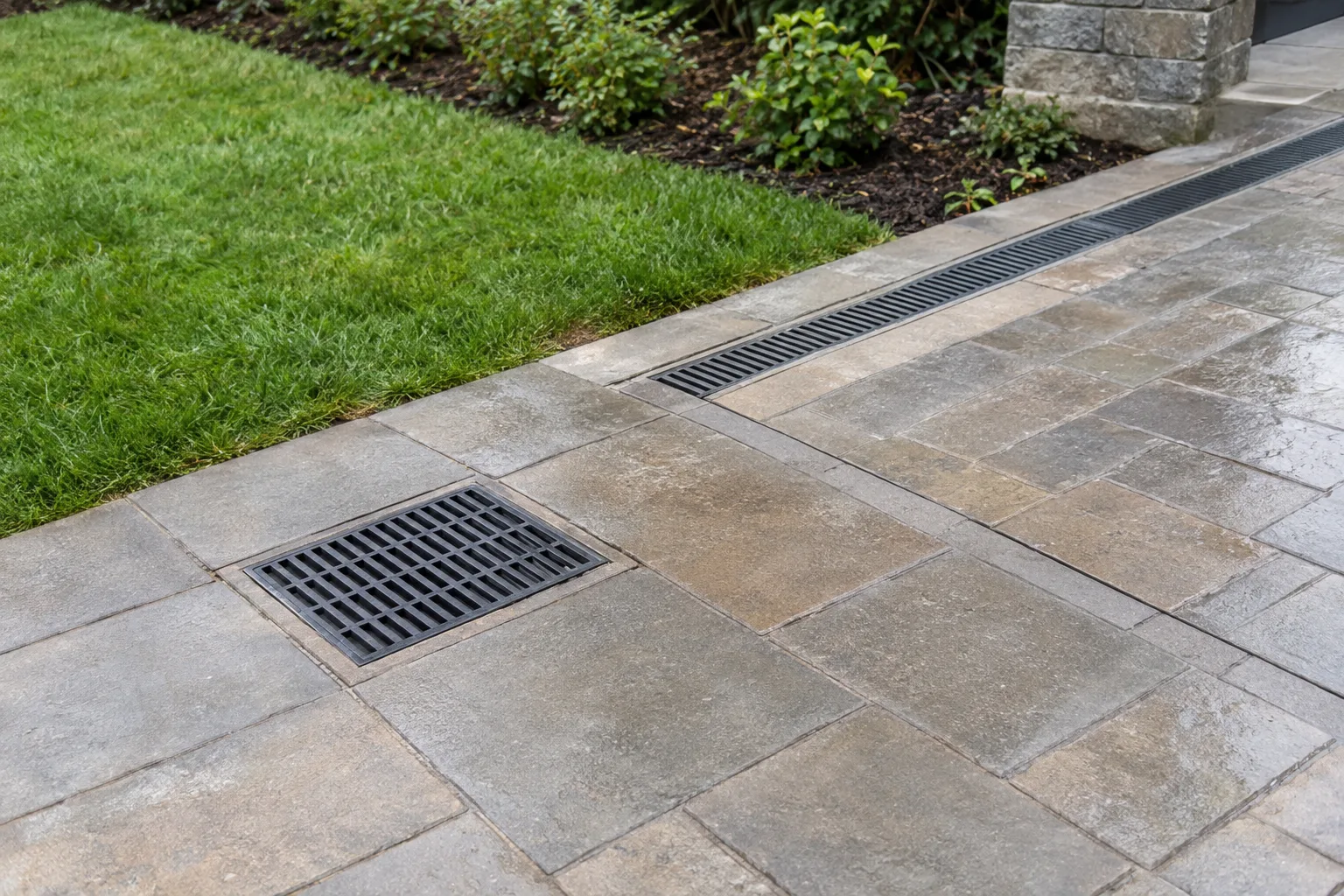
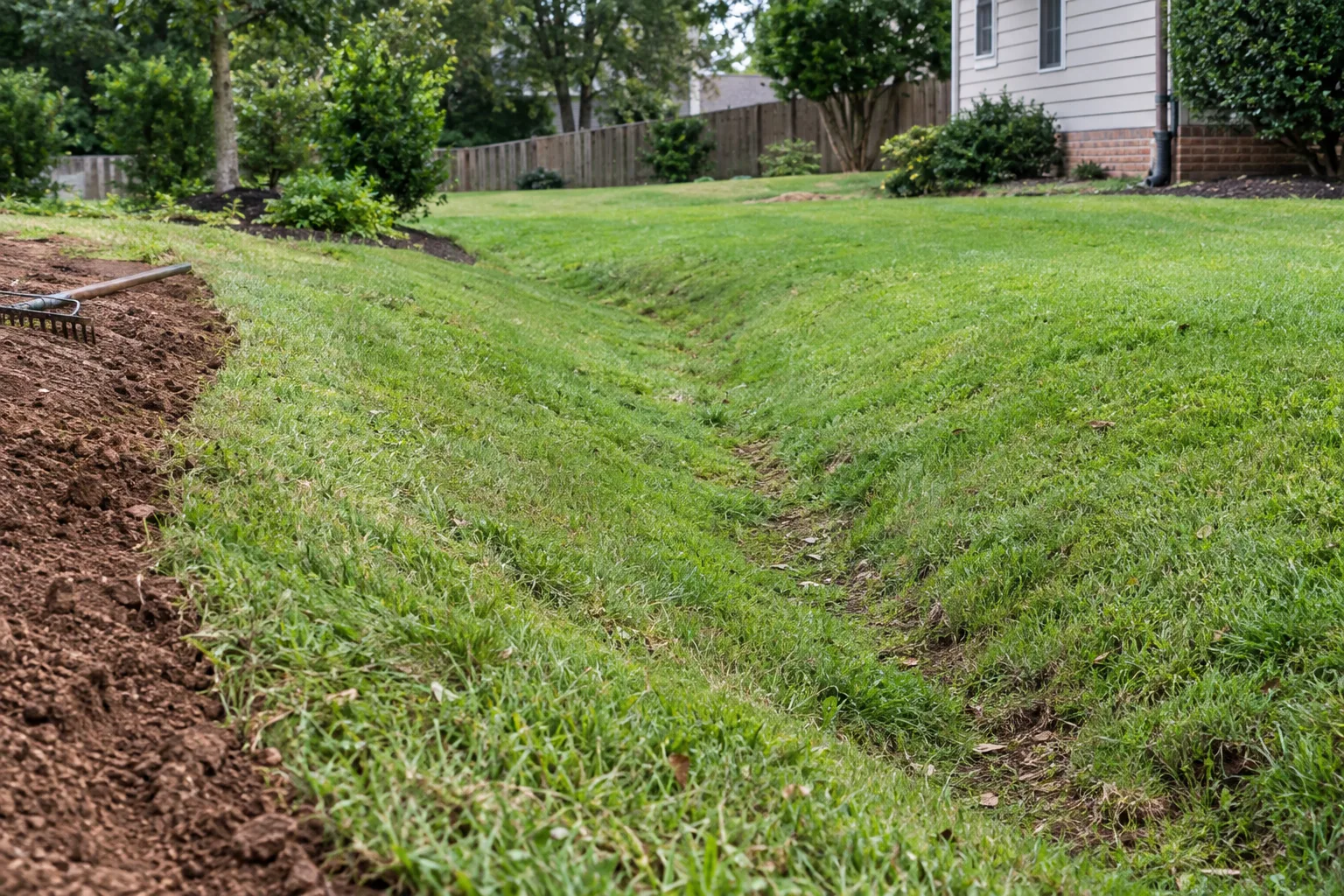
A catch basin may fit a defined low corner. A channel can collect water along a longer edge where runoff arrives across paving. We compare those options with a surface adjustment when the surrounding layout permits one. Door thresholds, steps and fixed borders can limit how much paving can be changed. Lowering one patch without checking those relationships may create an awkward walking transition or move runoff toward an entrance. We discuss both drainage and use of the space while the design can still be adjusted.
Make the restoration part of the estimate
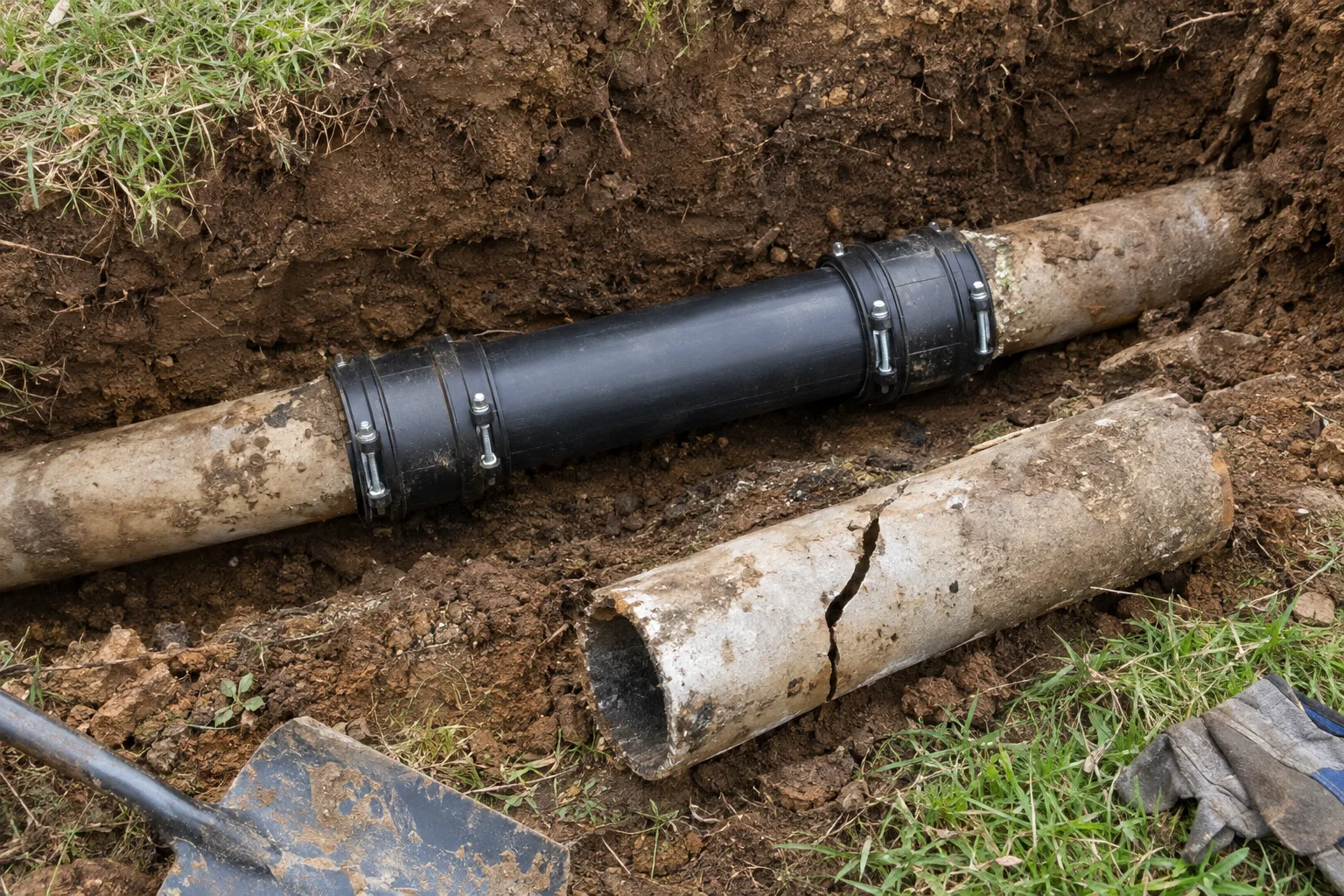
Work in a finished courtyard can require more planning than the length of pipe suggests. Access may pass through a narrow gate or across surfaces that need protection. Materials removed from a small excavation still need a handling route. We identify those constraints before comparing installation methods. Where paving must be opened, the scope should state the affected area and planned finish. A price for a collector alone does not describe the cost or disruption of connecting it and restoring the outdoor space.
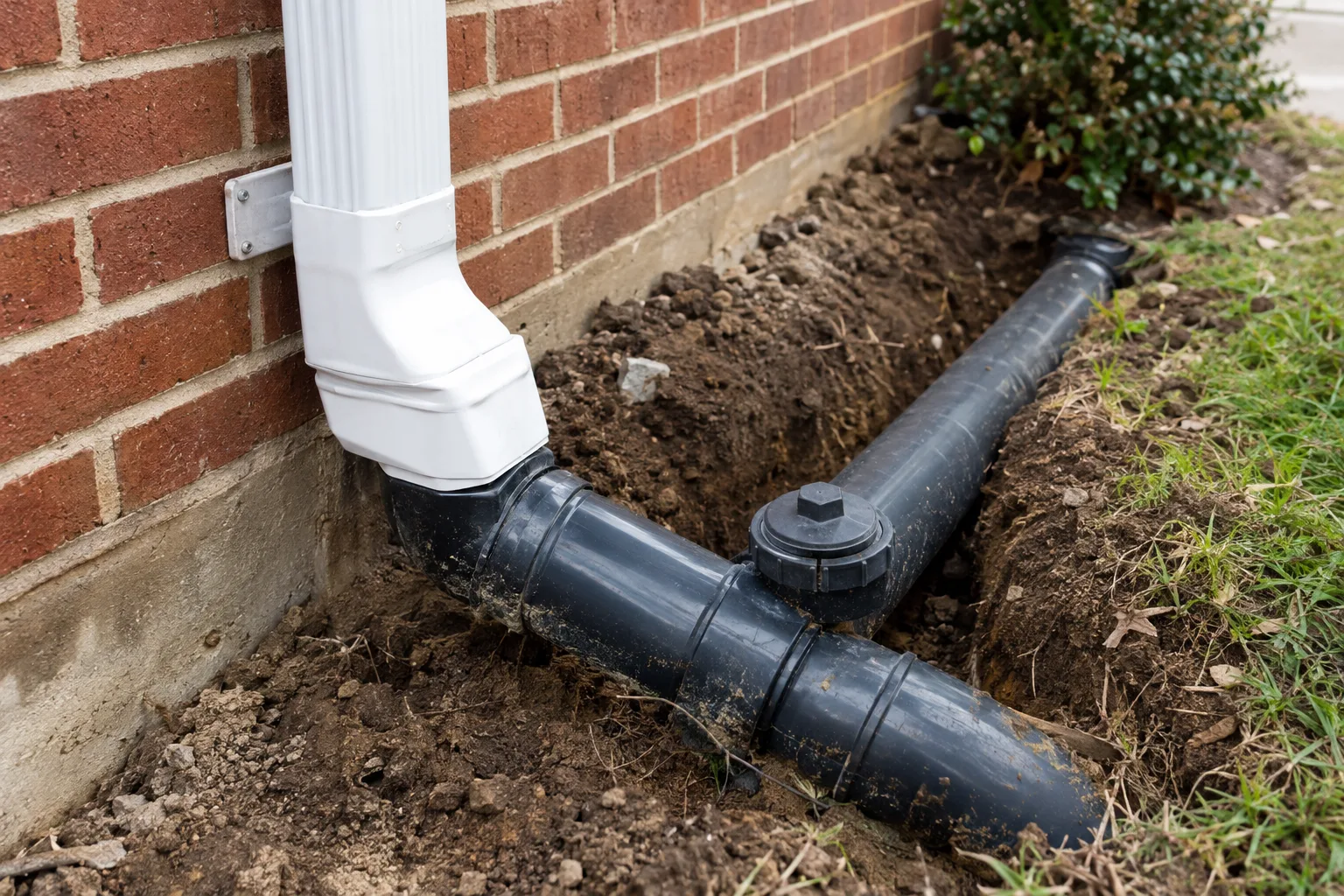
We also review existing downspouts and drains around the courtyard. A new collector should not feed an old line until its route and outlet are understood. Combining sources changes the water the downstream system receives. If the proposed destination involves a public feature or a controlled drainage area, the requirements for the Bedford property need to be checked. The presence of a nearby inlet is not enough to establish a usable connection. Those decisions precede permanent paving work.
After installation, grates need to remain removable and reachable. Furniture, planters and new landscape borders should not obstruct collection or cleaning. Note whether water reaches the opening during rain or remains behind a ridge elsewhere. That pattern can reveal a surface-level problem even when the outlet is working. Before an assessment, photographs showing the full paved area and its entrances are helpful. Tell us about previous resurfacing or edging changes, and whether the water clears after the storm or remains long afterward.