

Investigate seepage before choosing a trench
We help North Richland Hills property owners assess ground that stays wet near slopes, walls and property edges. The source may be runoff crossing the surface, moisture moving through the ground or irrigation. Those possibilities can leave similar wet patches but require different responses. We ask when the water appears and whether redirecting a visible source changes it. Trenching immediately beside the damp area can miss water entering from farther uphill or leave a separate source untouched.
Where a retaining wall is involved, the drainage question needs to be considered alongside the structure. Visible moisture does not establish the condition of the wall or justify excavation at its base. Movement, distress or uncertain construction details may require assessment by an appropriate specialist. We keep that boundary clear while examining the accessible surface route and nearby discharge points. Exterior drainage work should not be presented as structural repair or as a diagnosis of a wall that has not been evaluated.
Match the collection method to the source
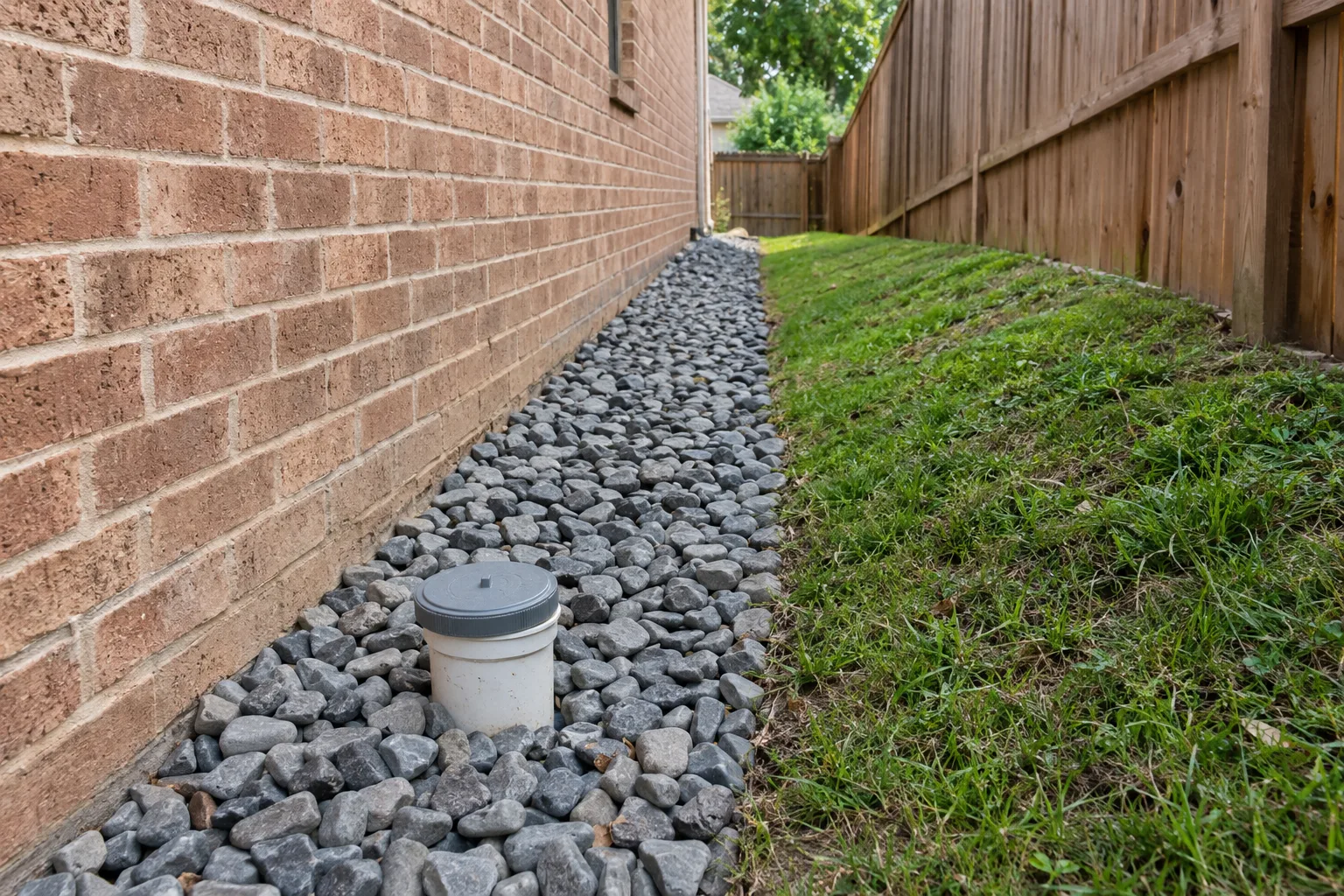
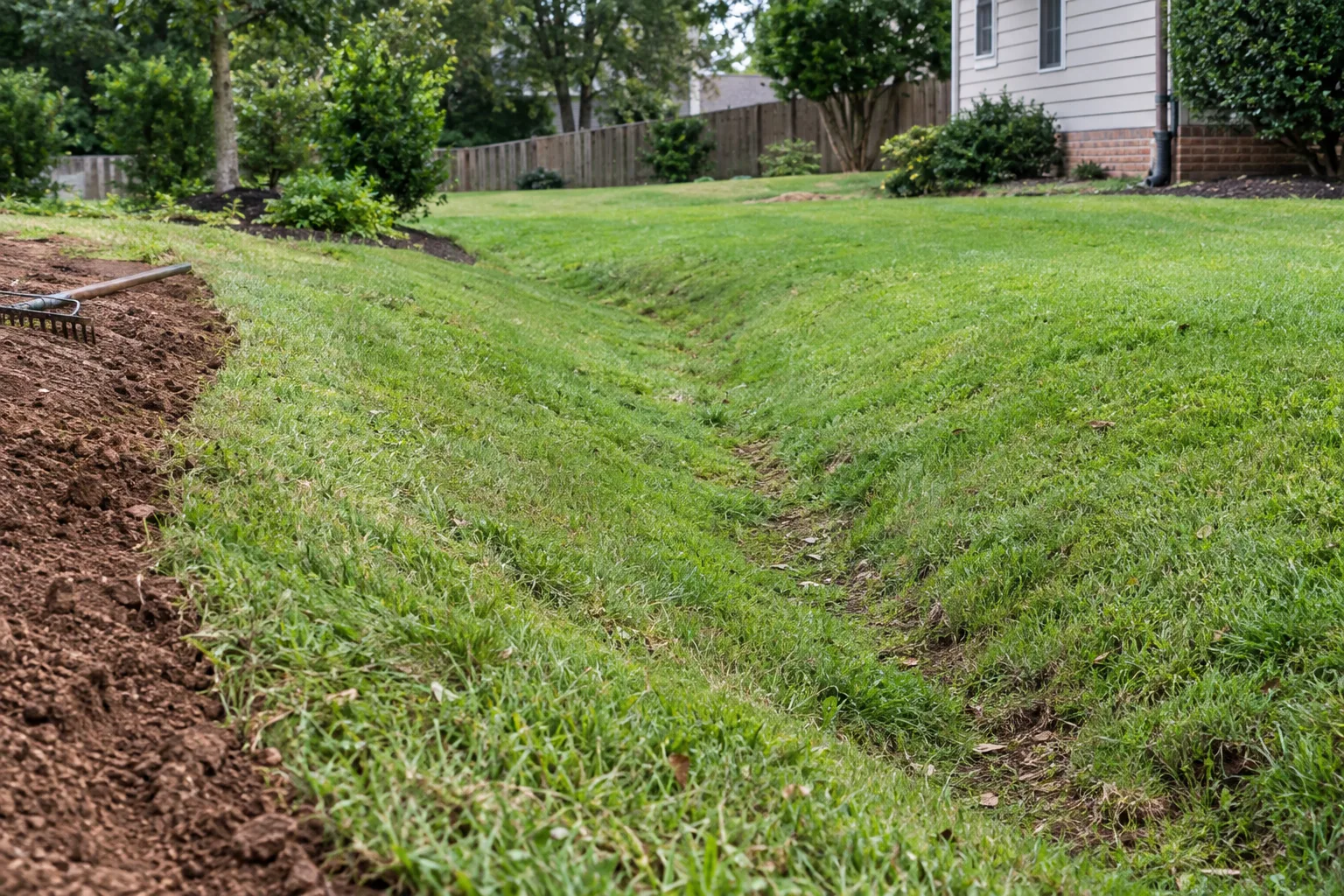
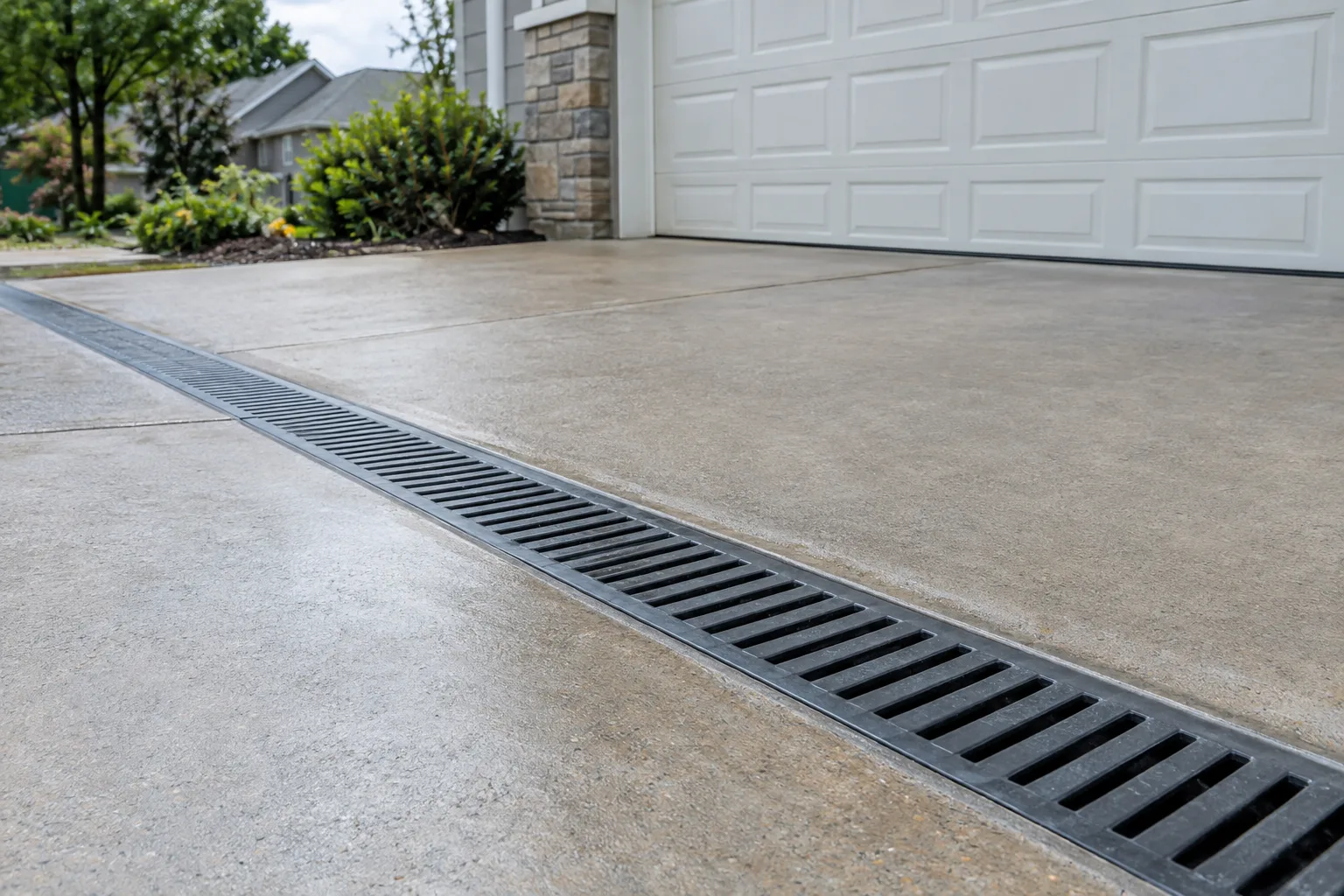
Surface runoff may be managed with grading, a swale or a collector positioned where flow converges. Subsurface collection is a different approach and depends on where water moves through the soil. We compare those mechanisms before selecting pipe. A French drain installed outside the wet layer may have little effect even if its materials are correct. Conversely, a surface basin may not collect seepage that never reaches its opening. The proposal should explain why water will reach the selected collection area.
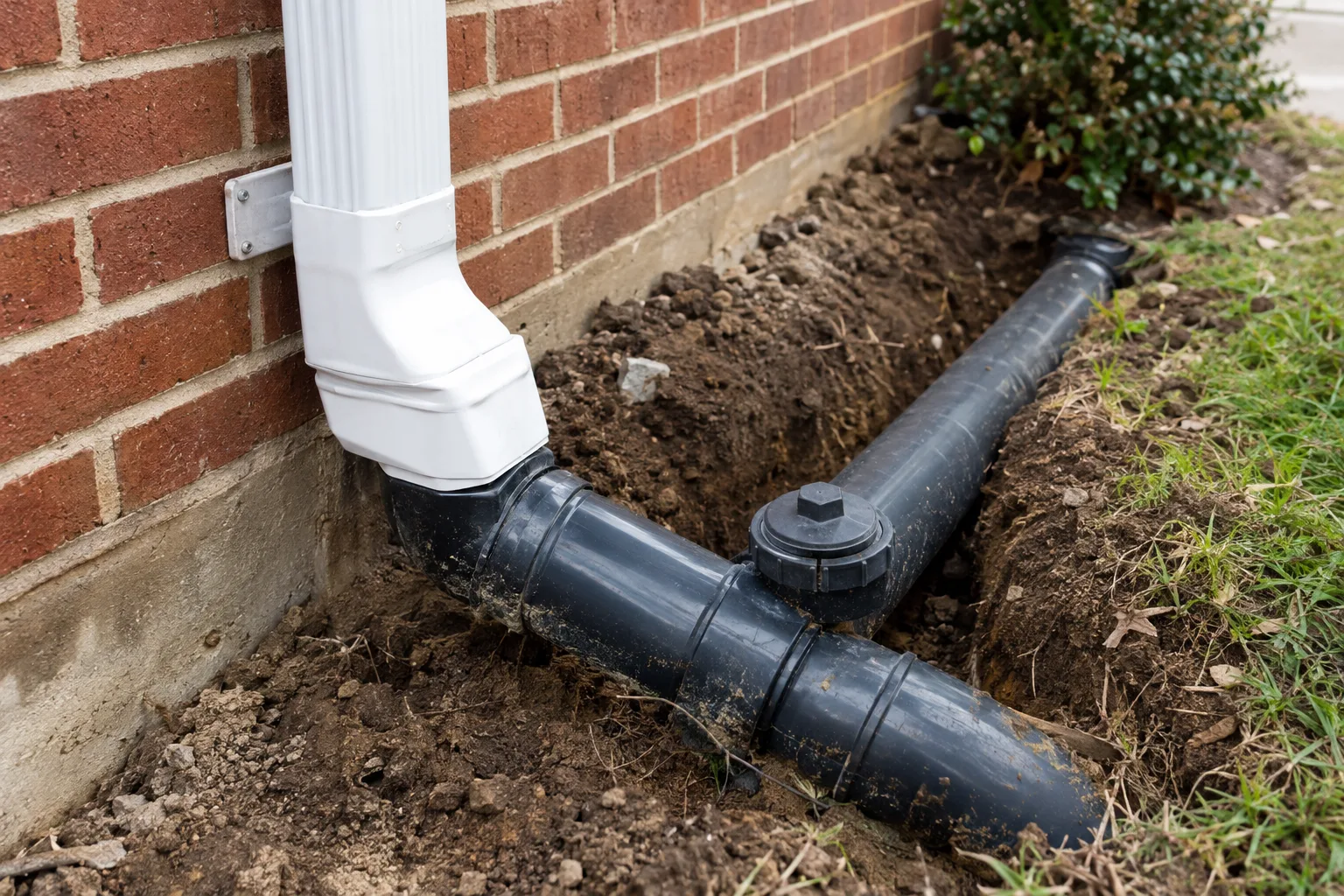
The route beyond the collector needs equal attention. A confined property edge may offer limited fall, access or space for an outlet. Roots, utilities and existing hardscape can narrow the options further. We discuss those constraints and any need for additional review before estimating the installation. If the plan relies on a public connection or drainage easement, the requirements for the North Richland Hills property must be established. A route that merely transfers saturated ground to another vulnerable area is not a complete correction.
Bring notes about how wetness changes between storms and whether irrigation is active. Wide photographs can show the relationship between the wet strip, nearby slope and surrounding structures. After work, keep surface routes open and access points clear. If new movement or continued indoor moisture appears, it deserves separate attention even when the yard collector is flowing. We explain the water-management scope and its limits so the owner understands which improvements were made and which questions still belong to another type of assessment.