

Repair the water route behind a washout
We help Kennedale property owners address runoff that carries soil out of beds and across the yard. Replacing mulch can improve the appearance briefly while leaving the cause unchanged. We trace the flow uphill to see whether a roof outlet, paved area or higher ground concentrates water into the damaged strip. Fresh channels and sediment deposits help identify that route after rain. The aim is to reduce or manage the incoming flow before rebuilding the surface that it has been washing away.
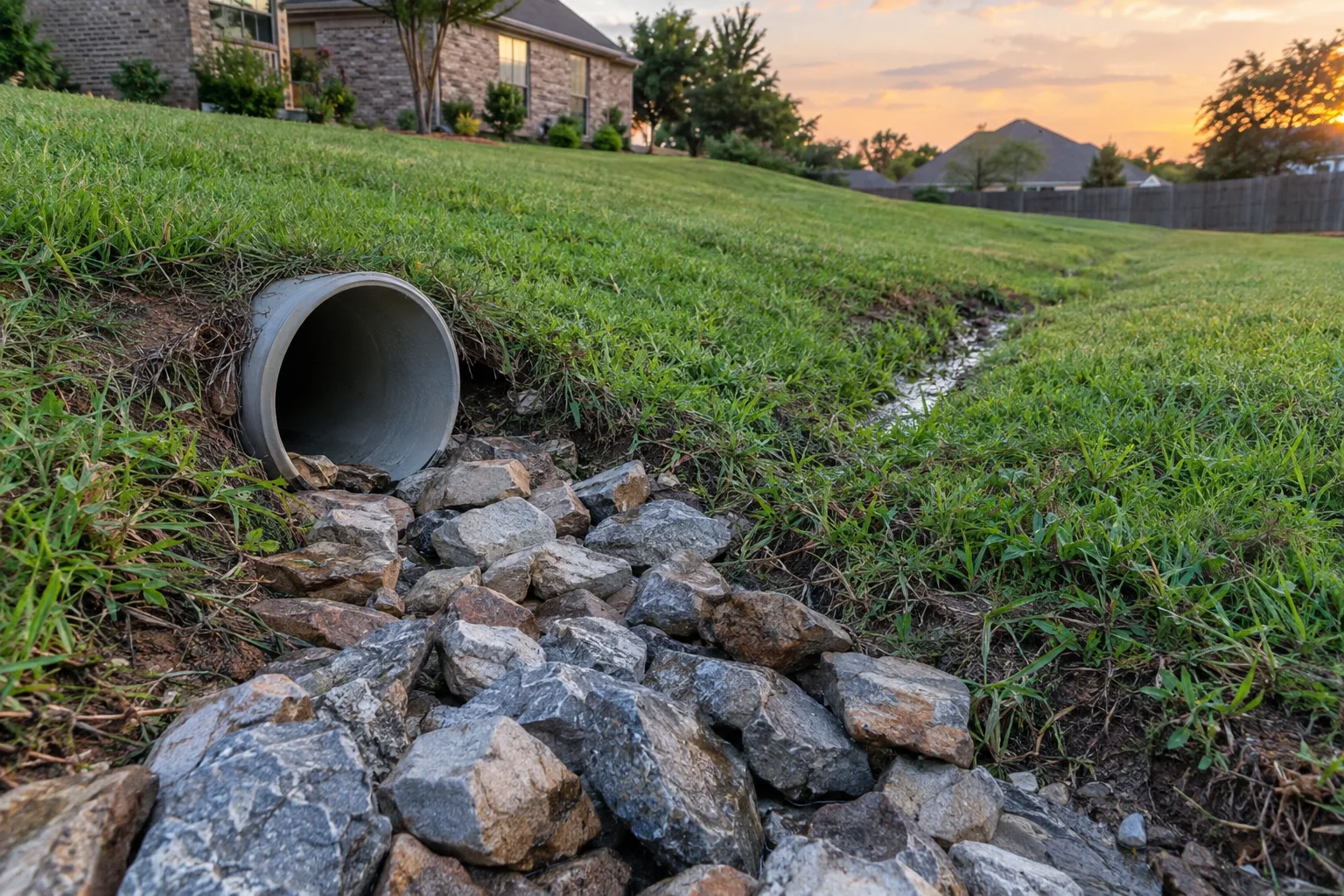
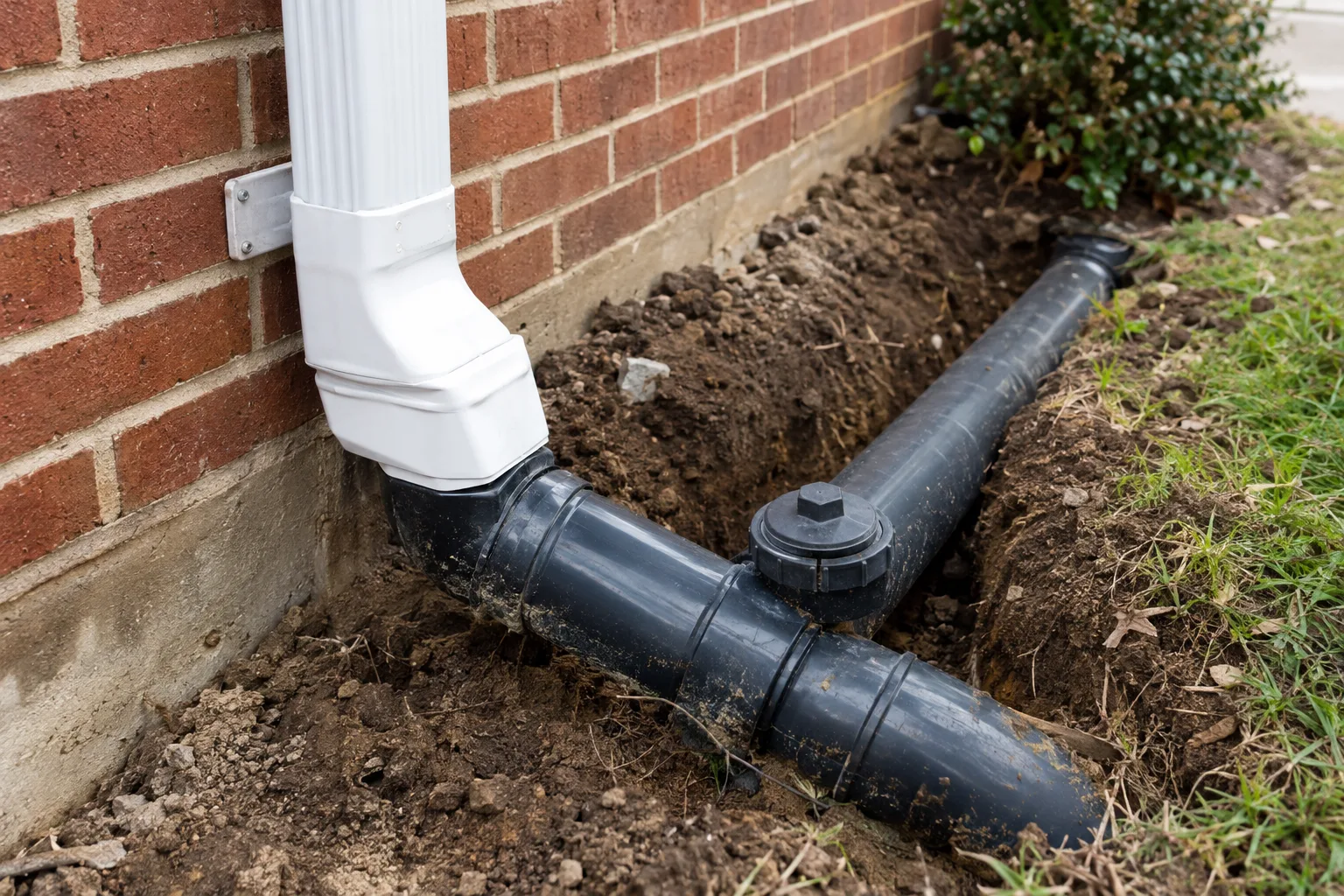
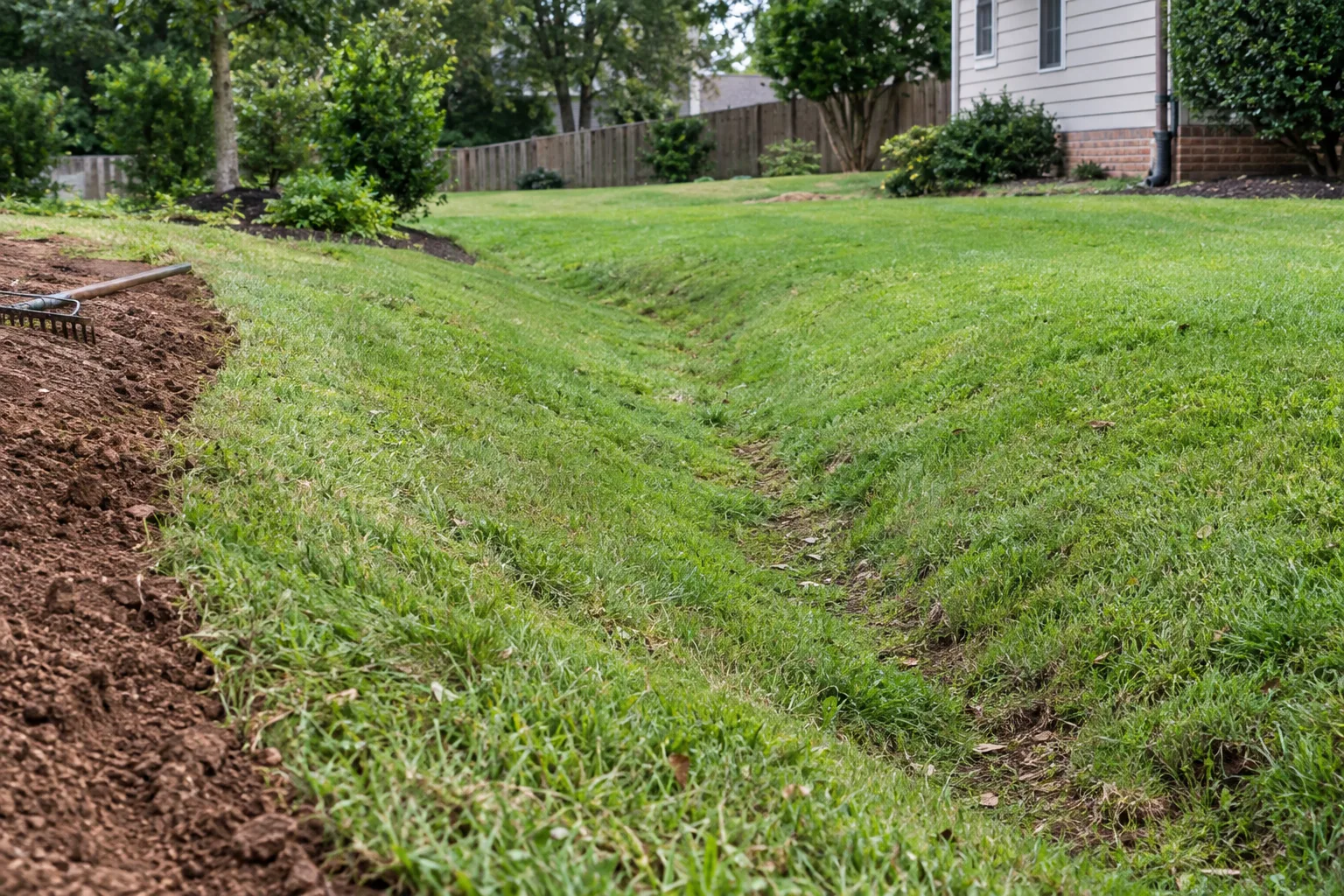
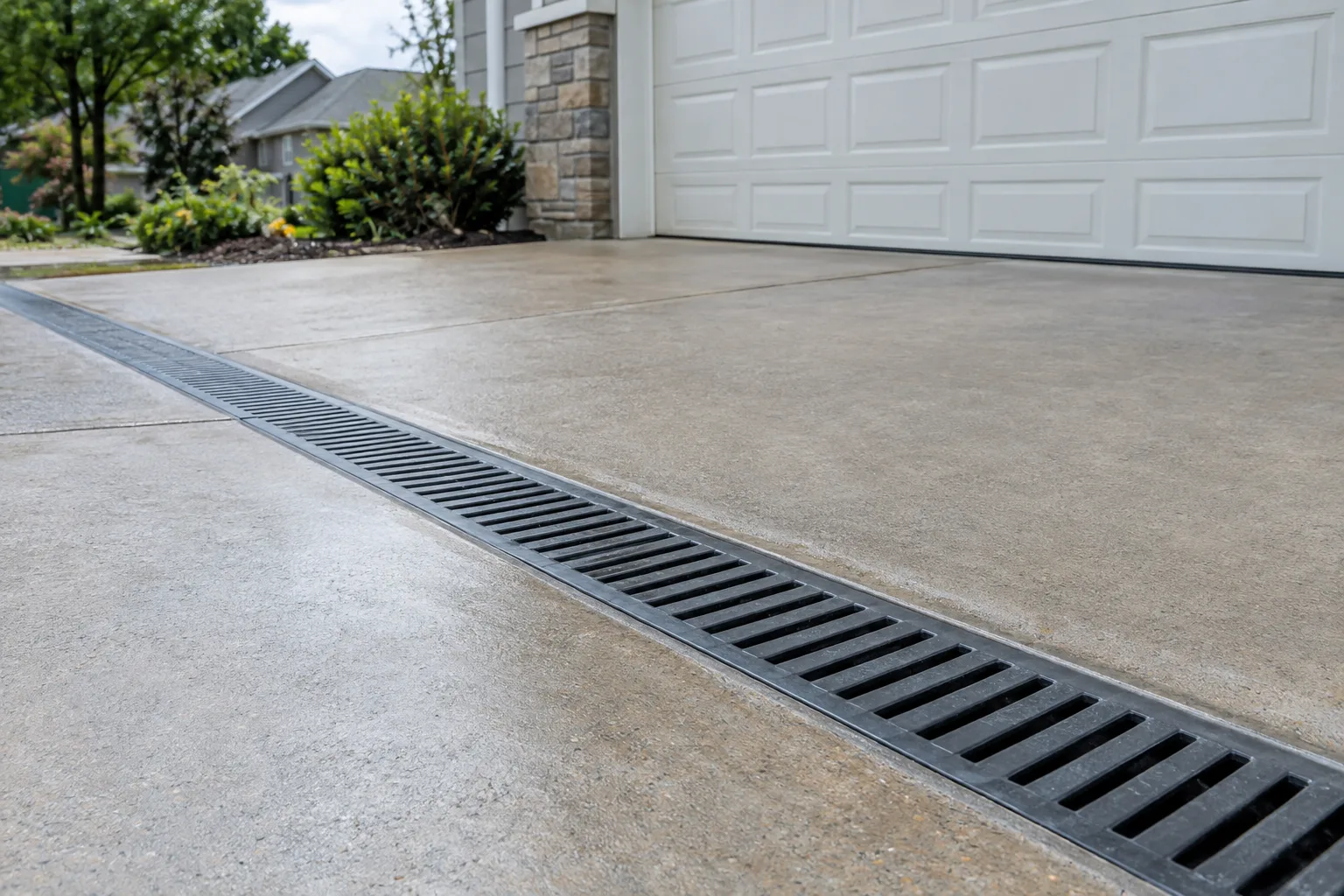
A swale, an inlet and outlet protection each perform different jobs. A swale carries water over a planned surface route. An inlet collects it into a pipe. Protection at the discharge point helps the receiving ground cope with concentrated flow. We compare those roles against the actual slope and available space. Installing a pipe can move the visible wet area, but the pipe end can start a new washout if the receiving conditions are overlooked. Both ends of the route belong in the proposal.
Restore soil with the next rain in mind
Loose material needs a stable finish rather than repeated replacement in the same path. We consider the ground shape, vegetation and any temporary protection needed while the surface establishes. The method should suit the amount and concentration of water reaching it. A few decorative stones are not automatically a drainage treatment, and a larger rock area can still be undermined if water bypasses its edges. We explain how the surface work relates to the runoff correction instead of presenting the landscape finish as the whole repair.
Access and material handling can affect work on a slope or along a confined property edge. The estimate should identify the affected area, soil removal, drainage changes and restoration. Where retaining structures or unstable ground are involved, separate professional assessment may be necessary. We also check the proposed downstream route and any property or municipal restrictions relevant to the Kennedale site. Sending water beyond the work area without resolving where it goes is not a complete erosion-control plan.
Before an assessment, note which part of the bed fails first and where the washed material ends up. A photograph of the upstream source can be as useful as one of the damaged ground. After work, watch for fresh grooves, displaced surface protection and a buildup of sediment below the repair. Report the specific location if erosion returns. That helps us identify a continuing concentrated flow or bypass instead of assuming the whole surface needs to be covered again in the same way.